
Natural, technological, urban, and animal sounds are all integral parts of the acoustic environment of a given place or region. They offer a window into how communities organise themselves, live together, and ascribe meaning to the sounds that shape their culture. Like music, everyday sounds carry social meaning, and play an established role in constructing identity. Exploring the acoustic environment therefore offers a deeper understanding of a culture through its unique ‘soundscape’ – a field that, although atypical, is now fully recognised within ethnomusicology.
publié par
Fanie Précourt
25 septembre 2026
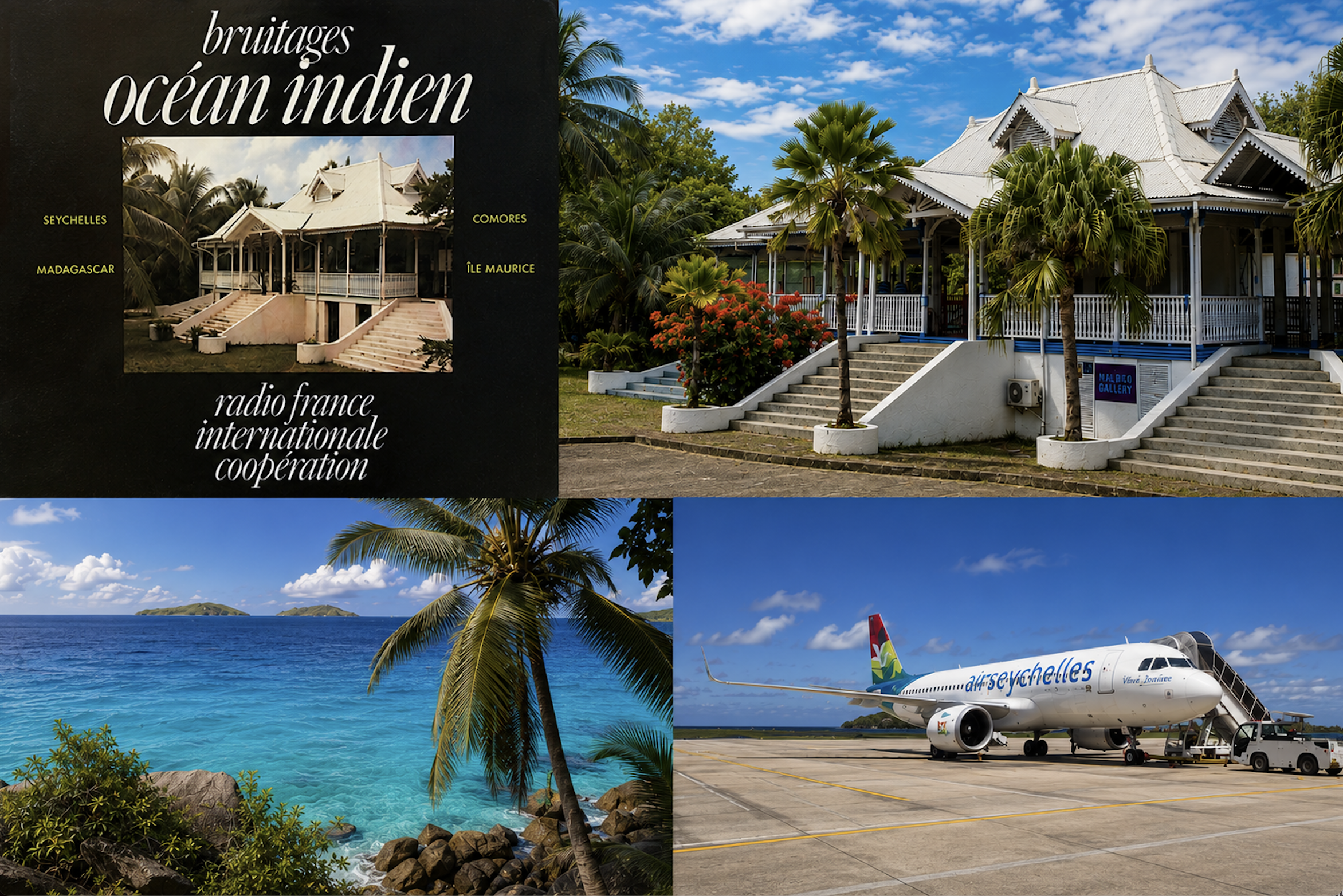
1989: Seychellois “noises” first recorded
In an effort to explore the concept of sonic identity – a notion that, in the twentieth century, was still largely equated with mere ‘sound effects’ – Christophe Campens and journalist Jacques Maunick were commissioned by Contact Inter-Îles Océan Indien to carry out field recordings across several islands in the south-west Indian Ocean, including Madagascar, the Comoros, Mauritius and the Seychelles. Contact Inter-Îles Océan Indien was a thirty-minute cultural and documentary radio magazine created by the co-operation department of Radio France Internationale (RFI) in the early 1970s. Taking a multidisciplinary approach, it covered the history, economy, social dynamics and cultural practices of island territories in the region and, until it ended in 1991, was a means of observing and sharing knowledge across the Indian Ocean islands. In 1989, RFI undertook the publication and commercial release, as vinyl LPs (ARC 35), of a selection of field recordings drawn from the programme. This initiative marked the first institutional attempt to document and share a Seychellois soundscape – an important milestone in recognising the ethno-acoustic heritage of the islands.
2025: a comparative soundscape
Thirty-six years later, motivated by a desire to analyse how the Seychellois soundscape had changed, sound engineer Clément Delpouve and ethnomusicologist Fanie Précourt returned to the sites where field recordings had originally been made by Christophe Campens and Jacques Maunick. Their goal was to replicate the 1989 material using similar methodological conditions: the same locations, times of day, and, insofar as possible, the same listening conditions. This comparative approach reveals changes in the acoustic environment over more than three decades, whether shaped by ecological shifts, social transformation, urban development or tourism. Juxtaposing past and present recordings provides valuable empirical material for analysing how the Seychellois soundscape has persisted, been disrupted, or recomposed over time.
Drawing on ethnomusicology, sound ecology and environmental sciences, this comparison deepens our understanding of how sounds become part of our shared sound heritage, while also reasserting the documentary and scientific value of historic field recordings.
Listen and decide for yourself …
 1. Archive recording: « The Sea ».
 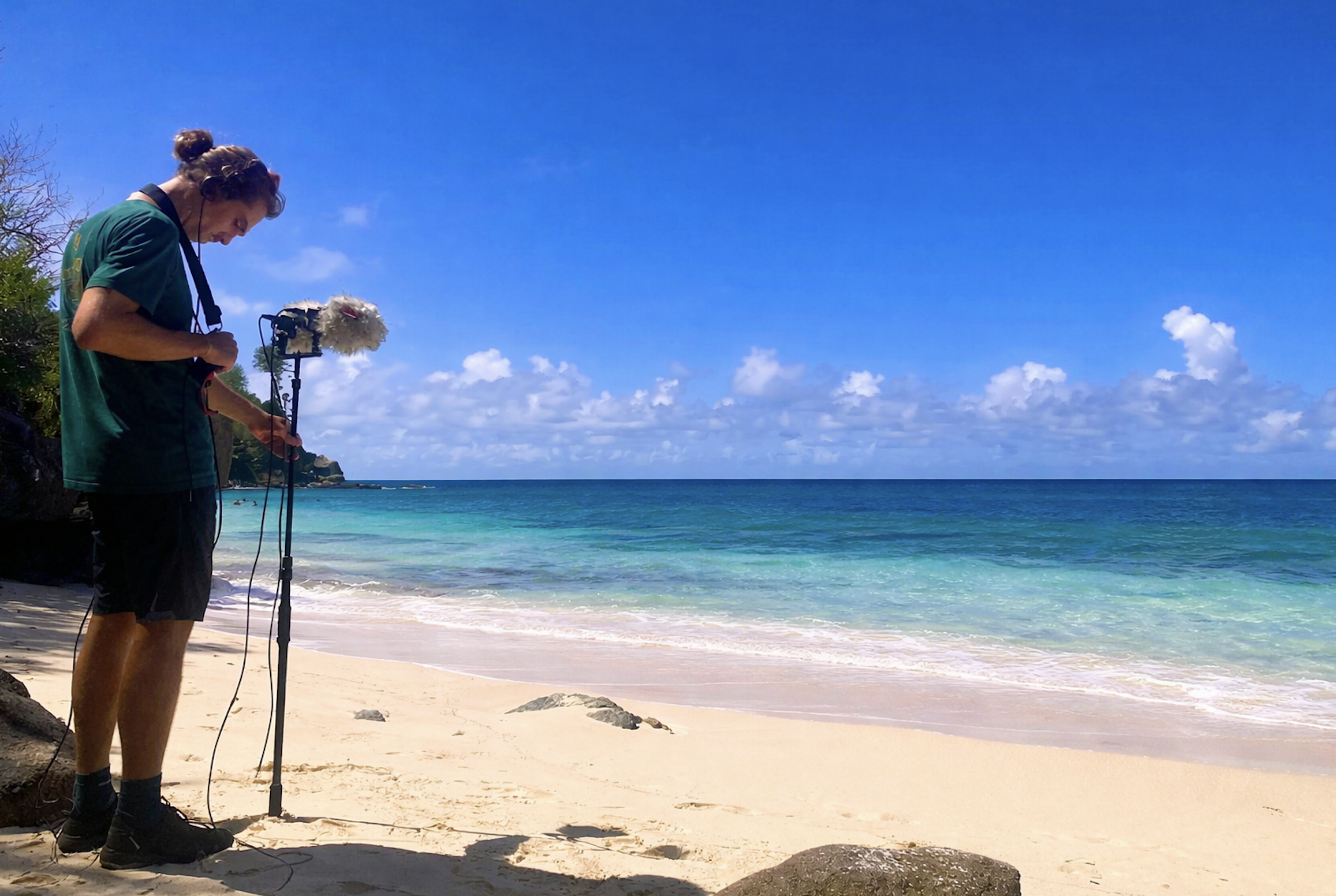 Contemporary recording: « The sea at Carana Beach » (North Mahé), 15/10/2025.
2. Archive recording: « At the harbour on La Digue – the boat preparing to depart for Praslin ».
Contemporary recording: « The sea at Carana Beach » (North Mahé), 15/10/2025.
2. Archive recording: « At the harbour on La Digue – the boat preparing to depart for Praslin ». 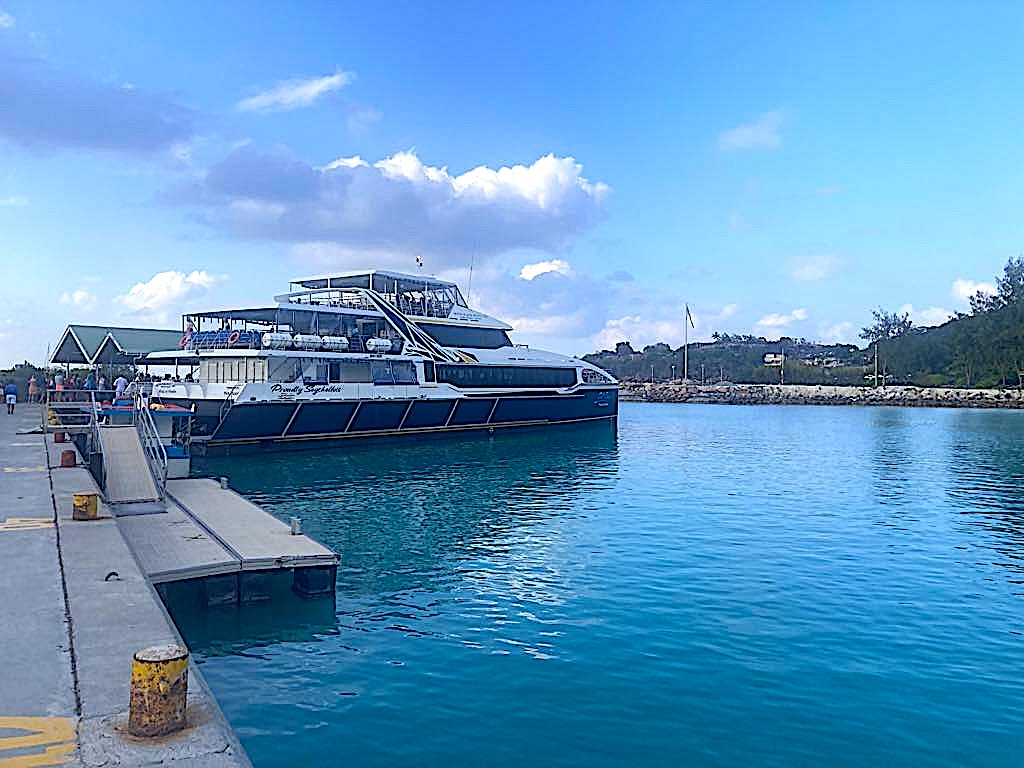 Contemporary recording: « On the deck of the boat at La Digue, preparing to depart for Praslin » (La Passe), 08/11/2025.
3. Archive recording: « 4am: « La Digue wakes up ».
Contemporary recording: « 4am: « La Digue wakes up ».
4. Archive recording : « Young Seychellois woman at the communal laundry site ».
Contemporary recording: « On the deck of the boat at La Digue, preparing to depart for Praslin » (La Passe), 08/11/2025.
3. Archive recording: « 4am: « La Digue wakes up ».
Contemporary recording: « 4am: « La Digue wakes up ».
4. Archive recording : « Young Seychellois woman at the communal laundry site ». 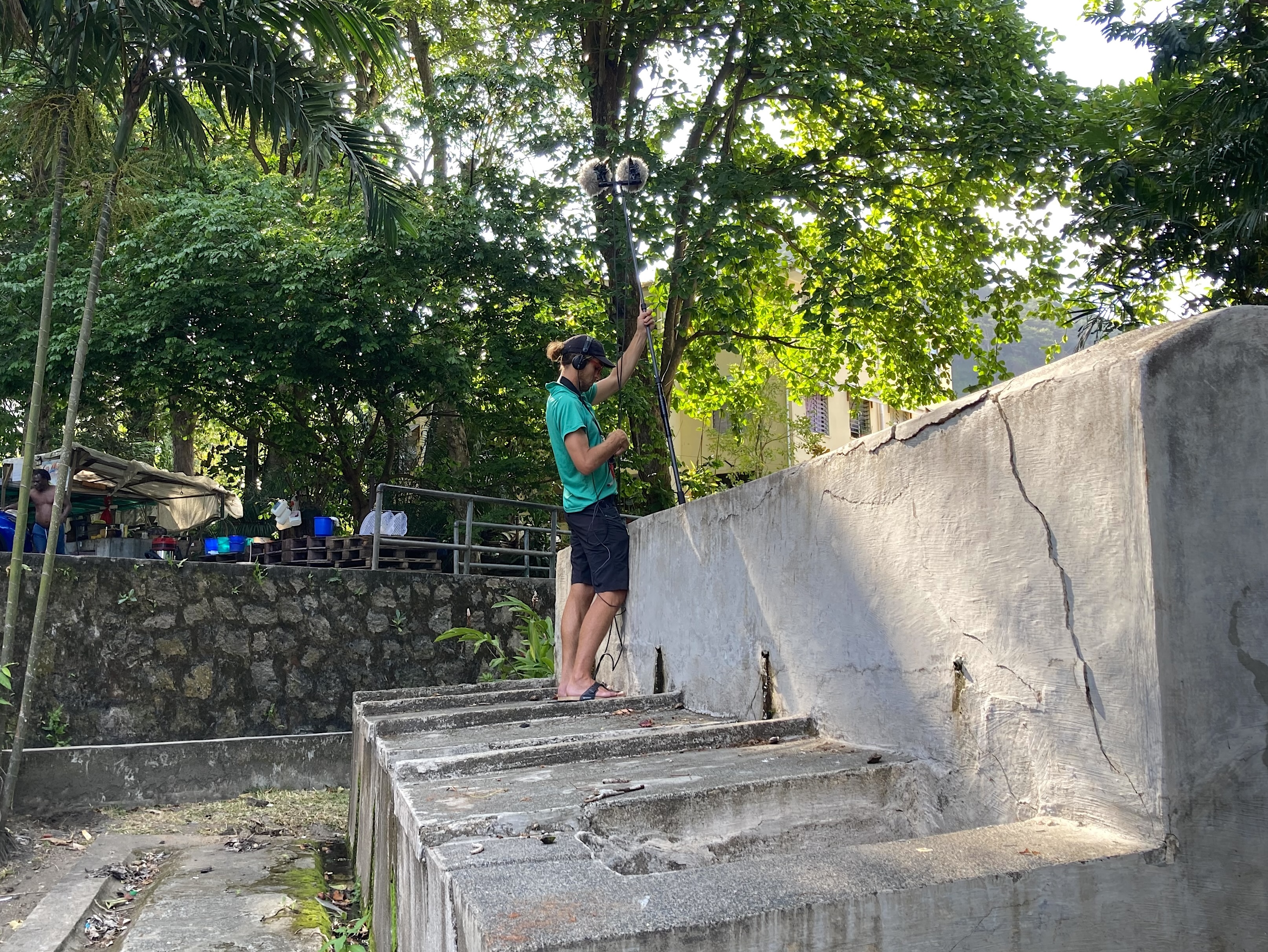 Contemporary recording: « At the lavwar » (Victoria), 22/10/2025.
 The Bel Air lavwar (communal laundry site) was built in 1910 for the Maternity Home that was located on Revolution Avenue (formerly Royal Street). The Saint-Louis River was dammed near Auclaire Lane, with pipes channelling water to the laundry system. The Maternity Home stopped using the lavwar in 1924, but Bel Air residents carried on washing their laundry there, alongside the washerwomen of Victoria, right up until the early 2000s. Water was free and plentiful, and laundry could be laid out to dry in the nearby cemetery. Despite being renovated in 2004, the Bel Air lavwar has fallen out of use, but there is now a car wash next to it that is fed by the river.
5. Archive recording : « Torrential rain ».
Contemporary recording: « Torrential rain in Port Glaud ».
6. Archive recording « 7pm: Dinner being prepared to the sound of Radio Seychelles ». 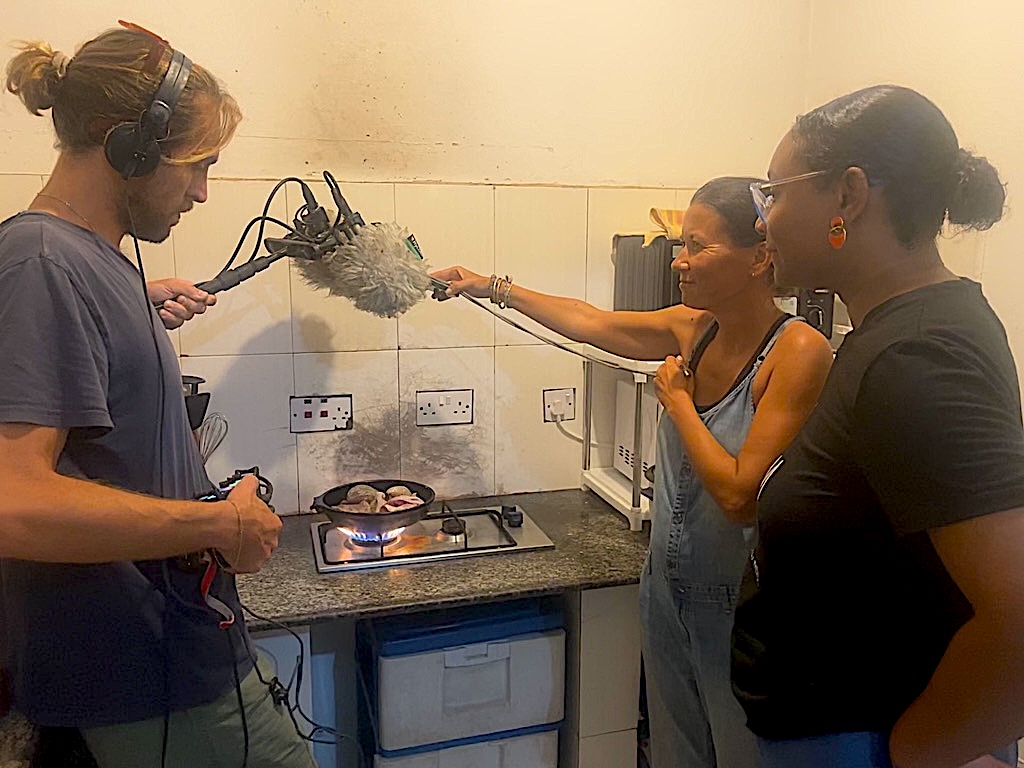 Contemporary recording: « 7pm: Fish sizzling to the sound of the Radyo Sesel news bulletin ».
7. Archive recording : « Air Seychelles operating an inter-island flight ».
Contemporary recording: « 7pm: Fish sizzling to the sound of the Radyo Sesel news bulletin ».
7. Archive recording : « Air Seychelles operating an inter-island flight ». 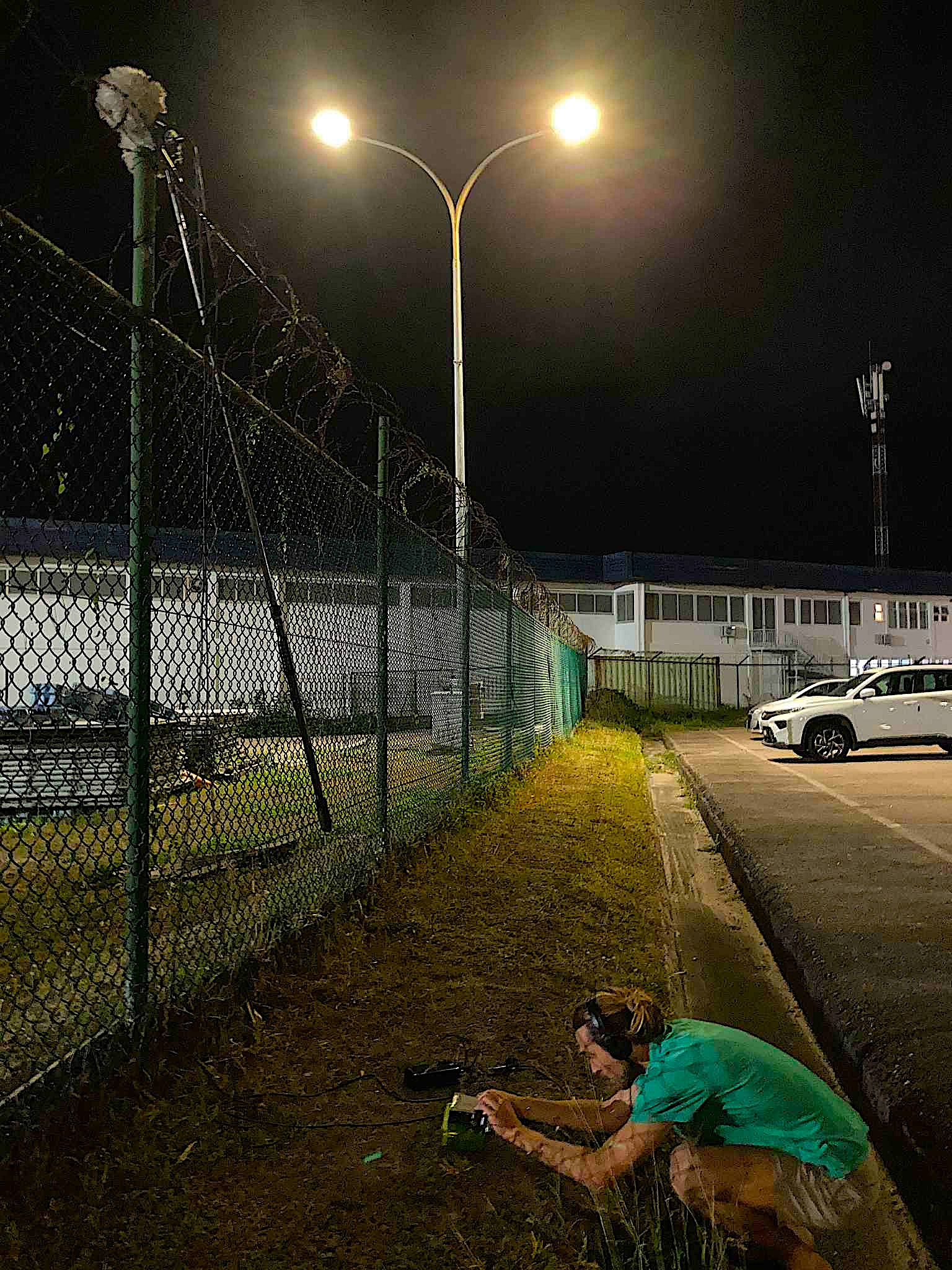 Contemporary recording: « Air Seychelles Praslin–Mahé flight » (Seychelles International Airport, Mahé), 29/10/2025.
8. Archive recording : « Audio snapshots of an ‘old-style’ wedding ».
Contemporary recording: « Tifin Maryaz Tradisyonnel traditional wedding » (Beau Vallon Bay), 26/10/2025.
9. Archive recording : « At the market in Victoria, the capital ».
Contemporary recording: « Air Seychelles Praslin–Mahé flight » (Seychelles International Airport, Mahé), 29/10/2025.
8. Archive recording : « Audio snapshots of an ‘old-style’ wedding ».
Contemporary recording: « Tifin Maryaz Tradisyonnel traditional wedding » (Beau Vallon Bay), 26/10/2025.
9. Archive recording : « At the market in Victoria, the capital ». 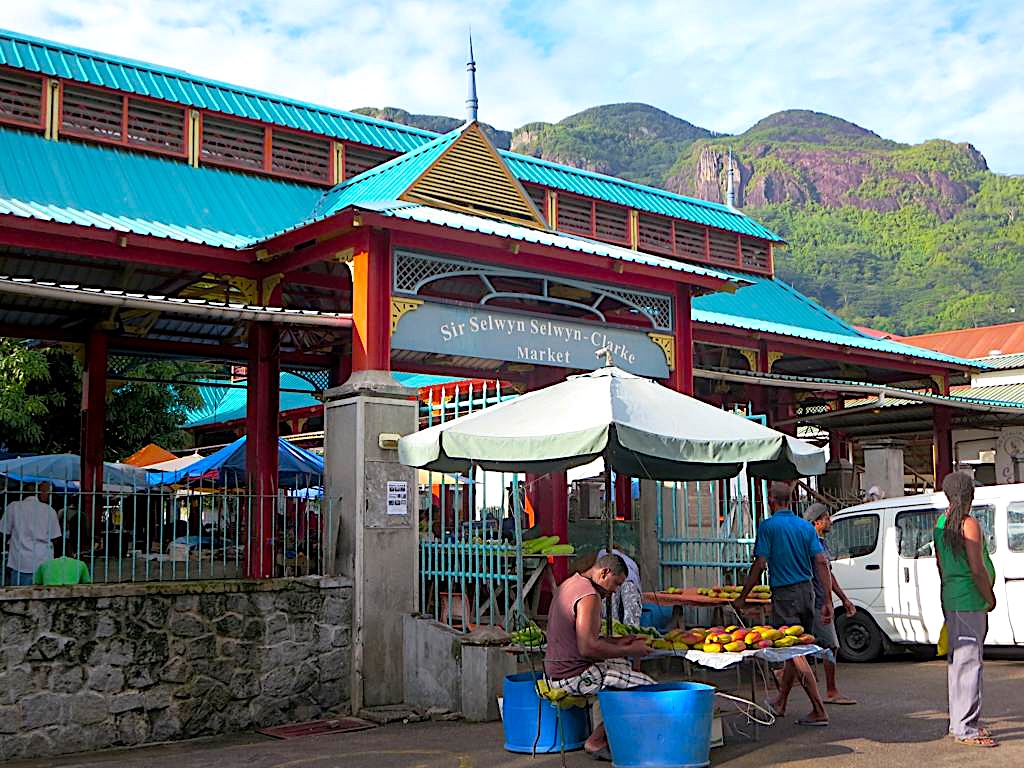 Contemporary recording: « At the temporary market in Victoria ».
 The market is currently housed in the former Seychelles Trading Company supermarket, not far from the historic Sir Selwyn Selwyn-Clarke Market while the latter is temporarily closed for renovation), in Victoria.
10. Archive recording : « At dusk, in town, birds in a tree ».
Contemporary recording: « At dusk, in town, birds in a tree begin to stir » (La Digue), 08/11/2025. Bonus
Contemporary recording : « Domino players in Port Glaud ». Fanie Précourt
