
Located 1,700 km from the East African coast, 1,100 km from Madagascar and 2,800 km from the west coast of India, the Republic of Seychelles comprises four archipelagos: the Seychelles proper (consisting of some thirty islets – the main ones being Mahé, Praslin, La Digue, and Bird Island), as well as the Amirantes Islands, Farquhar Atoll and Aldabra Atoll. The country as a whole includes 115 islands and islets, spread over 400,000 km² of ocean, but with a total land area of only 452 km².
published by
Fanie Précourt
26 juin 2026
The Seychellois population today stands at 135 000 inhabitants, of whom 80 000 live on Mahé. The Seychelles people are the product of intermingling between the French (occupiers from 1756 to 1810), the British (colonial rulers from 1810 to 1976), and those of Afro-Malagasy origin (descended from slaves brought between 1770 and 1835), as well as Indian, Comorian, and Chinese minorities – the latter being descendants of indentured labourers recruited during the period 1840 to 1930.
The population is predominantly Catholic (90 %), and Seychellois Creole is spoken by 90 % of inhabitants, while French and English are also used by 40 % and 30 % respectively.
Since becoming the Republic of Seychelles in 1976, the country has earned a reputation for its ancestral and multi-ethnic musical culture, which is firmly rooted in migratory flows from the colonial powers, as well as exchanges with neighbouring islands and nations. Within this sphere of shared cultural identity, Seychellois musical practices lie at the crossroads of African, Malagasy, Indian, and European heritage.
The archipelago is home to a variety of musical instruments, characterised by their materials, shapes, manufacturing techniques and sounds. These instruments, born of their makers’ ingenuity, present unique features that we invite you to discover through four articles, each focusing on a different classification: membranophones, idiophones, chordophones, and aerophones.
Aerophones
The aerophone family consists of musical instruments that generate sound by blowing air through them, causing them to vibrate, either by the air breaking on a sharp edge, by use of a reed, by the vibration of the player’s lips, or by rotating the instrument itself.
In the Seychelles, excluding the brass, woodwind and wind instruments specific to the archipelago’s European heritage, five traditional instruments are aerophones. Among them, the diatonic and chromatic accordions – as well as the harmonica – are mass-produced, while the conch shell and mouloumba are still made according to local or regional craftsmanship, although the latter two are now under threat throughout the archipelago. This situation is particularly alarming, since two of these instruments – the lansiv and the mouloumba – are no longer played, while even accordions and harmonicas are becoming much rarer.
Lansiv
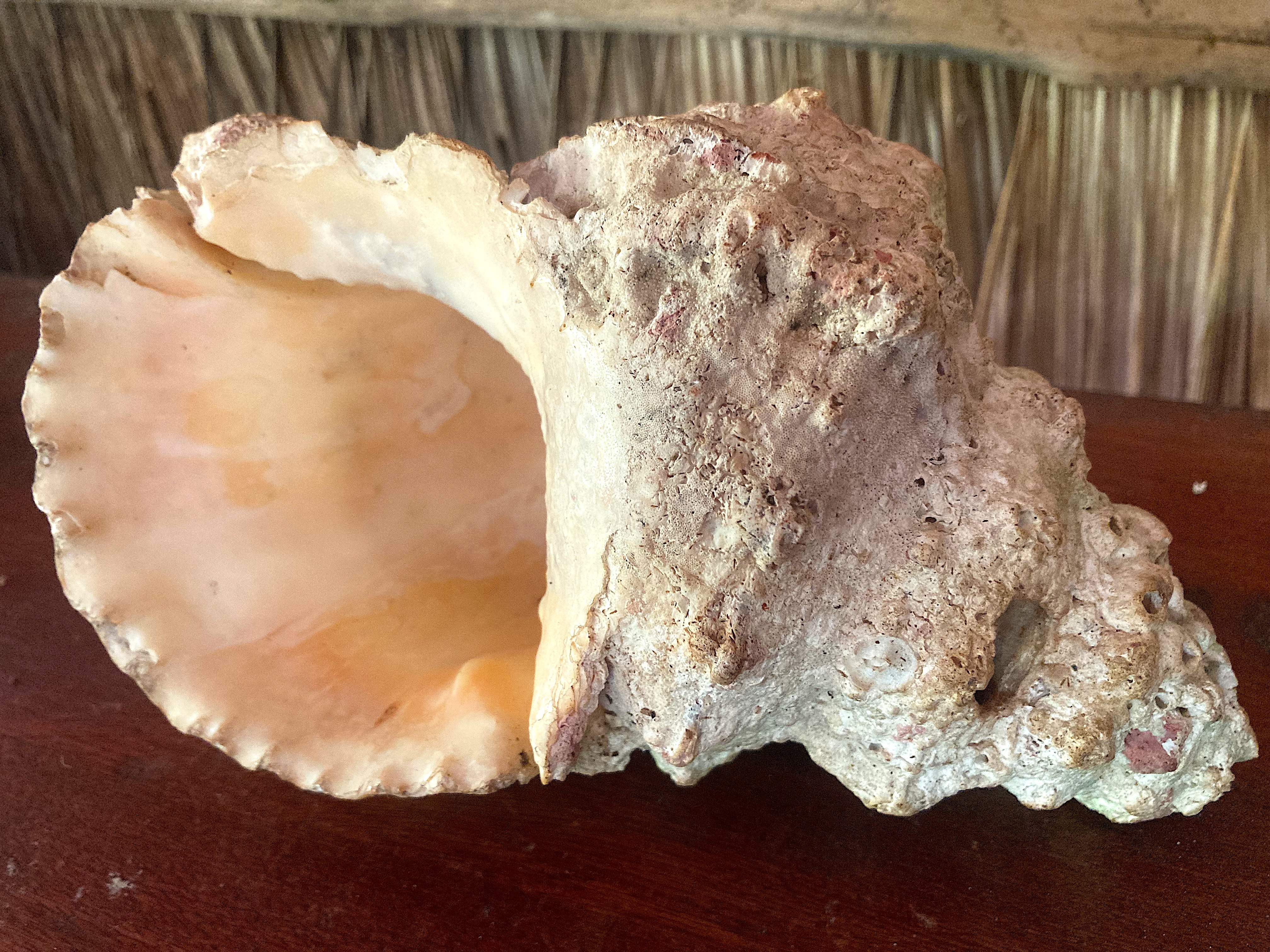
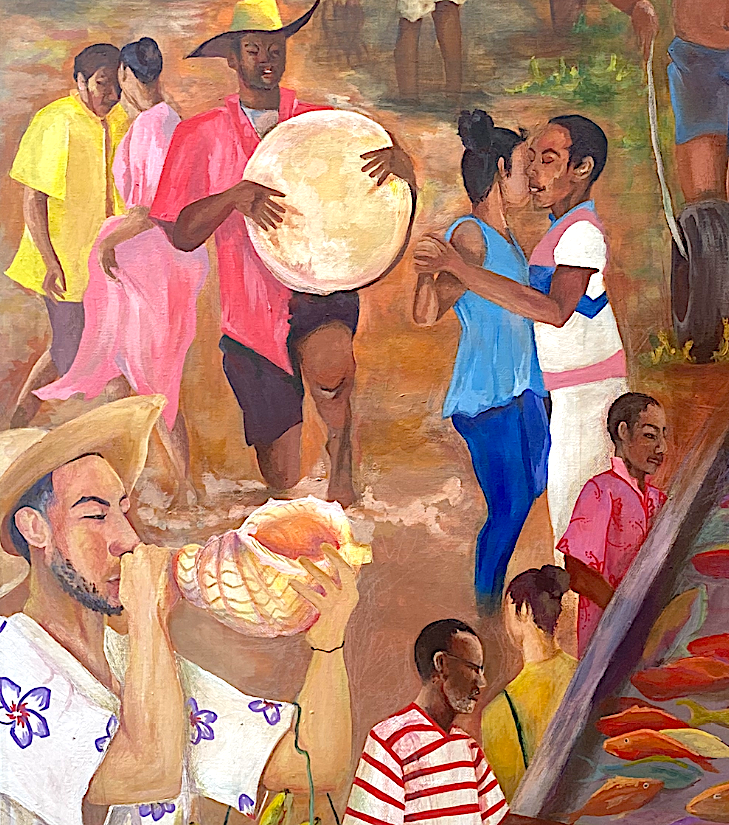
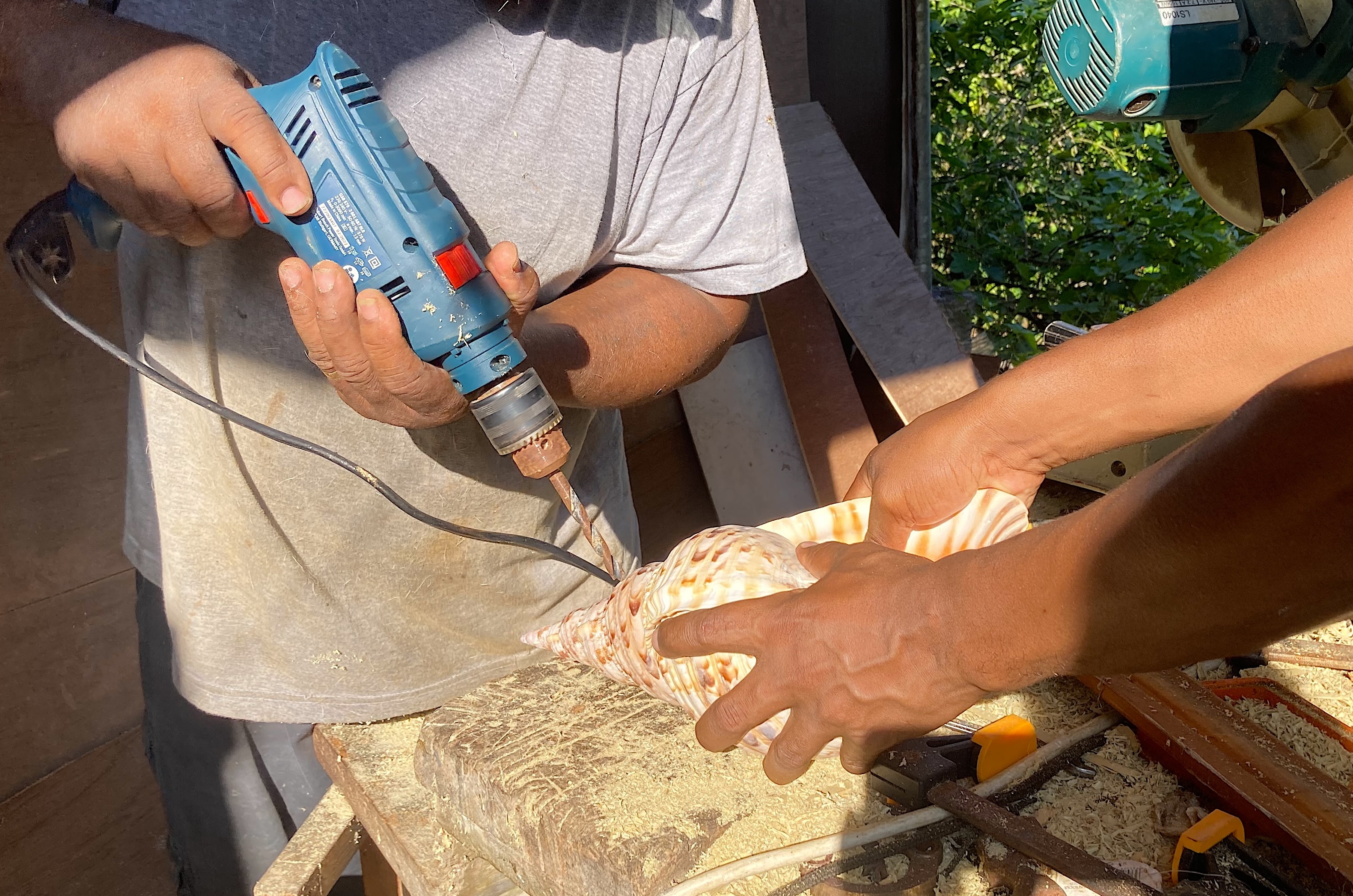
The practice of making trumpets from seashells is found in various regions of Asia, but also in Europe, among Native Americans, and on Indian Ocean islands such as Madagascar (antsiva), Mauritius (lansiv) and Reunion (lansiv). Given the Seychelles’ natural environment, it is highly likely that, in its early days, the lansiv was used for signalling (i.e. calling or transmitting messages, etc.) rather than as a musical instrument. It subsequently became part of the traditional repertoire when the sounds produced were varied by obstructing the opening of the shell’s coiled curves or transverse mouthpiece. Nowadays, it has completely vanished from Seychellois instrumental practices.
Mouloumba
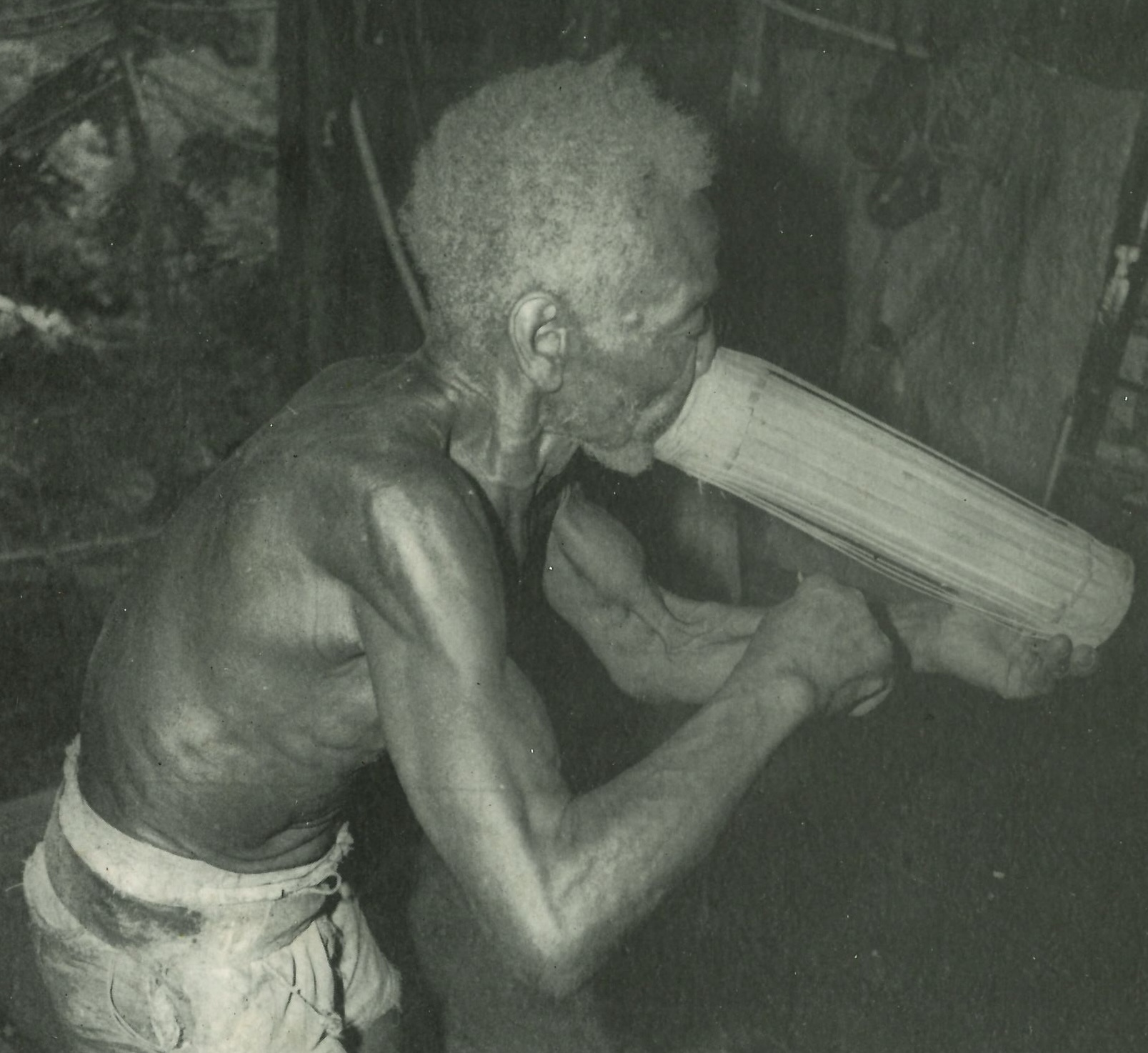
Although the mouloumba is classified as an aerophone due to its playing technique, it is actually akin to chordophones owing to its physical morphology. It thus belongs to the category of tube zithers, as it is made from a section of bamboo from which strings are cut, but left attached at one end and raised by bridges. These strings perform no melodic function; rather, they serve to imbue the player’s breath with a characteristic vibration, and they may also be struck with a wooden stick, making the mouloumba an idiophone. This idiochord tube zither is found in Oceania (on the island of Timor, for example, where it is known as a sassandou), and in Madagascar (valiha). Jean-Claude Mahoune[1] goes further by informing us that "the berimbeau de boca (mouth) said to be a wind instrument resembling the mbulumbumba from the province of Wila in the southwest of Angola is most certainly the mouloumba of Seychelles.” Holding one of the open ends against their mouth, the musician blows into the instrument and modifies the sounds produced as they see fit. Historically the mouloumba accompanied sokwe dancers. But much like the valiha, which was also once played across the archipelago, it has now slipped into obscurity.
 Practice of mouloumba, « Lulu lumulaka » by Jacob Marie, excerpt from the 33 Tours Seychelles 2 Forgotten Music of the Islands, Ocora 558 554.
 Diatonic and chromatic lakordeon
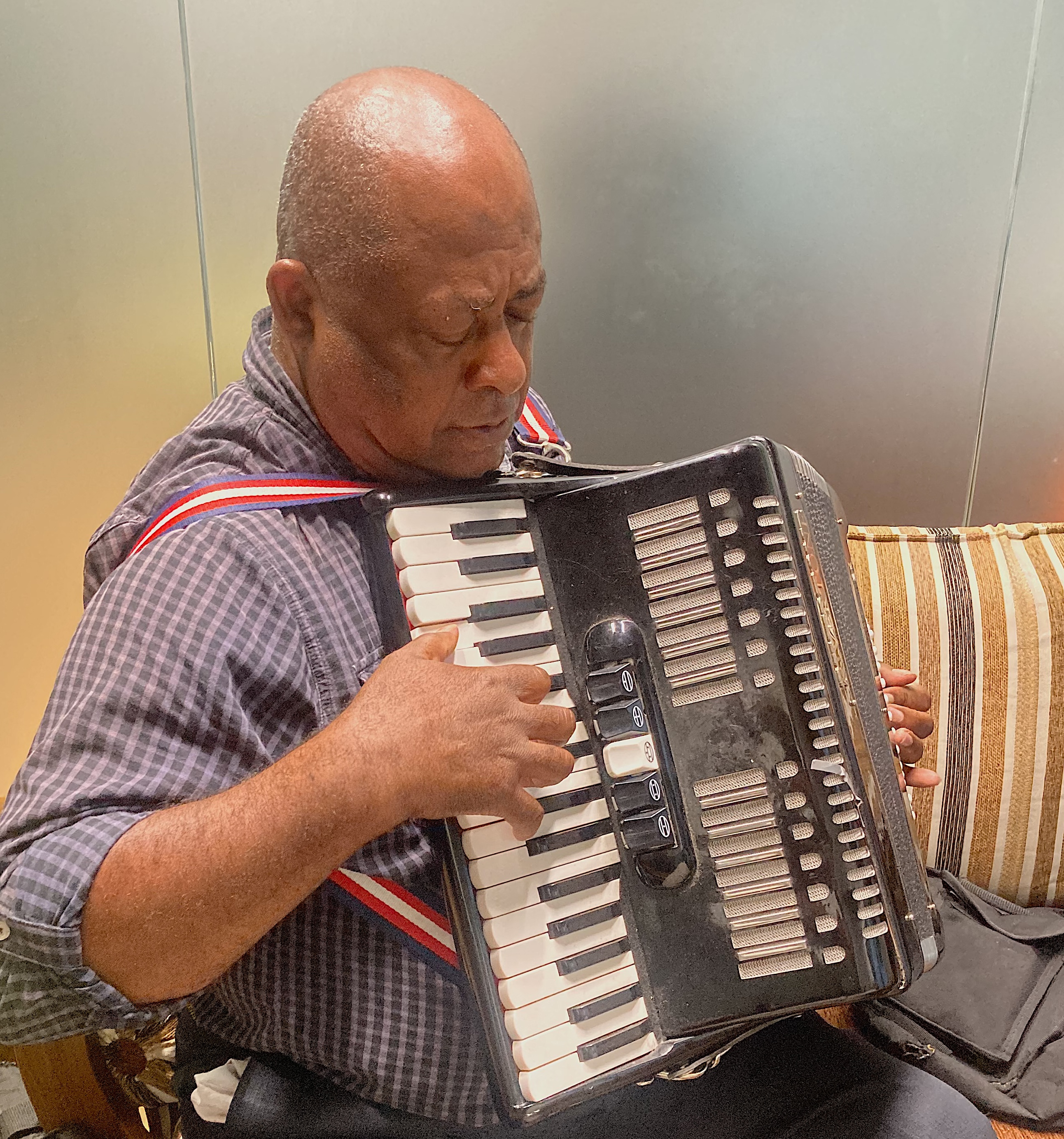
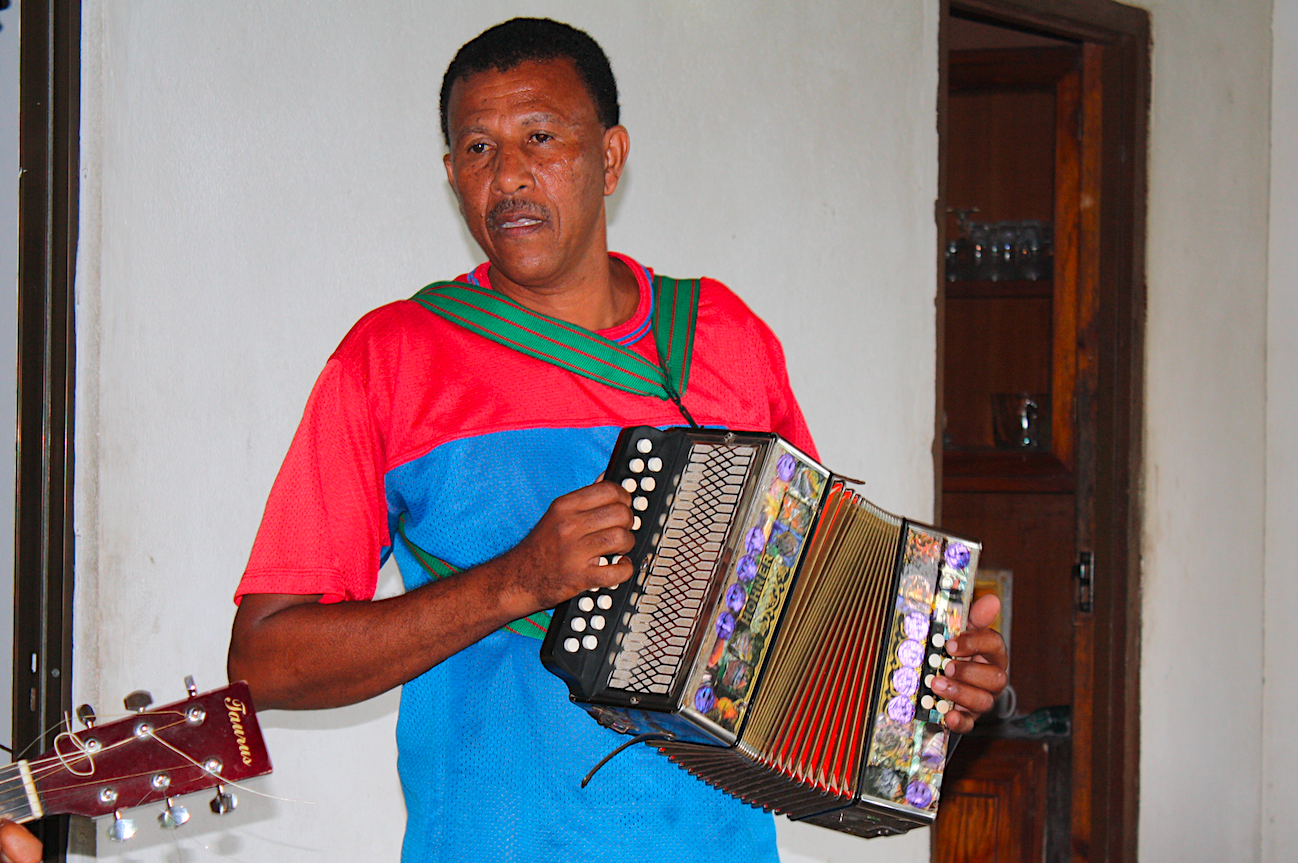
The diatonic accordion was imported from Europe to all the Creole islands of the Indian Ocean, and is known as kordeon in Rodrigues, râle-poussé, fouet fouet or râle le cœur in Reunion, and kordion or akordiaño in Mayotte. European sailors and travelers must have introduced the instrument – which came from German and Italian factories – first to Madagascar, and thence to the other islands of the region. Initially it was primarily used to perform fashionable European music and dances, before becoming creolised through kanmtole-specific dances. Nowadays it is very rare in the Seychelles, as is the chromatic accordion, which appeared from the 1960s onwards. Unlike traditional, handcrafted instruments, the accordion is expensive and uncommon because it must still be imported. It therefore carries a certain social status, and its presence in a sega or kanmtole ensemble is a measure of respectability for the musical event in question.
Harmonica
The harmonica, a wind instrument of European origin, became part of Seychellois musical practices during the 20th century. Easy to carry and play, it accompanied folk songs and traditional dances – such as sega or kanmtole – with light, catchy melodies. Today, however, it is seldom used in contemporary music, as it is considered outdated.
Fanie Précourt
[1] La Selve, Jean-Pierre, Musiques traditionnelles de La Réunion, Saint-Denis, Azalées, 1995 (p. 54).
