
Beyond the educational aspect, intergenerational transmission, artistic programming, and more broadly, cultural life, the vitality of Seychellois traditional dances and music is intimately linked to that of their musical instruments. In organology, an instrument is not simply a sound source: it is the product of a cultural, technical, and environmental ecosystem. Its construction, materials, uses, and the skills it employs all contribute fully to the musical identity of a territory.
published by
Fanie Précourt
23 octobre 2026
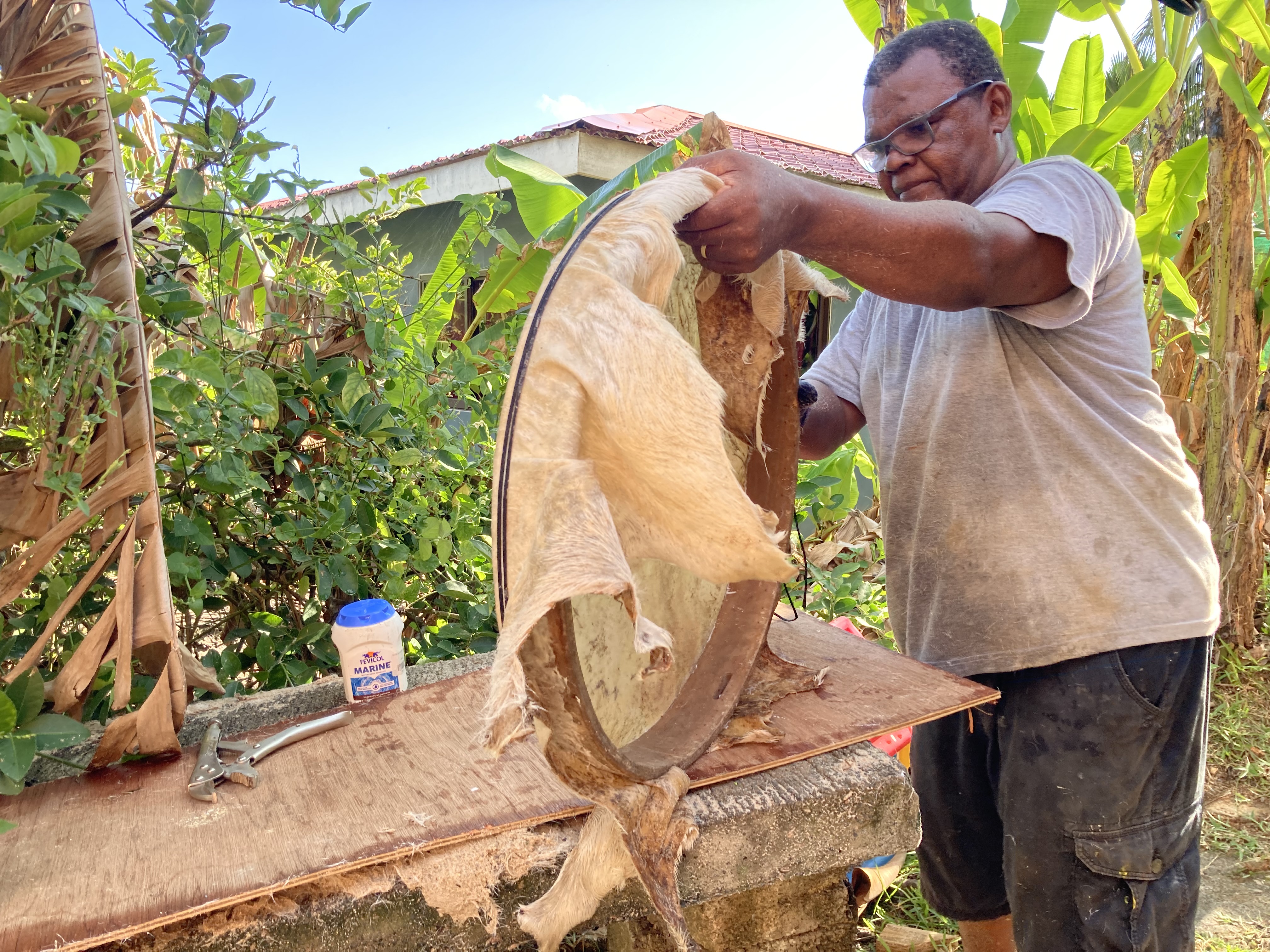
In the Seychelles, traditional instruments are the product of ancestral know-how, passed down orally, and deeply rooted in the ingenuity of the instrument makers. These makers utilize local resources (wood, seeds and plant fibers, animal hides) while developing techniques adapted to the climatic constraints and environmental specificities of the archipelago. Through these objects, a whole relationship with the land is expressed, a profound knowledge of tree species, natural cycles, and the acoustic properties of materials. The instrument is thus a reflection of a living culture, shaped by its environment. However, this fragile balance is now threatened by several converging forces.
On the one hand, there is a worrying decline in the number of instrument makers. Often elderly, these artisans possess valuable but largely unformalized knowledge, the transmission of which remains limited. The younger generation, less attracted to these demanding and economically undervalued practices, is gradually turning away from them. This break in the chain of transmission jeopardizes the very survival of these skills.
On the other hand, access to raw materials is becoming increasingly limited. The protection of certain wood species or plant resources, while necessary from an ecological point of view, complicates the manufacture of traditional instruments. Craftspeople must then contend with restrictions that compromise the sonic and structural characteristics of musical instruments.
Furthermore, the globalization of musical practices encourages the importation of standardized instruments, which are often less expensive and more accessible. Instruments like the djembe, widely distributed internationally, tend to supplant local membranophones such as the tanbour moutya and sega, whose manufacture is more complex and costly. This phenomenon leads to a form of sonic homogenization and a gradual marginalization of local specificities.
Finally, practical considerations also play a significant role. Modern percussion instruments, particularly synthetic ones, offer undeniable technical advantages: they are more resistant to climatic variations, require no special maintenance, and provide stable head tension. Conversely, Seychellois drums require specific techniques, such as heating the head before use, which can be cumbersome in contemporary performance contexts.
Faced with these challenges, an organological study focused on mapping instrument makers is essential. It allows us to identify the holders of this knowledge and contribute to the safeguarding, promotion, and transmission of this intangible heritage. Thus, preserving traditional Seychellois musical instruments is not simply about conserving objects, but rather about maintaining a complex relationship between culture, environment, and human know-how.
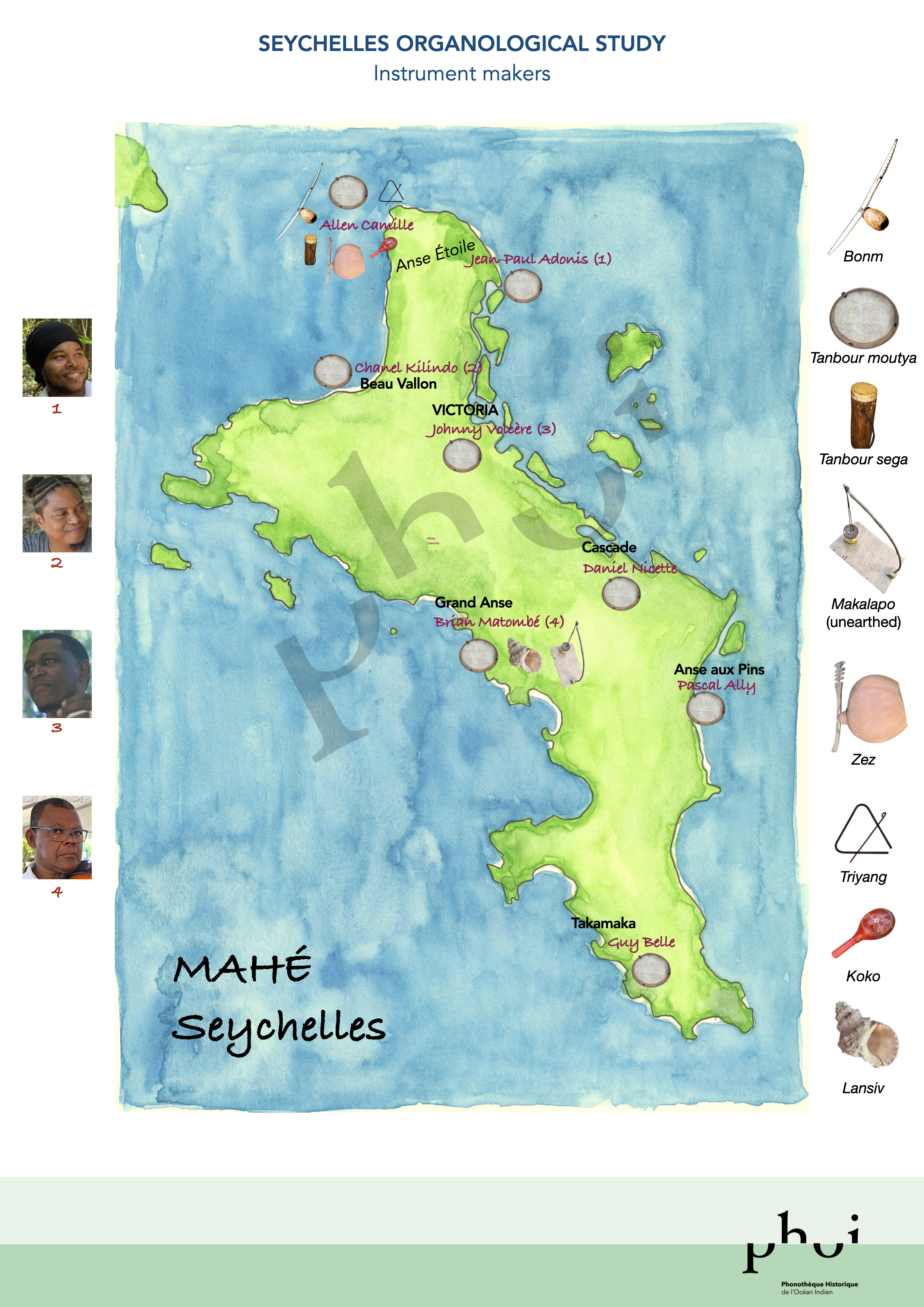
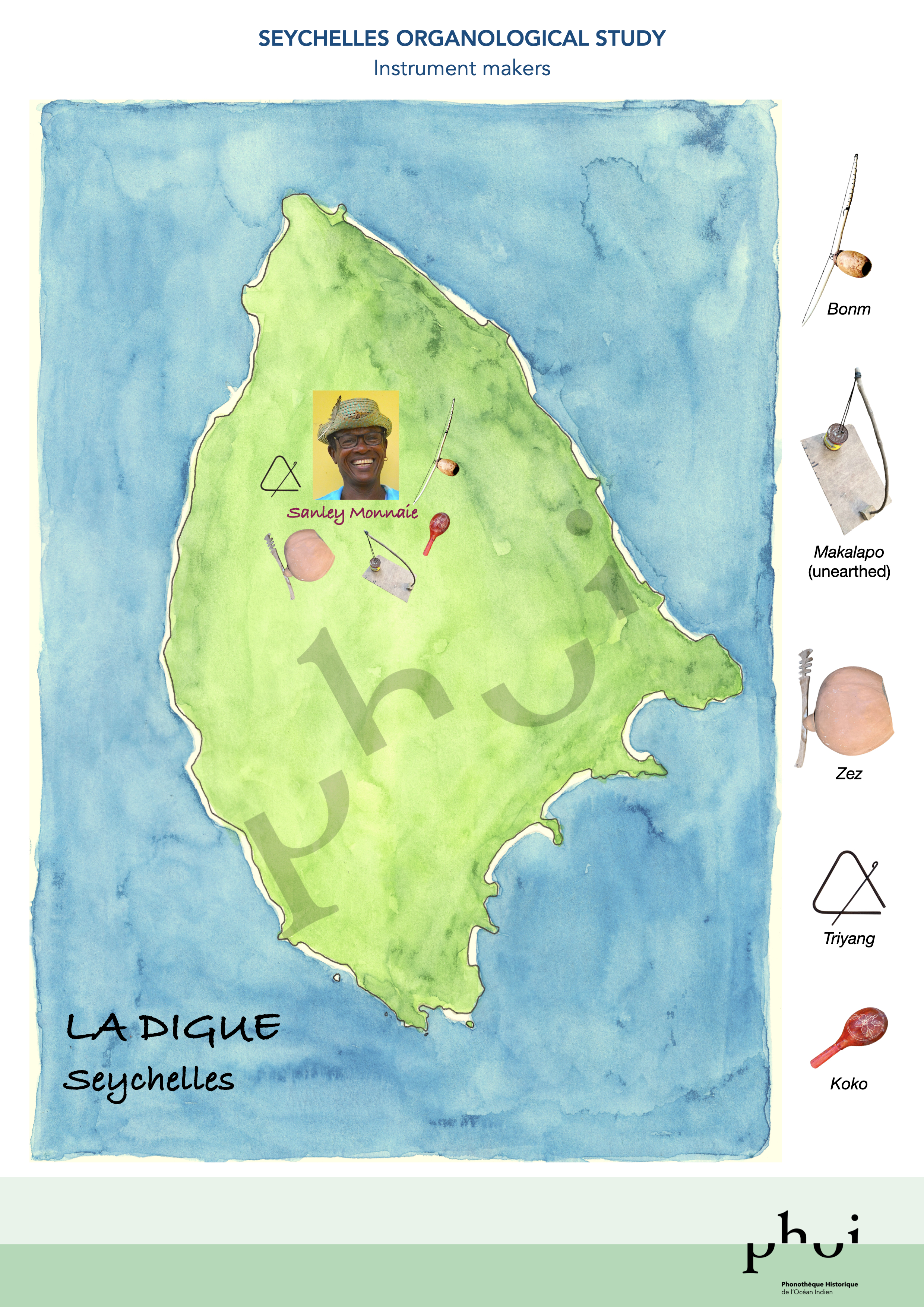
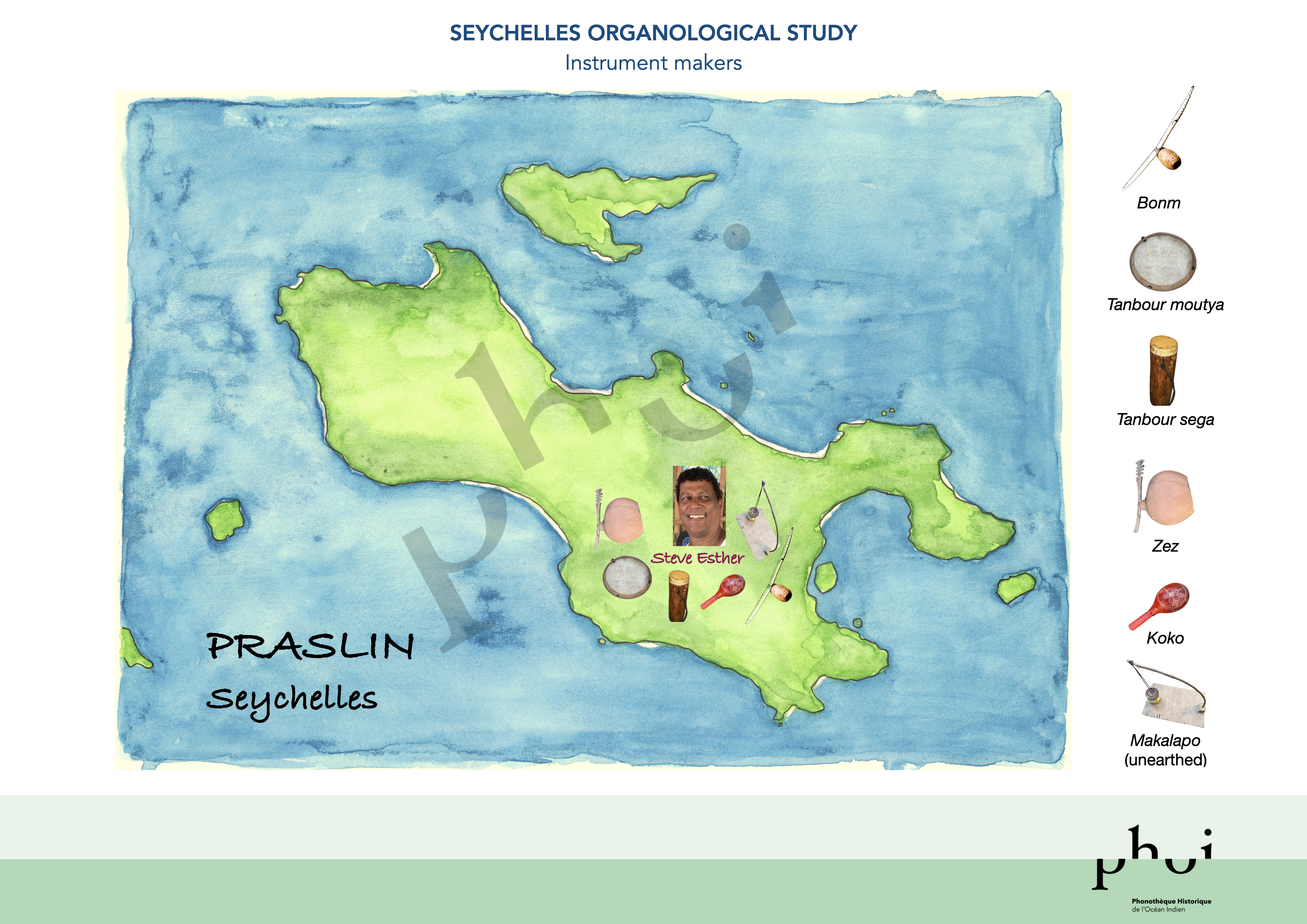
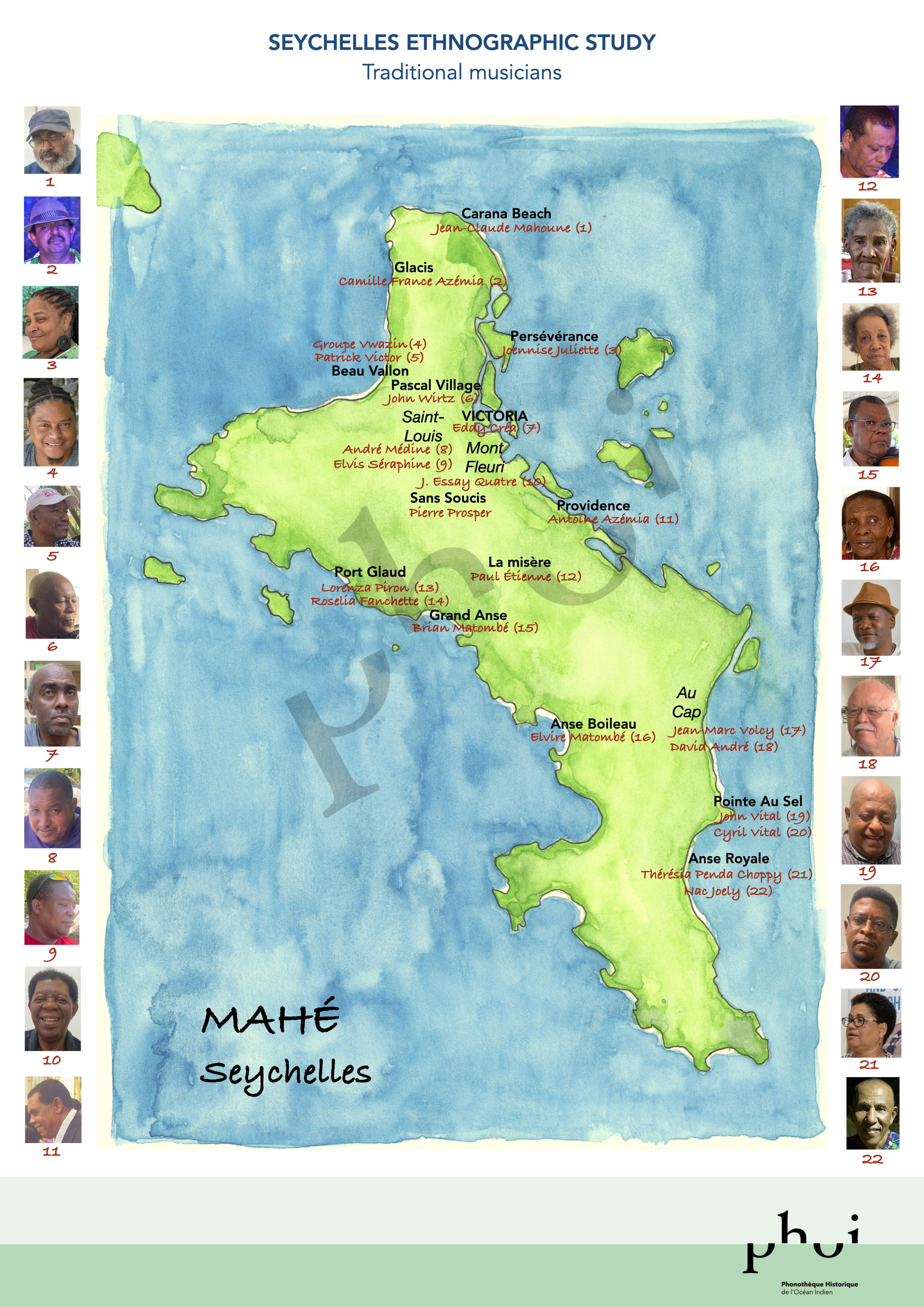
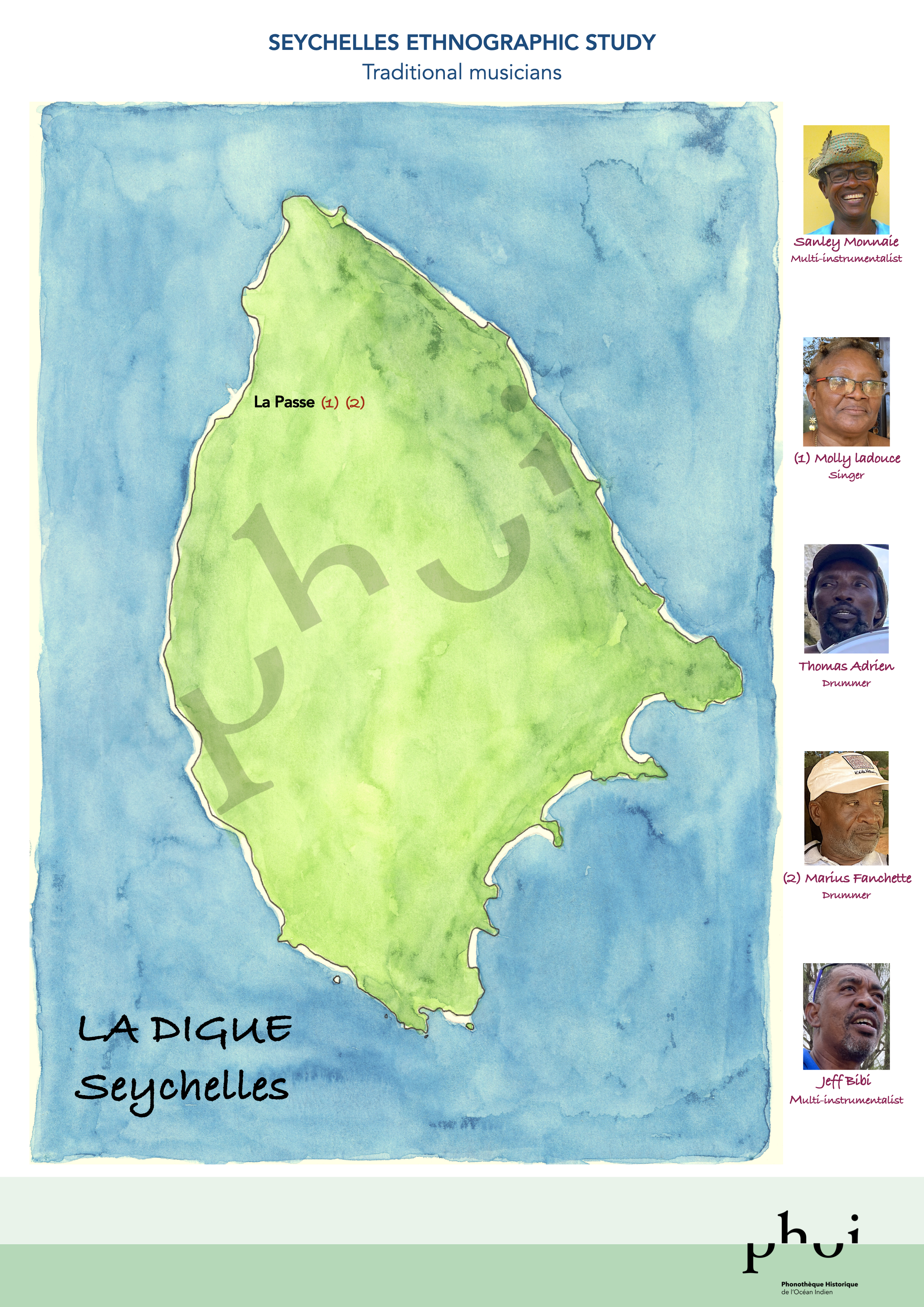
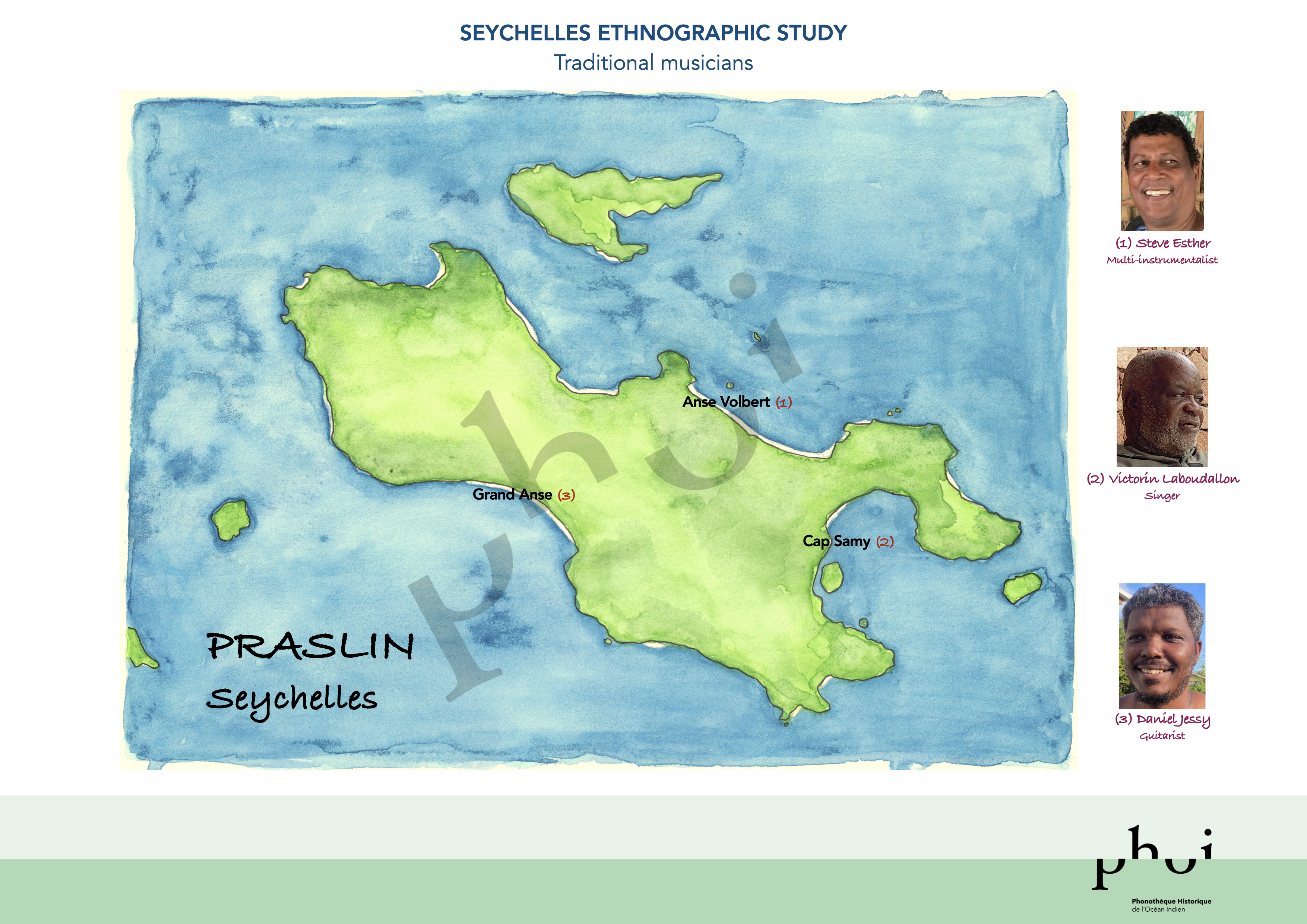
We also offer a non-exhaustive map of musicians playing traditional instruments. This approach seems essential to us because, beyond mastering playing techniques and associated repertoires, it is above all these performers, often self-taught multi-instrumentalists, who ensure the public appreciation of these instruments through their performances, their teaching activities, and their presence in cultural, festive, and institutional spaces.
Fanie Précourt
