
Located 1,700 km from the East African coast, 1,100 km from Madagascar and 2,800 km from the west coast of India, the Republic of Seychelles comprises four archipelagos: the Seychelles proper (consisting of some thirty islets – the main ones being Mahé, Praslin, La Digue, and Bird Island), as well as the Amirantes Islands, Farquhar Atoll and Aldabra Atoll. The country as a whole includes 115 islands and islets, spread over 400,000 km² of ocean, but with a total land area of only 452 km².
published by
Fanie Précourt
17 juillet 2026
The Seychellois population today stands at 135 000 inhabitants, of whom 80 000 live on Mahé. The Seychelles people are the product of intermingling between the French (occupiers from 1756 to 1810), the British (colonial rulers from 1810 to 1976), and those of Afro-Malagasy origin (descended from slaves brought between 1770 and 1835), as well as Indian, Comorian, and Chinese minorities – the latter being descendants of indentured labourers recruited during the period 1840 to 1930.
The population is predominantly Catholic (90 %), and Seychellois Creole is spoken by 90 % of inhabitants, while French and English are also used by 40 % and 30 % respectively.
Since becoming the Republic of Seychelles in 1976, the country has earned a reputation for its ancestral and multi-ethnic musical culture, which is firmly rooted in migratory flows from the colonial powers, as well as exchanges with neighbouring islands and nations. Within this sphere of shared cultural identity, Seychellois musical practices lie at the crossroads of African, Malagasy, Indian, and European heritage.
The archipelago is home to a variety of musical instruments, characterised by their materials, shapes, manufacturing techniques and sounds. These instruments, born of their makers’ ingenuity, present unique features that we invite you to discover through four articles, each focusing on a different classification: membranophones, idiophones, chordophones, and aerophones.
Idiophones
The idiophone family includes instruments that produce sound by the vibration of their own bodies, independently of strings or membranes. Two traditional idiophones in the Seychelles that remain in widespread use are the triyang and the koko. These instruments, generally crafted by hand, bear witness to local workmanship, and play an important role in transmitting Seychellois musical practices.
Triyang
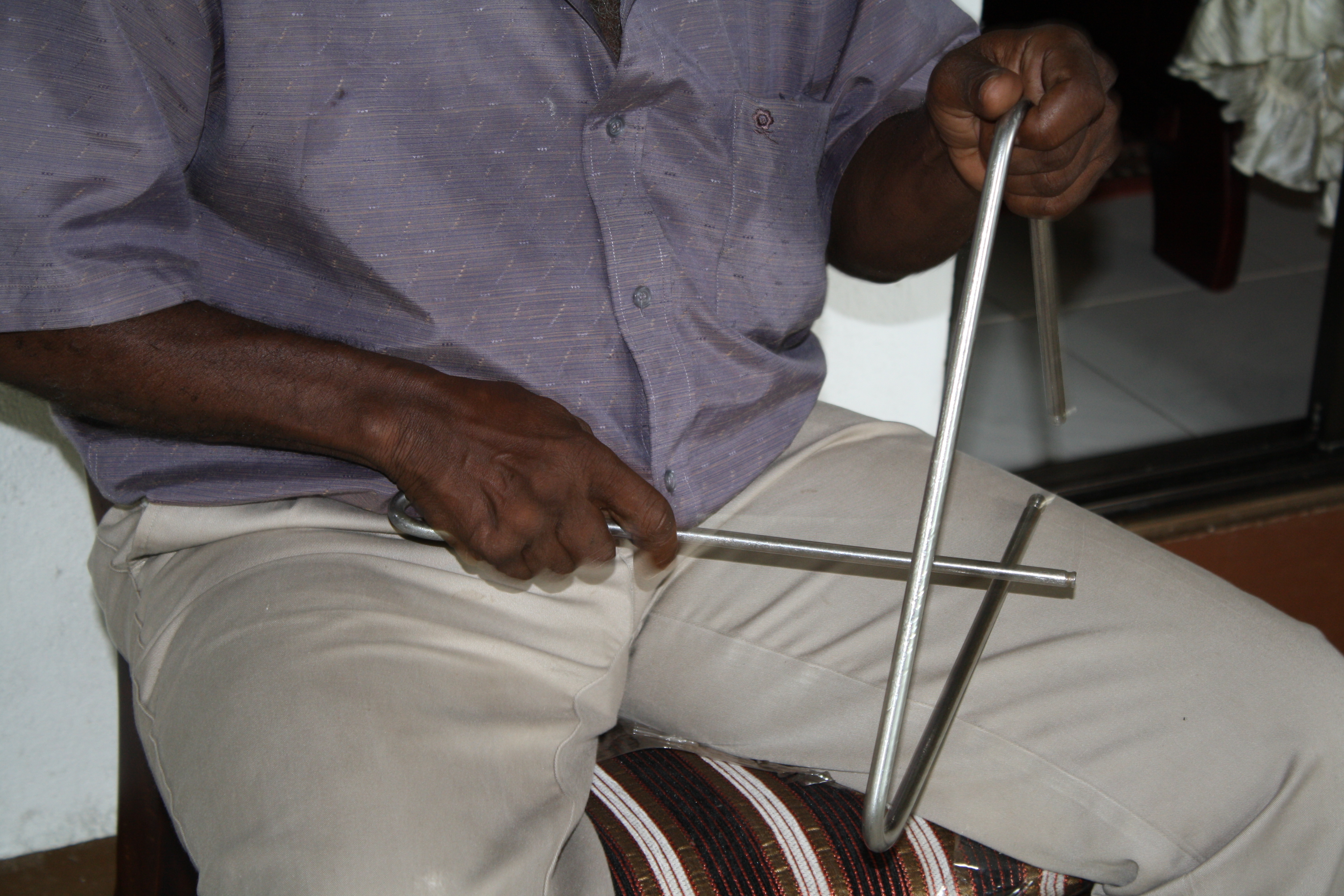
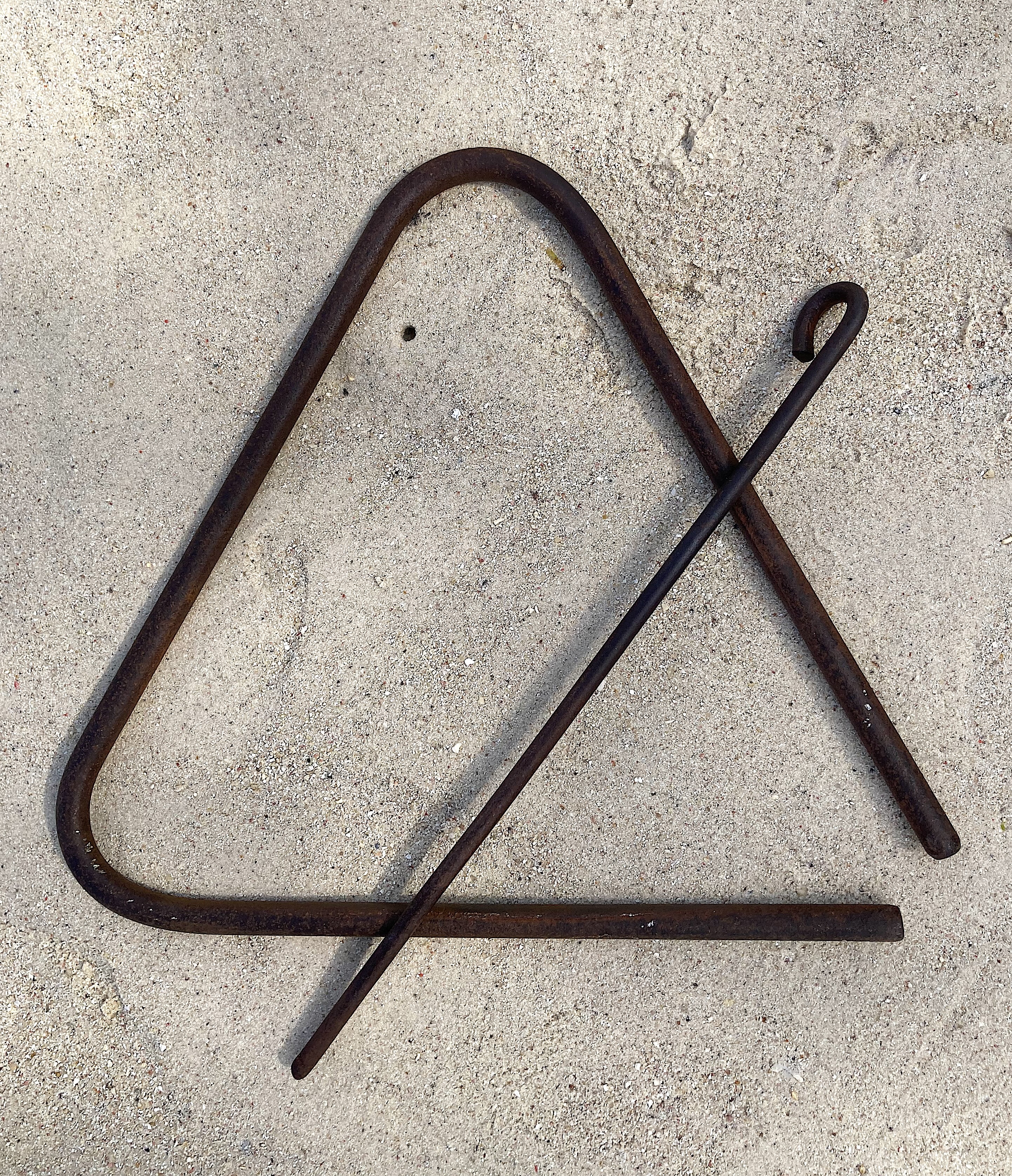
The triyang (tryang or triangle) forms part of the legacy left by the European population at the end of the 19th century within the Indian Ocean. It quickly became widespread in all genres of Seychellois music, and eventually became indispensable to kanmtole, moutya and sega. Initially the triyang was only used with kanmtole to signal changes in choreography. Later it became established as a regular rhythmic marker in an instrumental ensemble. Triyangs were once crafted locally in various sizes by blacksmiths, instrument makers, and even the musicians themselves, fashioned from heavy steel rods (of the type often used for reinforcement in building work), but they are now mainly mass-produced and imported from Europe.
Koko and kaskavel
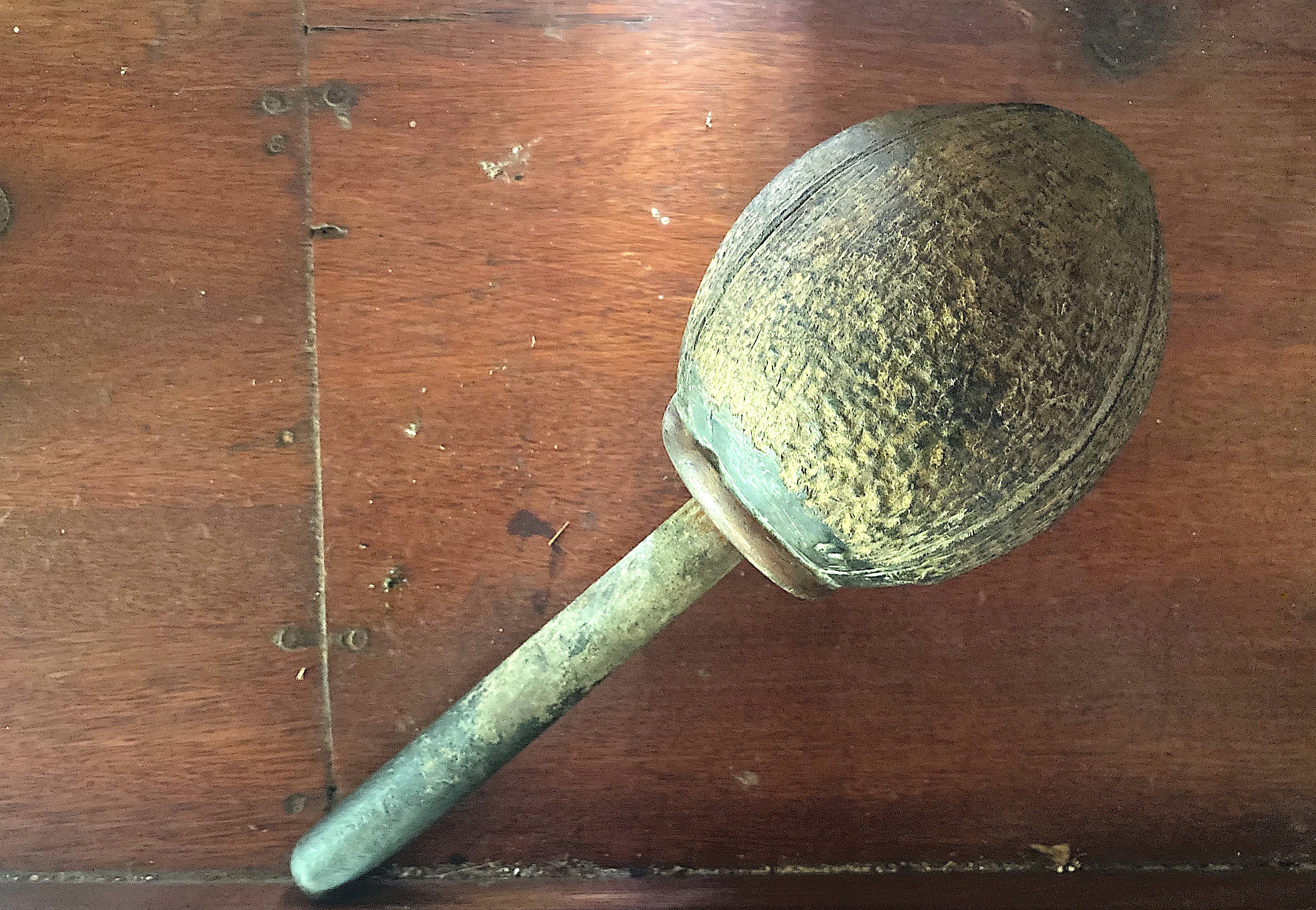
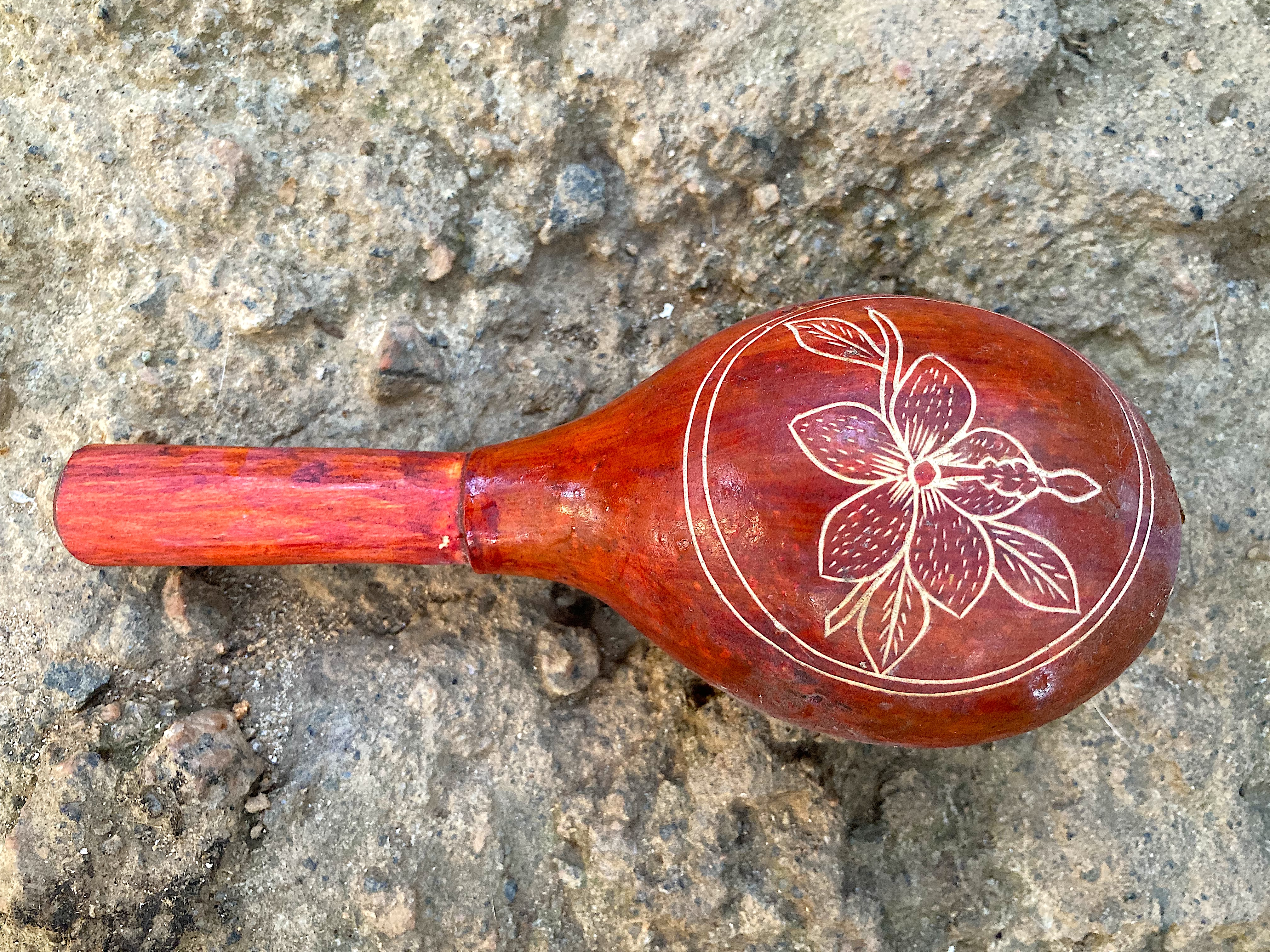
The koko (comparable to maracas) and kaskavel (made of woven basketry; found in Mauritius and Rodrigues under the name katya-katya; kaskavel, kavir or kavia in Reunion; and kahemba or kandreho in Madagascar) belong to the rattle family, and are idiophones sounded percussively through indirect shaking. Once restricted to performance with the bonm musical bow, the kaskavel later evolved into an instrument in its own right, capable of being played independently. While its timbre is similar to that of raft-shaped rattles (such as the maravann, kayamb, or raloba), it has become increasingly rare since the 1960s, largely due to the popularity of the koko. Today, while the koko still survives in a limited form, the kaskavel is no longer played.
Fanie Précourt
