
published by
Fanie Précourt
25 août 2026
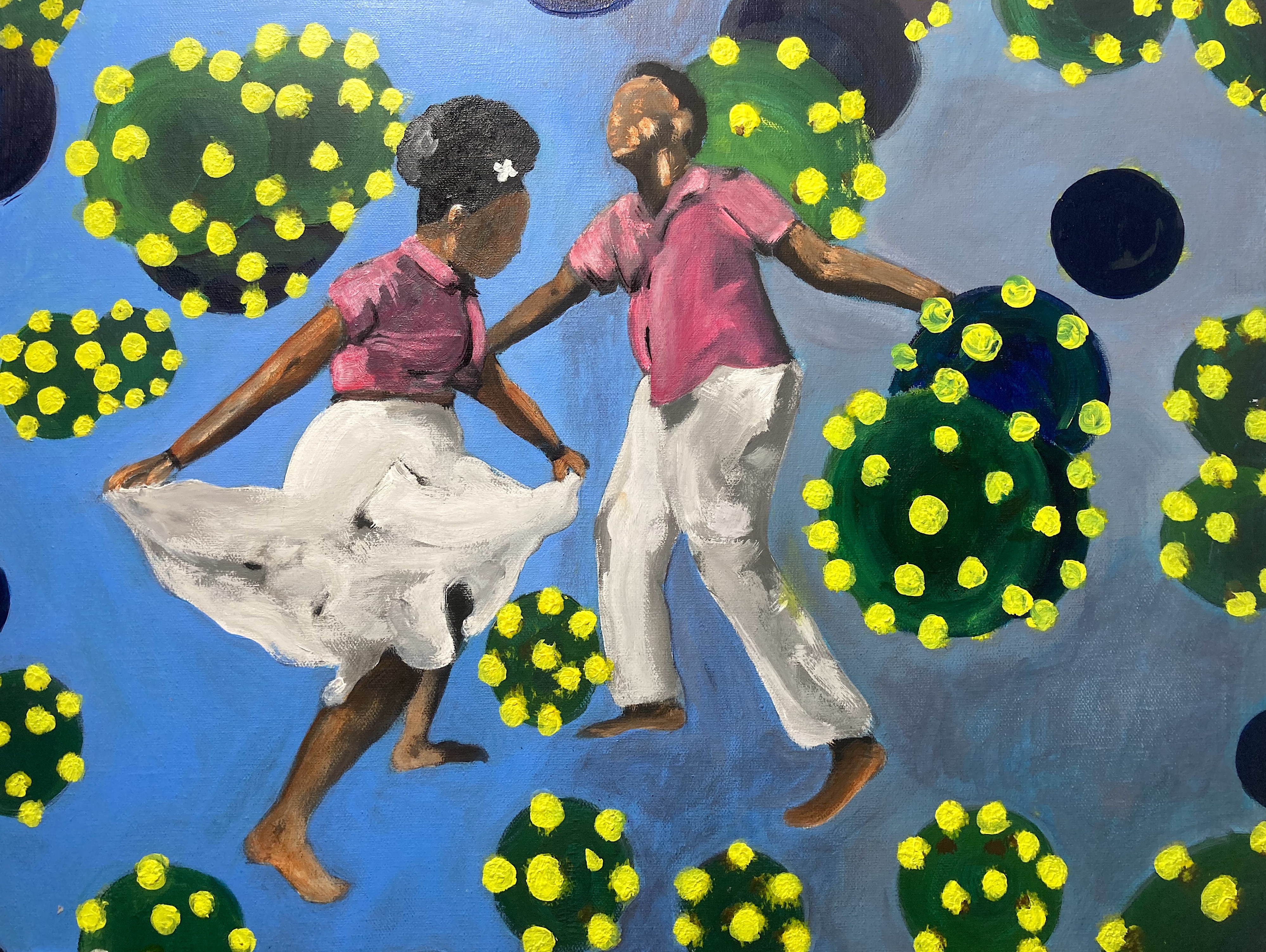
Kanmtole
The term “kanmtole” or “kamtole” refers to a collection of courtly, parlour and country-style dances. Many of these dances were once performed at the British Royal Court and the salons of Europe, while the country dances were likely derived from those of England, Ireland, and Scotland. Ever since they reached the Seychelles archipelago – some as early as the 18th century – these musical and choreographic repertoires brought by the British were transformed (or, more accurately, ‘creolised’) by the Seychellois people who made them their own, infusing them with Afro-Malagasy stylistic influences.
The dance names are revealing in this respect: the Schottische became kotis, the Écossaise became kosez, and the Polish mazurka became mazok. Thus, the kanmtole opens with a vals (waltz), then includes a double and simple kotis, a mazok, a polka, and a jaz (one-step). It continues with four country dances: annavan kat (forward four), annavan de (forward two), men drwat (right hand), men gos (left hand), together with a kosez (Écossaise), a berlin, and a pad'kat (four-step). The repertoire may also include a quadrille or its constituent parts, such as a galo (gallop, the last figure of a quadrille), a final (the last figure of a quadrille), a lansyé (English Lancers quadrille), a boulanger (La Boulangère, the fifth figure of a quadrille) as well as a polonez (Polonaise), a karyon, and a rumba (samba).
 Lnasye (Quadrille des Lanciers créolisé) in « Leve tradisyon vol. 1 ».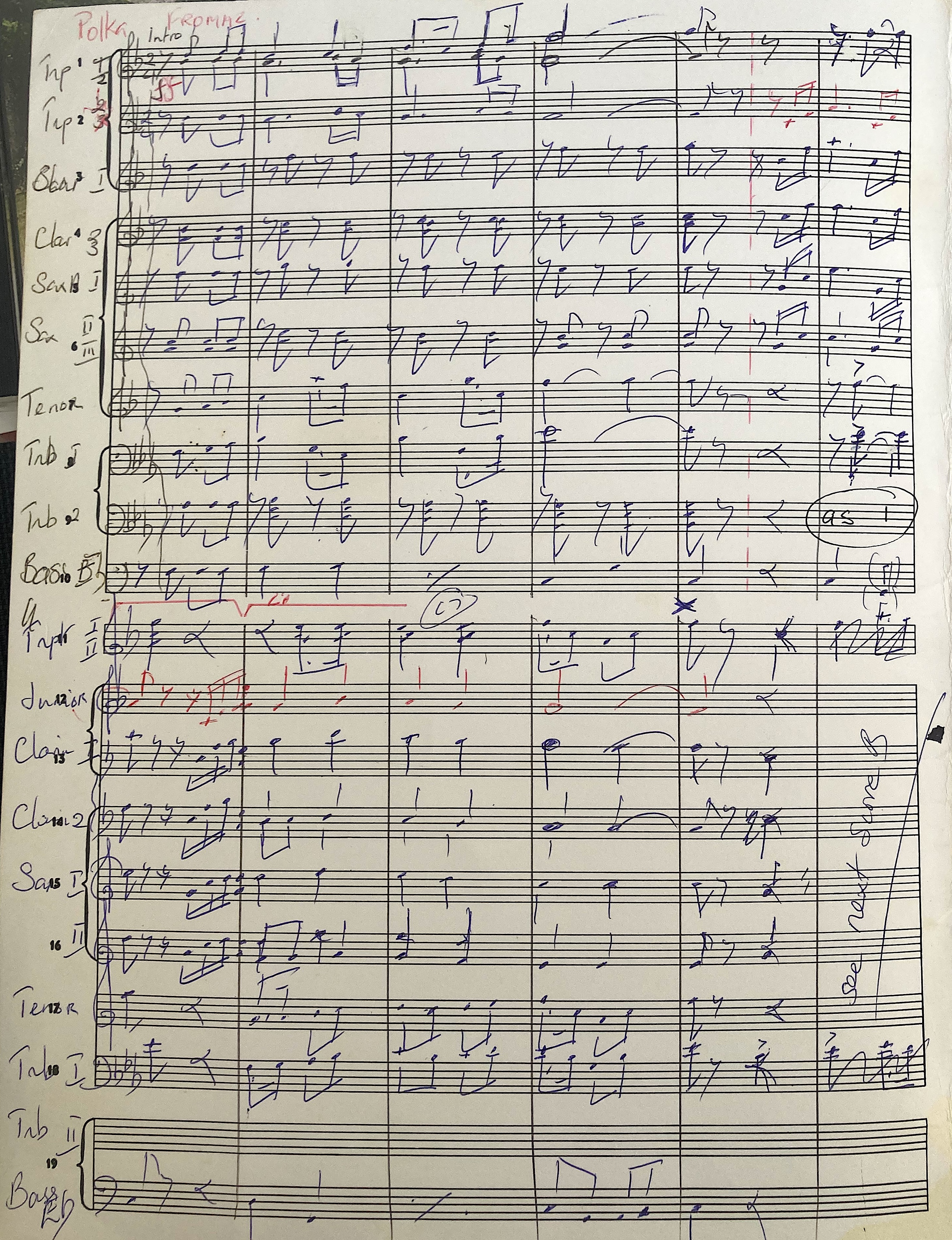
The kanmtole is traditionally performed by an ensemble consisting of two violins (vyolon), a mandolin or banjo (benndyo), a triangle (triyang) and a bass drum (gros kes), but is also sometimes played with an accordion (lakordeon), guitars (generally replacing the banjo and/or mandolin), and a drumset (often used instead of the bass drum). A man known as a komander (‘commander’) may lead the dances; his role is to guide the dancing couples through the choreography by calling out the steps.
Romances or romans
Seychelles romances are in French, as they are a legacy of former colonial settlers from France who moved to various islands in the Indian Ocean. They often made their way through Reunion and Mauritius before reaching the Seychelles, as can be seen in historical documents such as the romance notebooks and travellers’ journals in which they were recorded. The way these songs were passed down orally over several generations also shows that they have been creolised since their origins. However, their core subject matter – love, sorrow, conflict – has remained unchanged.
Having come close to disappearing in the early 20th century, romances are now mainly the preserve of older people. They are, however, enjoying a modest comeback, fuelled by growing awareness of the importance of passing them on from one generation to the next.
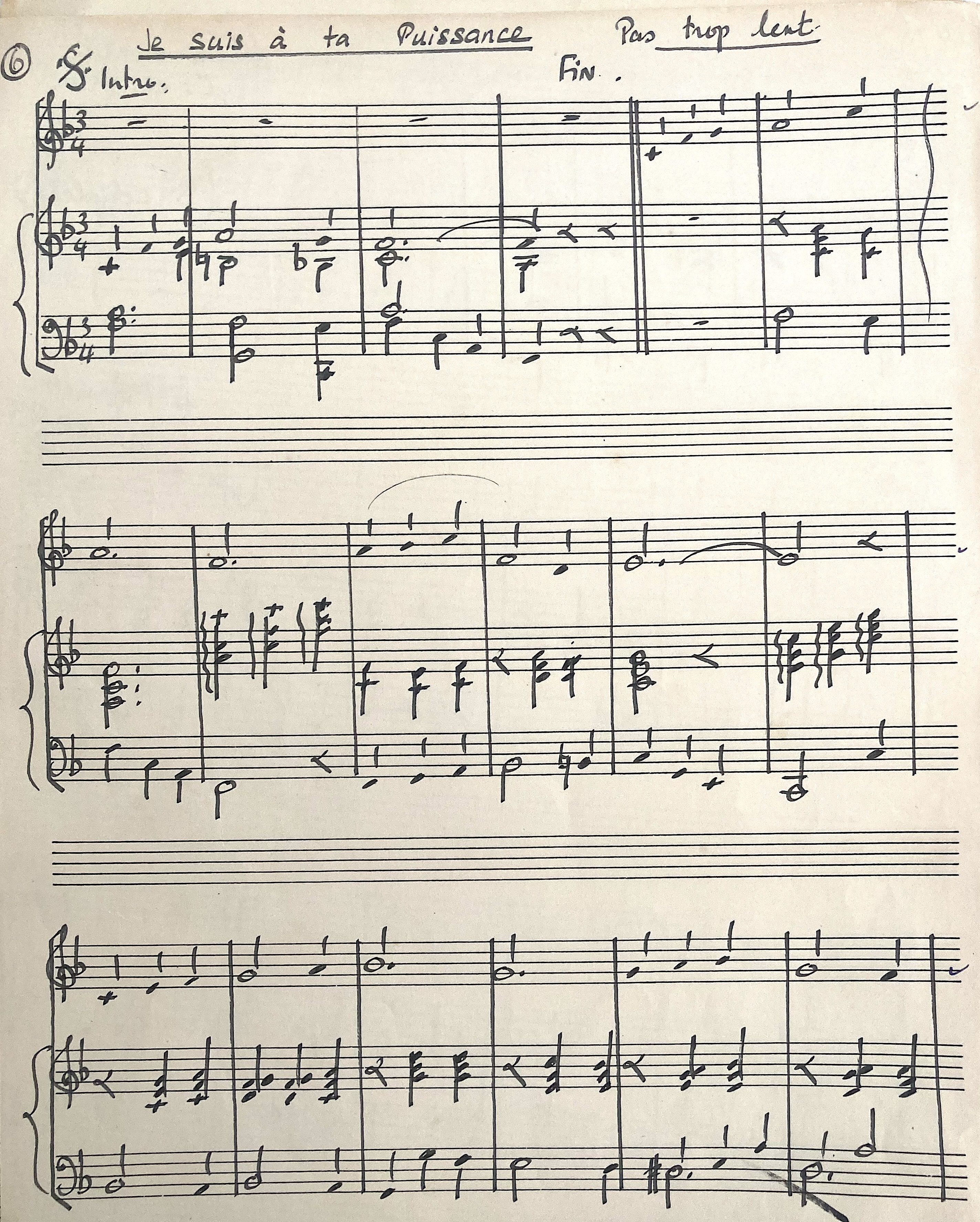 Romans « Je suis à ta puissance » by Elvire et Brian Matombé, Mahé, 10/25.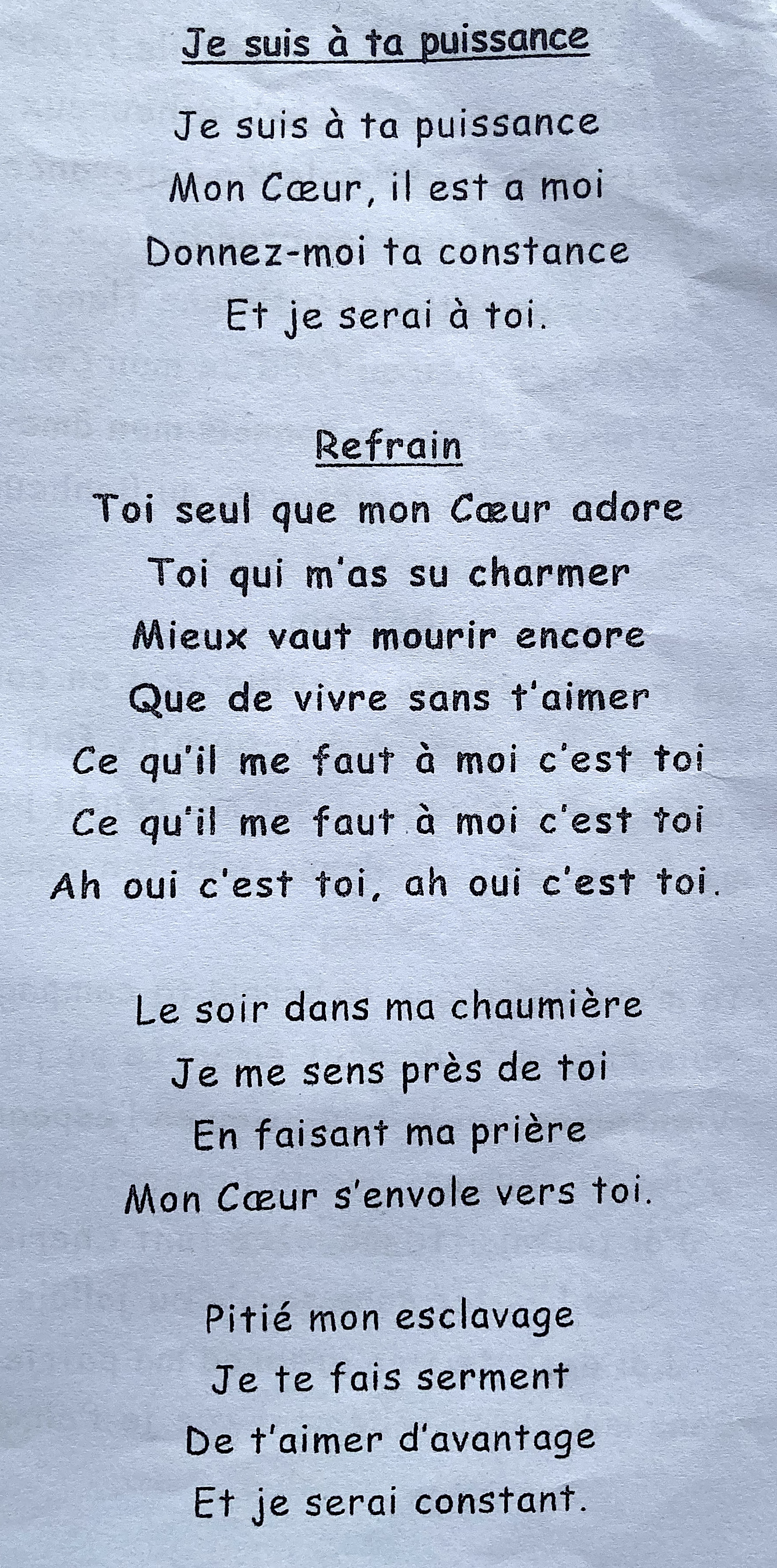
/index.php/Detail/representations/19217
Marches
There are two types of march: military marches played in parades – a (fading) legacy of British colonial rule; and wedding marches of European origin, which are essentially bridal serenades.
Marche « Laserenad », in Retour zarden di rwa - souvenir Festival Kreol, 1999. Musical practices of Afro-Malagasy influence
Sega
The contemporary genre of sega emerged from a fusion between sega tranble or sega otantik – a fast-paced dance of Afro-Malagasy origin that induced a trance and has now died out – and the influence of European melodies. In its early form, sega was comparable to moutya (see below for more on moutya). Danced outdoors to the beat of tanbour sega drums, older generations also referred to this dance as makwa, reflecting its Bantu origins. It was not until the 20th century that the repertoire underwent a marked transformation with the advent of electrification. Nowadays, sega is performed indoors with melodic instruments such as banjos and violins, as well as electrified instruments like guitars and synthesisers, and has become more modern.
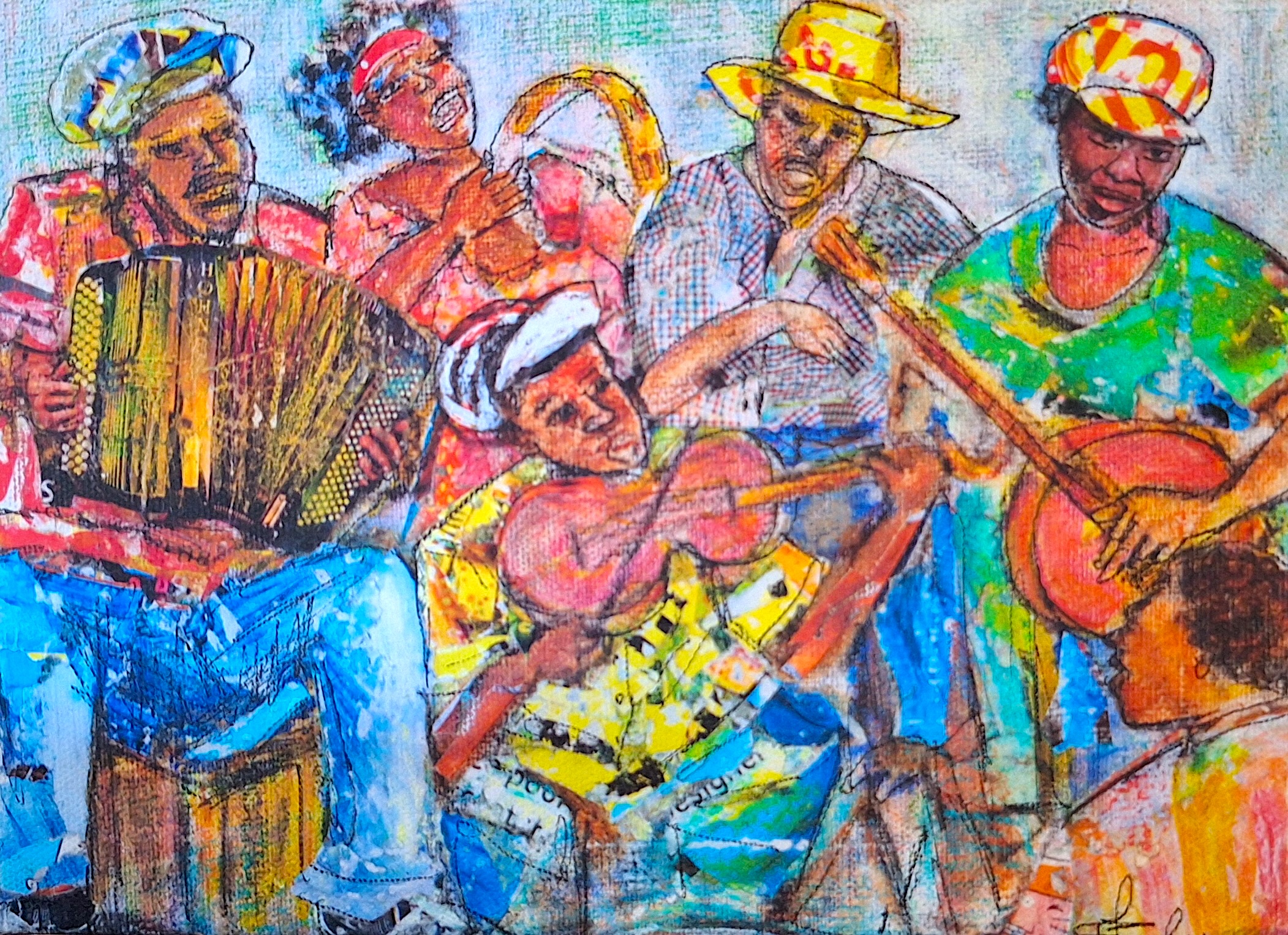 Sega « Danse nous moutia », by Patrick Victor, in 45 T ISSA 6008.
 Moutya
In terms of its history and style, the moutya can be considered the equivalent of maloya in Reunion, séga tanbour in Rodrigues, and even sega typik in Mauritius. Both a dance and a music genre, it was originally the domain of the enslaved. At day’s end, they gathered round a bonfire for moutya, using the heat to tauten the skin of the eponymous drum. The authorities attempted to ban the practice, deeming it overly erotic. In fact, the researcher Bernard Koechlin notes that, according to various accounts, moutya was long considered a suppressed form of music and was tolerated only on public holidays, from sunset until 9pm, on the pretext that it involved ‘immodest’ dancing (see “Seychelles 2 - Musiques oubliées des îles”, Ocora C558 554, Harmonia Mundi).
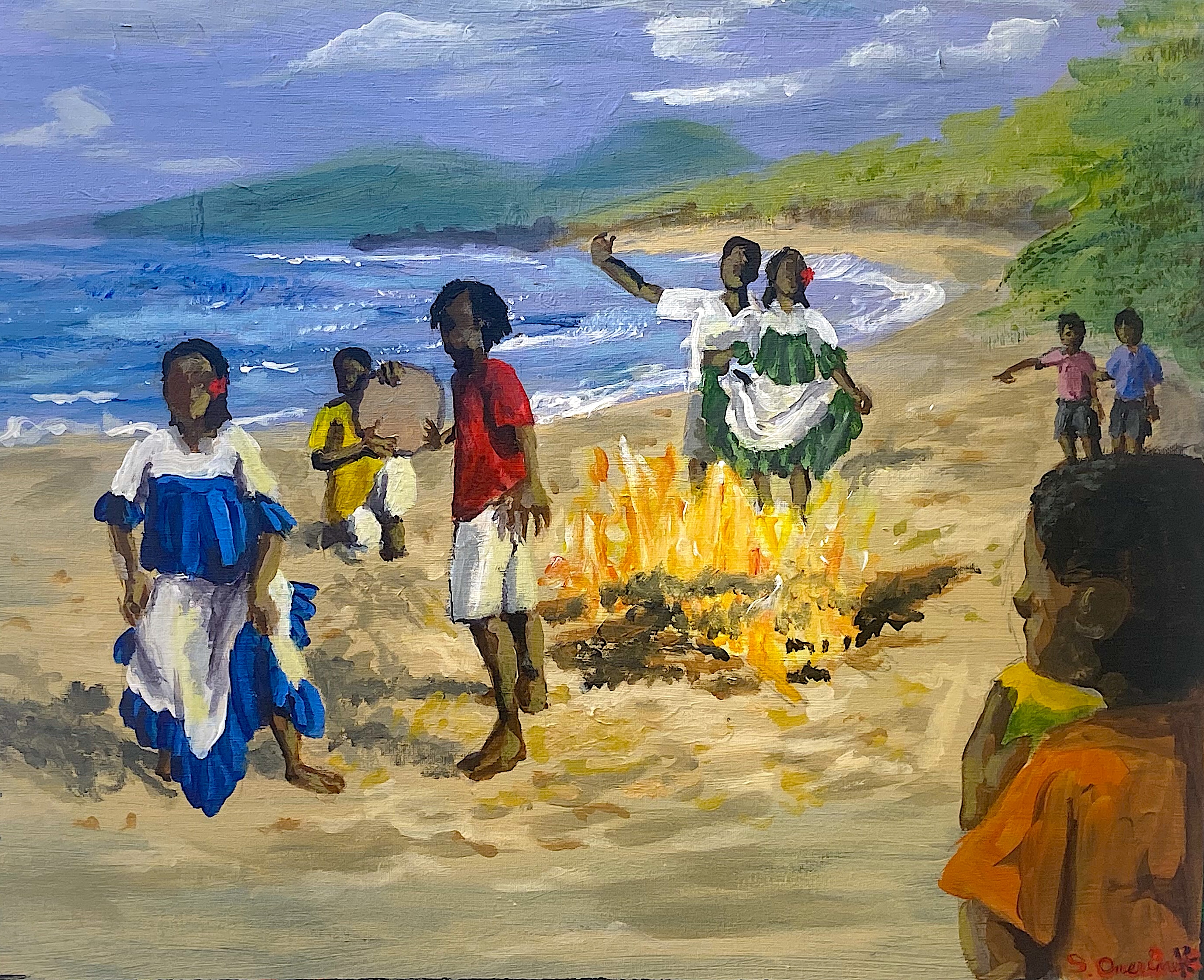
“The dancers sit in a circle on the ground. When they hear the sound of drums, two men get up and move to the centre. One of them puts his hands to his mouth and calls out: “Ehhh, hey, hey”. The other man then begins to recite the words of either a well-known song or one he has made up himself. His companion repeats the words, but sings them. When the song is over, the two men dance towards the seated women. They hold out their hands to them, making sounds similar to monkey cries. All the other men sitting in the circle spring to their feet and start calling out to the women, but never touch them; meanwhile, the women keep backing away, rolling their hips provocatively. The men sing in unison, and the women repeat the words. The singing begins softly, eventually building to a higher note. The dancers sing and pound their feet, swaying rhythmically to the drums. Their upper bodies barely move, while their hips and buttocks gyrate up and down, back and forth.” (Excerpt from “Dance the Moutya”, Seychelles Bulletin - 30 June 1973).
Moutya « La bouette fini tombe » in Seychelles 2 Musiques oubliées des îles, Ocora 558 554. 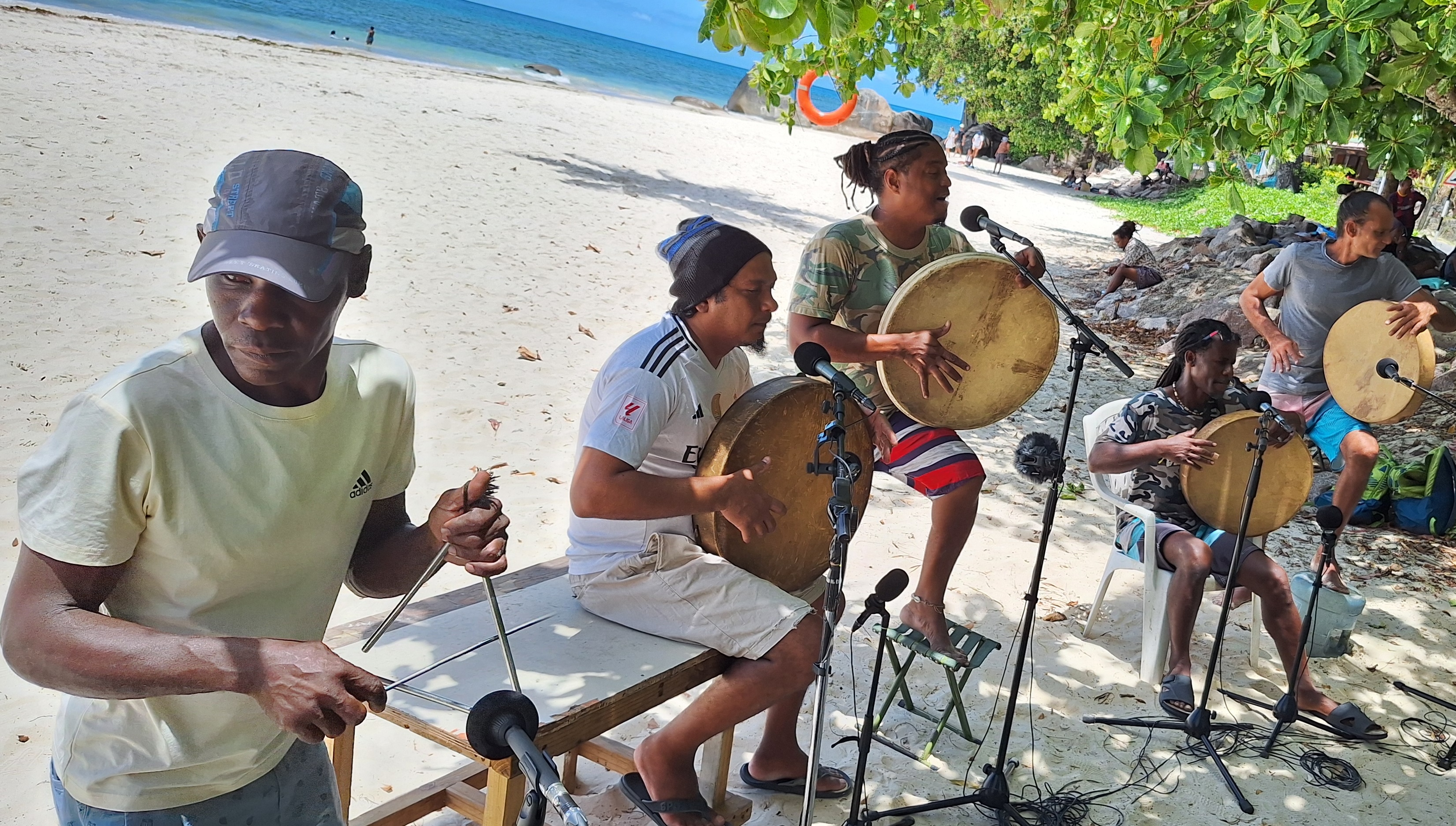
Sanson bonm or zez
This intimate, small-scale vocal tradition derives its name from its musical accompaniment: either a bow, the bonm, or the zez, a type of stick zither. Traditionally sung by those of Afro-Malagasy descent, this monodic chant may take the form of a lament or a sentimental piece, with a repetitive musical backing that mainly plays a rhythmic role. Like the instruments used to perform them, these chants have become rare and are now critically endangered.
Sanson zez, « Pardon mon mari pas battre moi comme ça » 33 T Seychelles 2 Musiques oubliées des îles, Ocora 558 554. 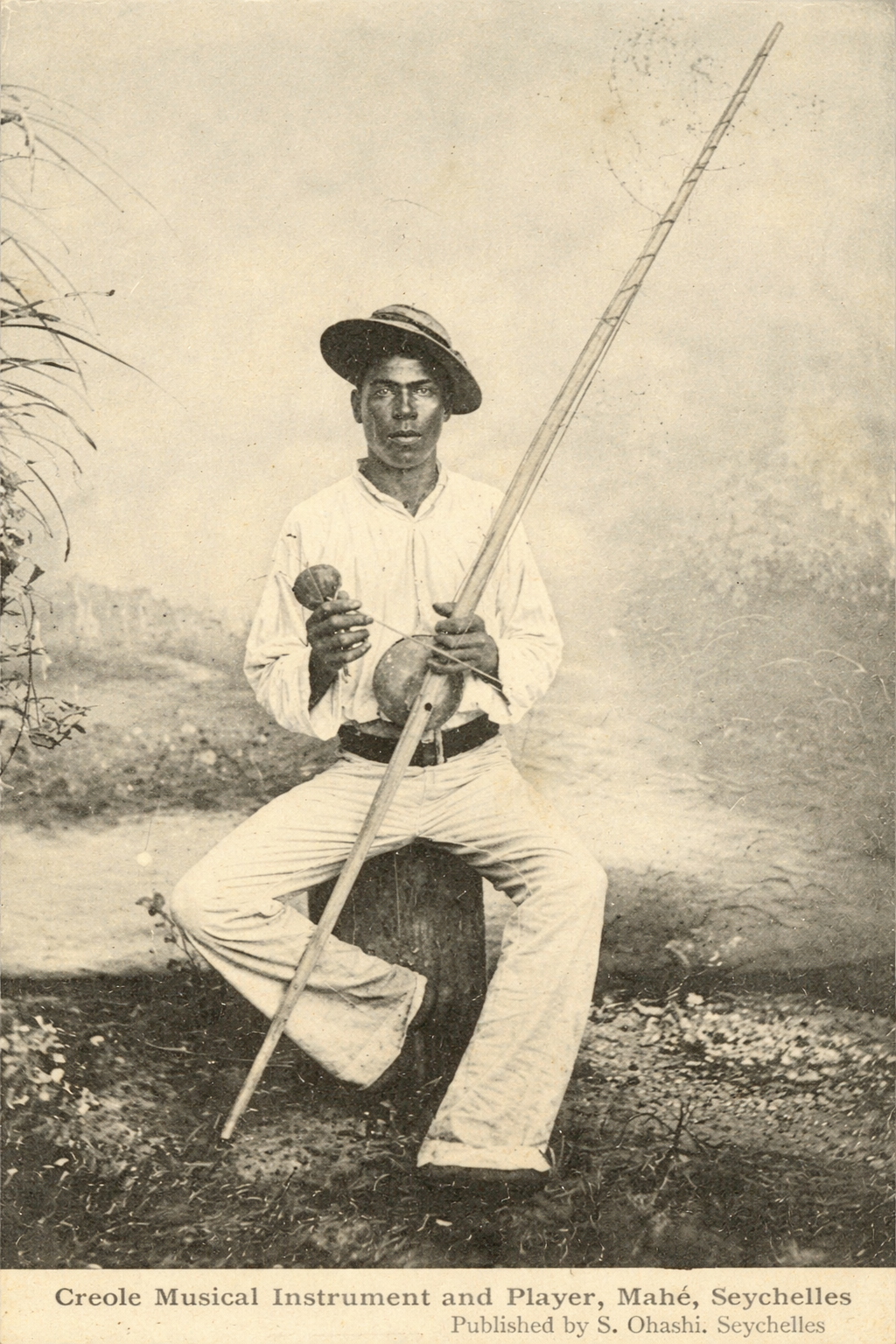
Tinge or tsinge
Tinge, also known as tsinge or tingue, is a form of stylised sparring and acrobatic dance accompanied by song. Traceable back to Afro-Malagasy peoples during the era of slavery, equivalents can be found throughout the Indian Ocean, including moring in Reunion, mourengué or mringué in the Comoros archipelago, moraingy, moringy or ringa in Madagascar, and even capoeira in Brazil. A form of martial art, stinge may have originated in Congo and Angola (batouk), and is traditionally only practised by men, with women mainly as spectators, chorus singers and supporters, clapping their hands. Based on footwork, stinge makes use of specific moves such as the “troké", the "vi za vi” and the “touyé", which stem from a formalised set of steps and a stylistic technique unique to each participant.
In the late 1970s, Ton Pa (Jacob Marie) revived the local tradition, which had more or less fallen out of favour in some areas, even giving it a new name: “kalou pilon”, which means pestle and mortar. This term arose from the fact that once the coffee harvest had been ground, the mortar pestles were used for entertainment. These bouts usually took place on Saturday evenings and Sundays near shops selling baka, an alcoholic beverage made from fermented sugar cane juice.
As for the repertoire, the songs – referred to as sanson makwa (a reference to the Bantu people originally from Mozambique) or sanson mozanbik (again referring to the origin of the enslaved population) – still contain snatches of Swahili, Malagasy, and various African dialects, which the Seychellois pass on through oral tradition even though they no longer know their meaning. Depending on the context, songs may be improvised, drawing on light-hearted themes and onomatopoeia.
This custom – which enjoyed its peak on Mahé, at Anse-Louis and on Silhouette Island – is now disappearing.
Tsinge « O Silhouette » in 33 Tours Seychelles 2 Musiques oubliées des îles, Ocora 558 554. Sokwe
A legacy of the Afro-Malagasy people, sokwe is a form of masquerade that alternates sequences of theatre, song, and dance. As a rule, the characters taking part must be unrecognisable and look rather frightening. To achieve this, they wear masks and cover themselves entirely with banana leaves. Sokwe aim to convey messages through scenes of either real or imaginary life. Accompanied by hand clapping, sokwe songs consist of short, repetitive refrains.
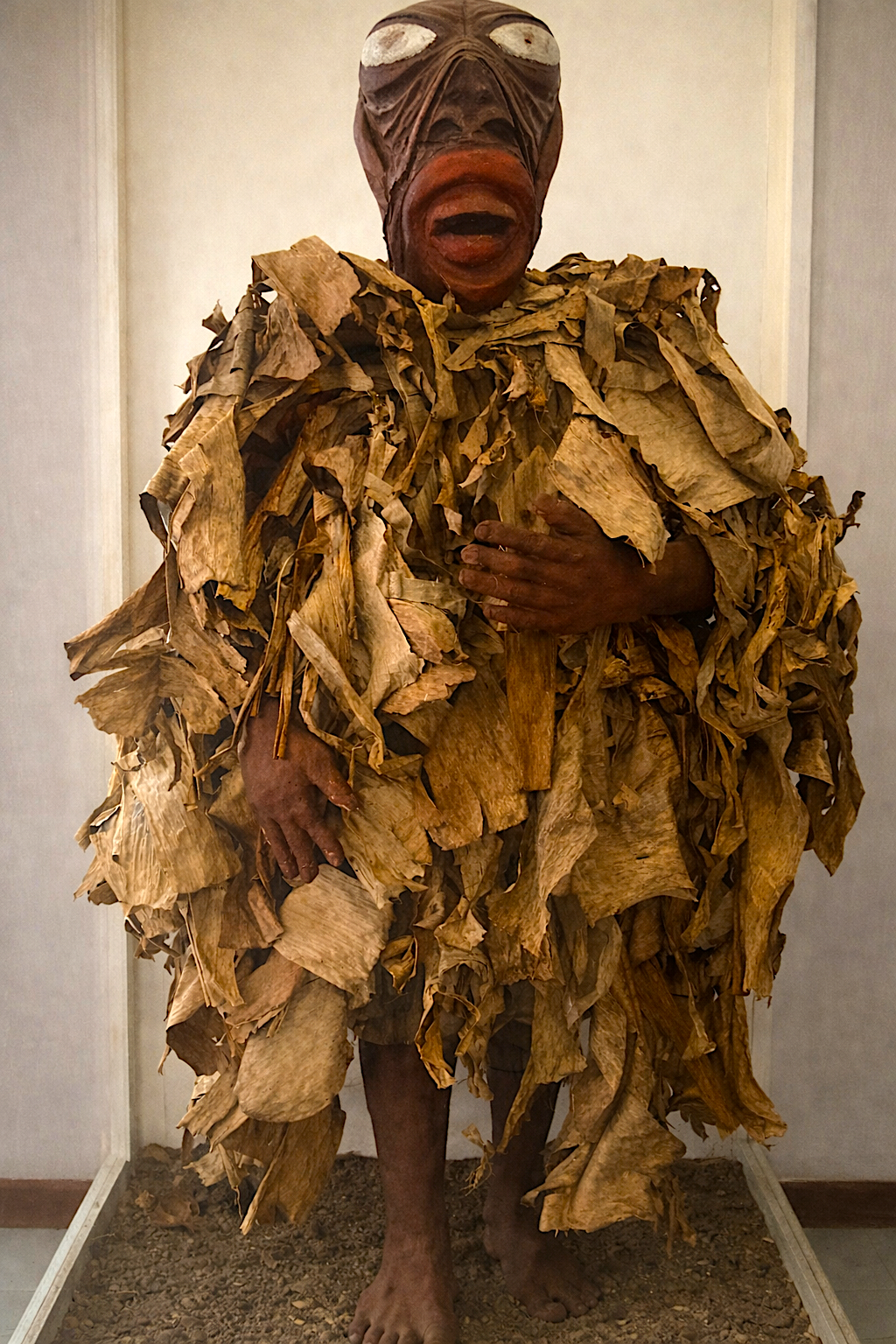
Based on his research for the Ocora record label in 1978, Bernard Koechlin offered the following insights into the tradition: "Sokwe, sometimes referred to as "bonhomme sokwe" is a kind of commedia dell'arte. The masked performers are completely covered with a type of creeper that is commonly found on the islands. The troupe consists of a king (…) with his ‘court’ (officers with epaulettes), a sorcerer (maker of remedies), a doctor with a life-restoring stethoscope, a rifle-wielding man, and an individual known as tra-montagne. The scenario – which is always the same – follows a set pattern: after a brief introductory dialogue, the king starts to dance then falls to the ground, stricken. The doctor intervenes, treats and heals the sovereign, and the performance ends as it began, with dancing. Using this framework as a base, the actors improvise highly comical dialogues."
Sokwe « Dalambwe » by Patrick Prosper in Ton Pat` memwar lamizik seselwa, Taka 1017. These days, sokwe is no longer regarded as a living tradition in the Seychelles: it is only performed, very rarely, during the Festival Kréol.
Fanie Précourt
