
Located 1,700 km from the East African coast, 1,100 km from Madagascar and 2,800 km from the west coast of India, the Republic of Seychelles comprises four archipelagos: the Seychelles proper (consisting of some thirty islets – the main ones being Mahé, Praslin, La Digue, and Bird Island), as well as the Amirantes Islands, Farquhar Atoll and Aldabra Atoll. The country as a whole includes 115 islands and islets, spread over 400,000 km² of ocean, but with a total land area of only 452 km².
publié par
Fanie Précourt
17 avril 2026
The Seychellois population today stands at 135 000 inhabitants, of whom 80 000 live on Mahé. The Seychelles people are the product of intermingling between the French (occupiers from 1756 to 1810), the British (colonial rulers from 1810 to 1976), and those of Afro-Malagasy origin (descended from slaves brought between 1770 and 1835), as well as Indian, Comorian, and Chinese minorities – the latter being descendants of indentured labourers recruited during the period 1840 to 1930.
The population is predominantly Catholic (90 %), and Seychellois Creole is spoken by 90 % of inhabitants, while French and English are also used by 40 % and 30 % respectively.
Since becoming the Republic of Seychelles in 1976, the country has earned a reputation for its ancestral and multi-ethnic musical culture, which is firmly rooted in migratory flows from the colonial powers, as well as exchanges with neighbouring islands and nations. Within this sphere of shared cultural identity, Seychellois musical practices lie at the crossroads of African, Malagasy, Indian, and European heritage.
The archipelago is home to a variety of musical instruments, characterised by their materials, shapes, manufacturing techniques and sounds. These instruments, born of their makers’ ingenuity, present unique features that we invite you to discover through four articles, each focusing on a different classification: membranophones, idiophones, chordophones, and aerophones.
Chordophones
Chordophones generate sound through the vibration of one or more plucked, strummed, scraped, rubbed, and/or blown strings. Seven such traditional instruments exist in the Seychelles. While commercially manufactured violins, guitars, banjos, and mandolins are imported, the zez, bonm, and makalapo are the result of time-honoured techniques, using skills that it is now vital to preserve and pass on. However, these instruments are becoming increasingly scarce due to difficulties in sourcing raw materials, changing musical practices, and an ageing cohort of instrument makers who lack successors. Despite their important cultural and identity-related value, three of these instruments have already vanished completely from contemporary musical life.
Extinct instruments
Makalapo (portable version: makaloumpo)
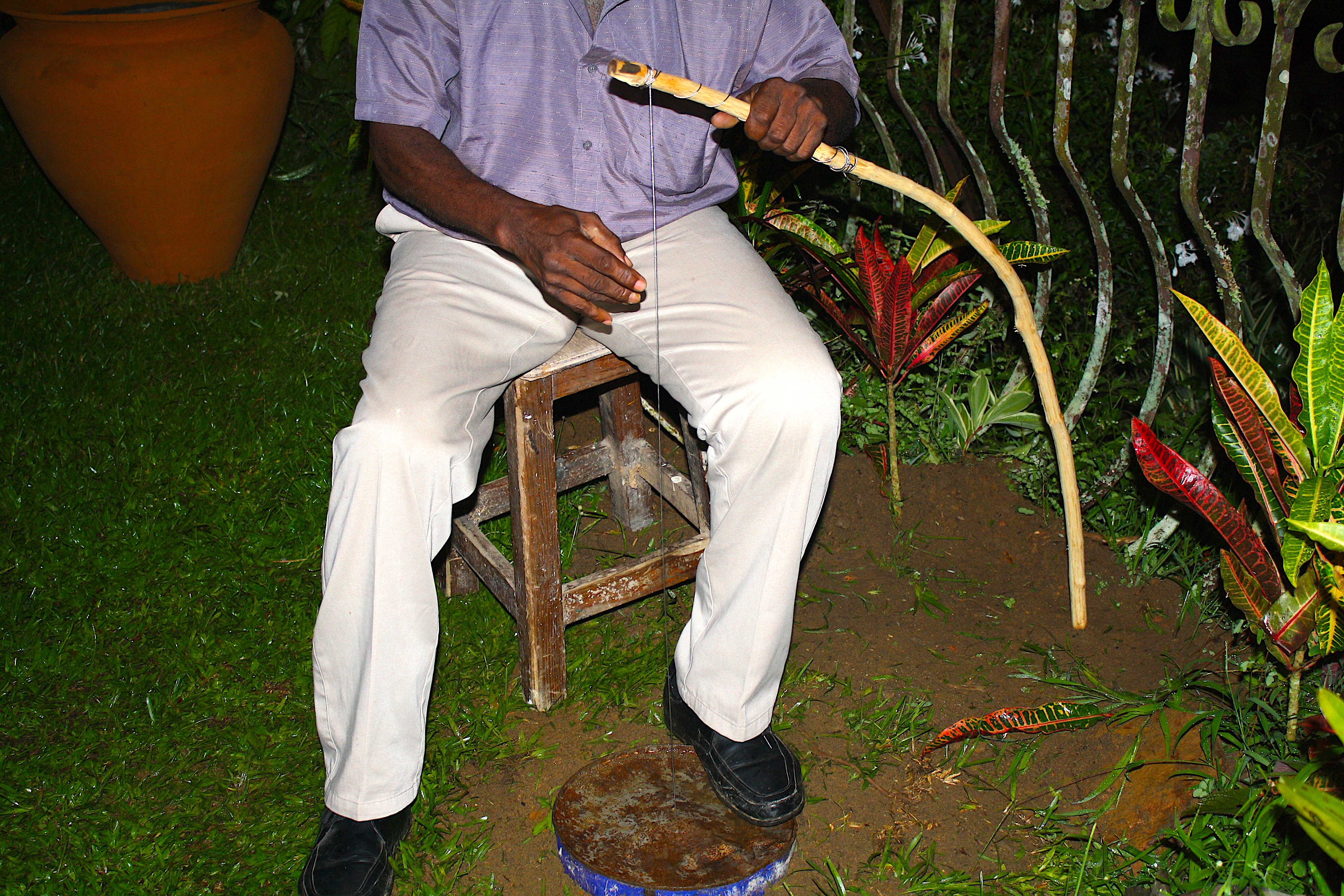
The makalapo belongs to the family of heterochordic harps or bows (a ground bow with an added string, not a detached one), which can be found in many countries of the African continent, including the Central African Republic (korongoe), the Congo (angendeng), Uganda (musokolome and sekiyuleghe), Ivory Coast (tekpede), Cameroon (ang'eindi), South Africa and Zimbabwe (galinga), and Madagascar (pitikilangy or pitikilanga). Among the islands of the Indian Ocean, this instrument – once known as the bob en terre in Reunion – has now completely disappeared. It was also played in the Chagos Islands and Mauritius, where it was known as the makalapo, mirroring its name in the Seychelles.
The Mauritian musician Marclaine Antoine said on the subject:
“Legend has it that this instrument makes the dead dance on Earth. This is because the sound box is buried in the ground. So the dead dance in the underworld when the instrument is brought to life. Some say that if you play it on All Souls’ Day (November 2nd), you will be struck on the back with a cane. And certain people even claim that the instrument plays itself in the evening.” Chagossian Charlesia Alexis added to these explanations, saying that “We had to remember to remove the string at dusk. Otherwise, come nightfall, at the bottom of the garden the spirits would come and play it [...] leaving behind a muffled, otherwordly echo.” (excerpts from the YouTube video: Présentation du Makalapo par Marclaine Antoine ["Presentation of the makalapo by Marclaine Antoine"]).
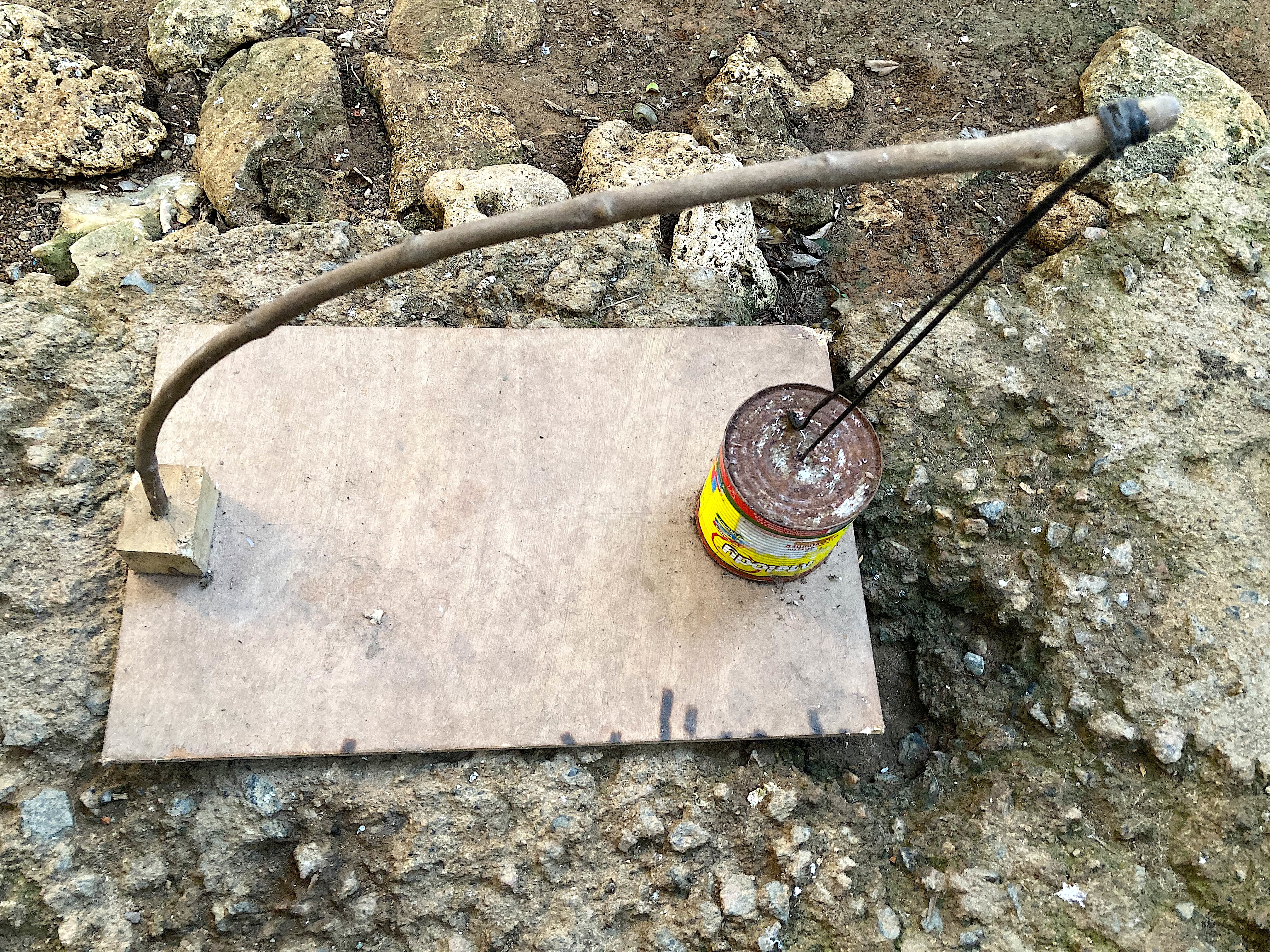
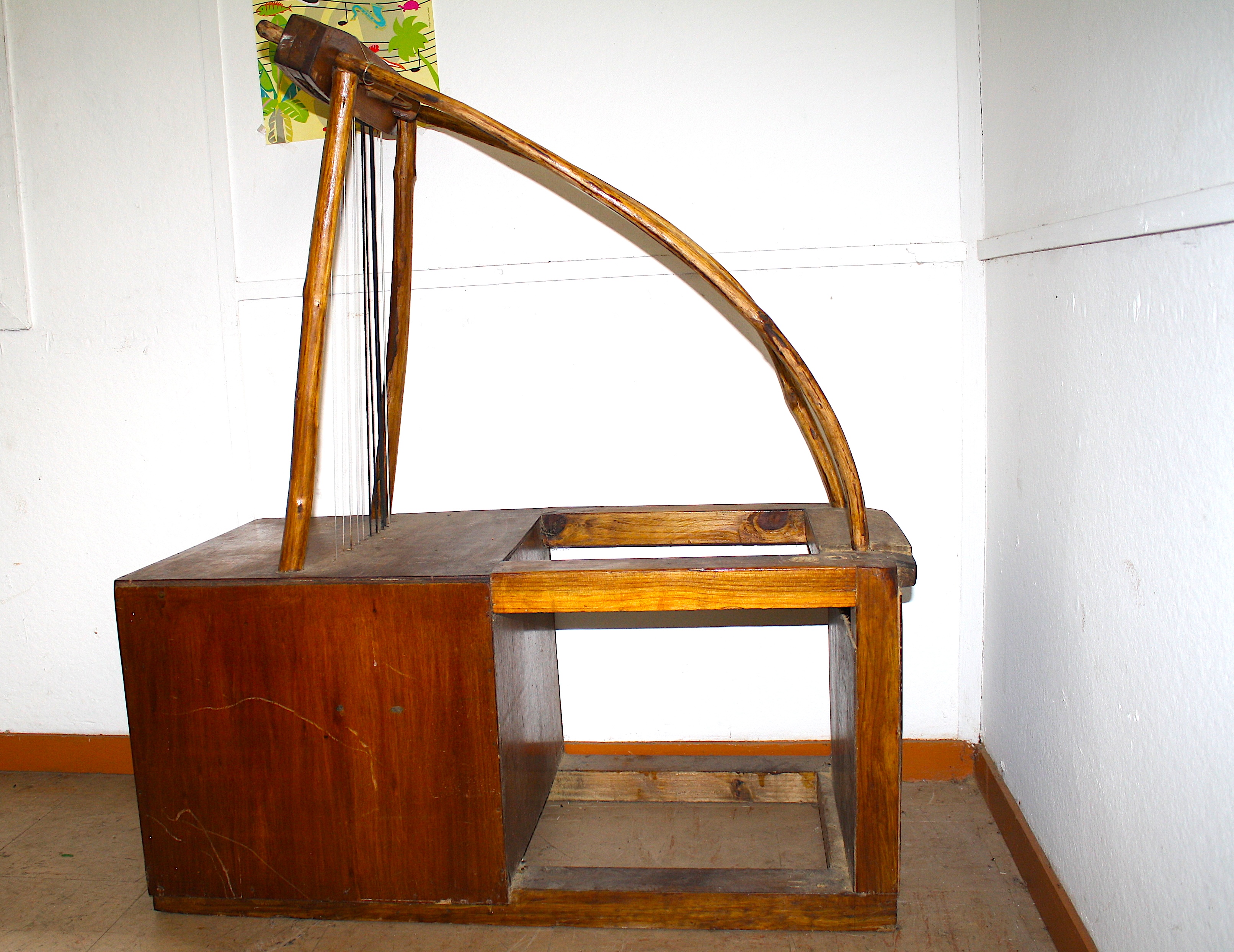
A string (metal or nylon, but traditionally raffia or sisal) was stretched between the end of an arched branch fixed in the ground and the centre of a metal container, usually a paint tray or tin plate. In some cases, a wooden board or sheet metal was used to secure the sound box and the end of the string underground or to the bow. The string bent the wooden bow, which in turn made the string taut. The playing technique involved plucking the string with one hand, while adjusting its tension with the other, curving the instrument’s flexible neck to vary the tones produced. The makalapo was already rare ten years ago, and has now completely disappeared from contemporary use, despite Patrick Prospère’s attempt in 2010 to create a portable, multi-stringed version (the makaloumpo).
 Makalapo practice, « Ti pol » performed by Patrick Prosper in CD « Ton Pat, memwar lamizik seselwa » Taka 1017.
 Mandolin
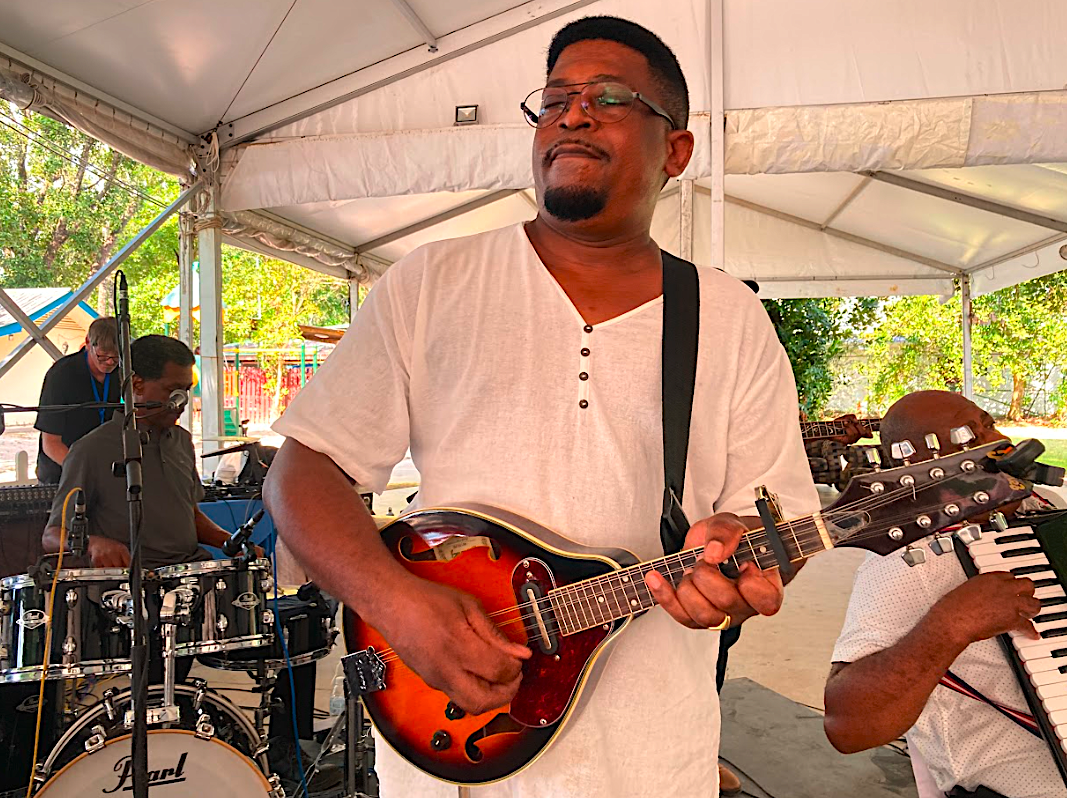
The mandolin is a plucked string instrument with a European musical lineage. It spread via colonial routes and European cultural networks to the islands of the south-west Indian Ocean during the 19th century. Until the early 20th century it was the preserve of the bourgeoisie, then gradually became integrated into popular music-making (e.g. kanmtole), as Seychellois society began to blend different traditions. However, over the course of the last century it was quickly replaced by the benndyo and guitar.
Zez
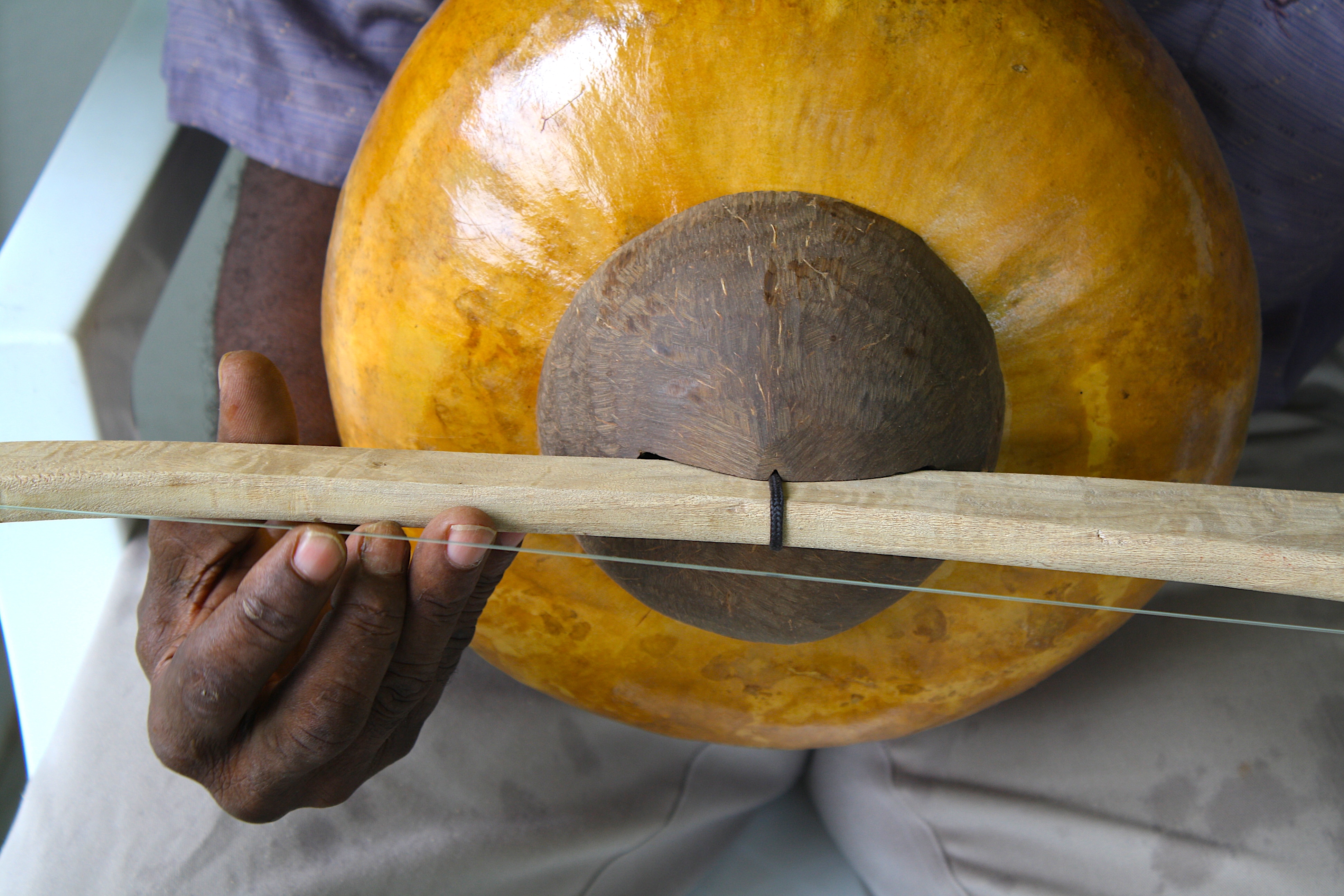
Similar in principle to the bonm – with a calabash held against the musician's chest – the zez is a monochord zither also present in Madagascar (dzedzy in Swahili, jejy, jejo, jenjy, jejilava, jejivotavo or lokanga voatavo depending on the region); in East Africa (including in Uganda, where it is called enzeze), in Burundi, Tanzania, and Rwanda (zez), as well as in the Democratic Republic of Congo (luzenze) and the island of Celebes (also known as Sulawesi) in south-east Asia, where the zez is a primitive version of the vina. According to André Schaeffner[1], its ancestor is believed to be the Egyptian dede harp. Researcher Nketia[2] writes that the ‘one-string fiddle’ was also found in eastern and central Africa, in the former Zaire, Kenya, and Tanzania, where it is known as sese or zeze. Among the region’s islands, the zez is now very rare in Mayotte (where it is named dzendze ya shitsuva or dzendze foiky), and has recently disappeared from Mauritius. In the Seychelles, although it is remembered by musicians, it too seems to have died out along with its last practitioners: Jacob Marie aka "Ton Pa", Marius Camille, and Patrick Prospère.
The zez is a stick zither with a rigid, lightweight wooden neck, fitted with a series of three – or even four – notches arranged in two rows. A nylon string is attached to both ends of the neck, which also supports the resonator – fixed two-thirds of the way along – consisting of a calabash gourd or coconut, to which a soundar (one third of a coconut) is sometimes added, as with the bonm resonator. Similarly to the bonm, the player alternately presses the resonator against their body to amplify the sound. The string is plucked with the right hand (if the musician is right-handed), while the left hand plays the notes on the notches.
Zez practice, « Kok tya pe sante » performed by Patrick Prosper in CD « Ton Pat, memwar lamizik seselwa » Taka 1017. 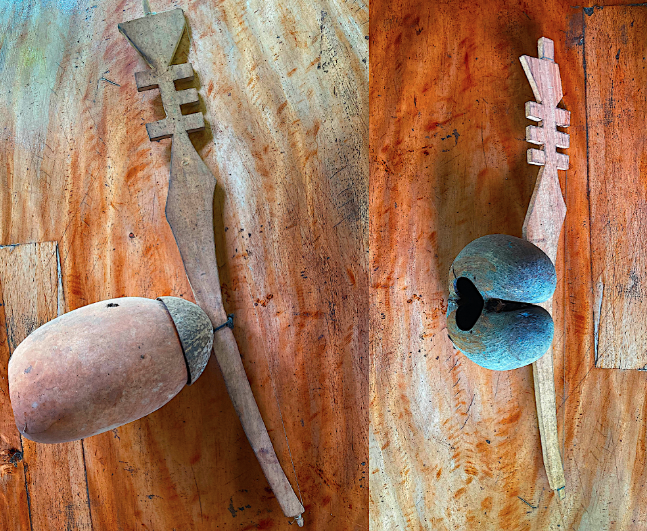
Rare instruments
Bonm
This monochord musical bow, played by striking, and variously known as a bom or bomb in the Seychelles, is found across various islands in the south-west Indian Ocean, such as in Reunion (bob, formerly bobre or sombrèr), Mauritius (bom), Rodrigues (bom) and Mayotte (dzendze lava). It may have originated in Madagascar, where it is called the jejilava, and, like many traditional instruments, it was probably spread across the region by enslaved people brought from the island nation. However, it is also present in Mozambique, where this type of musical bow is referred to either as a chitende or a chiqueane south of the Save River, or as a n'thundao or a chimatende in Sofala province. Regarding the etymology of the name, Jean-Pierre La Selve[3] notes that its local appellation might be traceable back to Europe:
“The musical bow is in fact reminiscent of the bumbas, a monochord instrument with a resonator made from a dried pig's bladder, and which is often depicted in Flemish paintings as it was played in Northern Europe during carnivals. So it is not impossible that Flemish sailors (…) introduced this name, which, by omitting the last syllable, could have evolved from bombas to bomb and from there to bom".
Based on iconography we can take our hypotheses even further, as this suggests a new link regarding the instrument’s origin, pointing to morphological similarities between the Mauritian and European models (in particular the bladder used as a resonator).
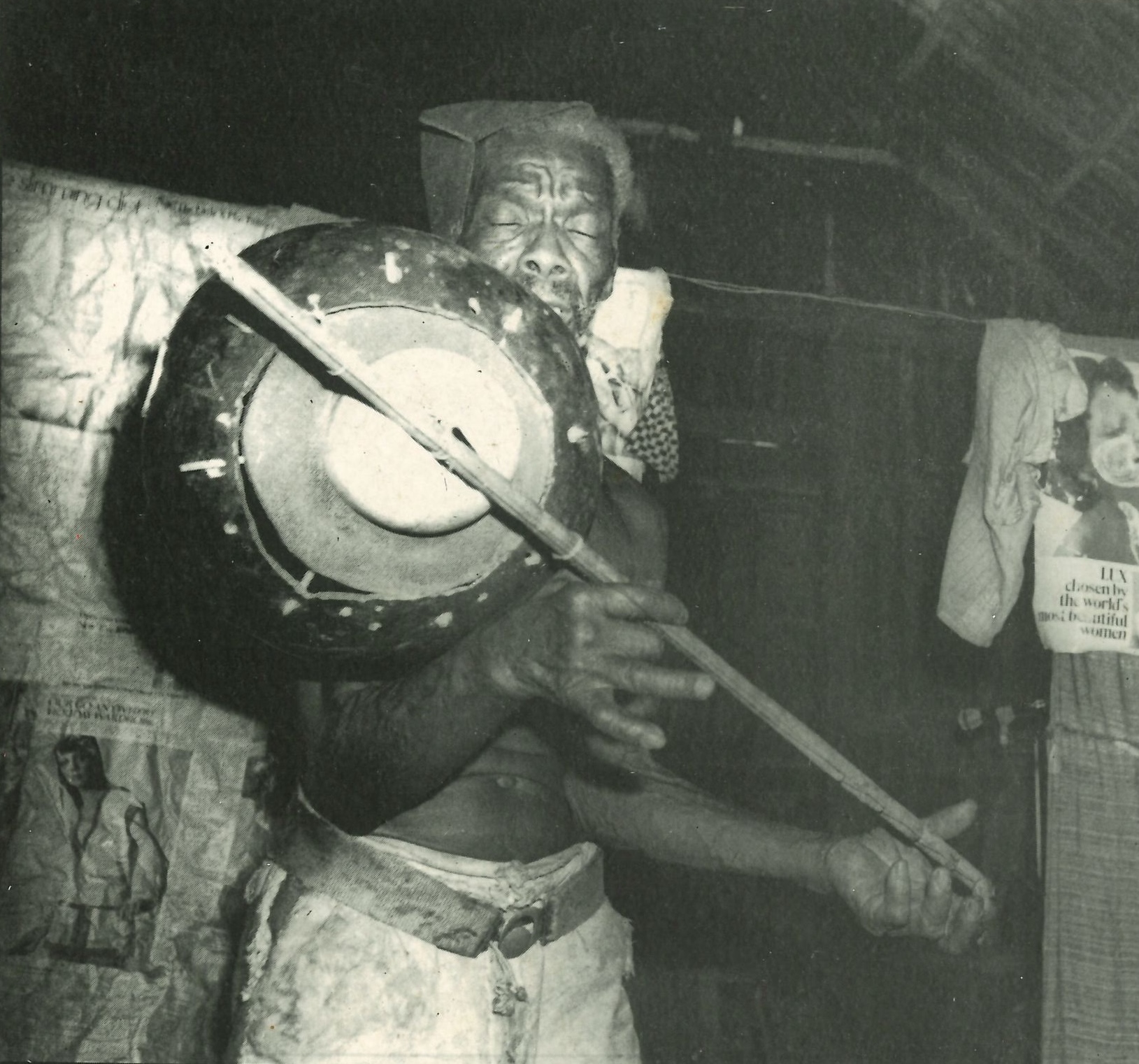
The craft of bonm making has changed since it first arrived in the region. Like many African musical bows with a resonator, although the amplifier (a hollowed-out calabash gourd or coconut cut two thirds of the way through) is removable for tuning purposes, it is nevertheless attached to one end of the flexible wooden neck (the bwavar, which is either Hibiscus tilaceus or Tilapariti tiliaceum) by a ring encircling the bow and string and which helps to keep them taut. Formerly made from plant fibres, nowadays the string is made of steel wire, cotton and synthetic materials, electric cables, or even bicycle brake cables. To play, the musician alternately presses the resonator against their stomach. They strike the string with a thin stick, often made of bamboo, that is typically accompanied by the handheld kaskavel rattle, a shaken idiophone traditionally made from a sealed, natural casing, that resonates due to small seeds it contains. The musician’s left finger and hand (for a right-handed player), holding the bow at the resonator, further modulate the string’s tension by touching it. The bonm can be played solo, or to accompany singing (sanson bonm); additionally, it provides a rhythmic pulse for tinge and sokwe dances. Today, apart from Madagascar and Reunion where it is experiencing a revival, the musical bow is fast disappearing from the islands of the south-west Indian Ocean. Marius Camille, known as Ton Boboy (1898–1981), Jacob Marie, known as Ton Pa (1908–1994), and Andréas Laporte, aka Dea (1902–1983), were the most popular bonm players in the Seychelles.
Bonm practice, « Moi Wilison » by Jacob Marie, excerpt from the 33 Tours Seychelles 2, Forgotten Music of the Islands, Ocora 558 554. 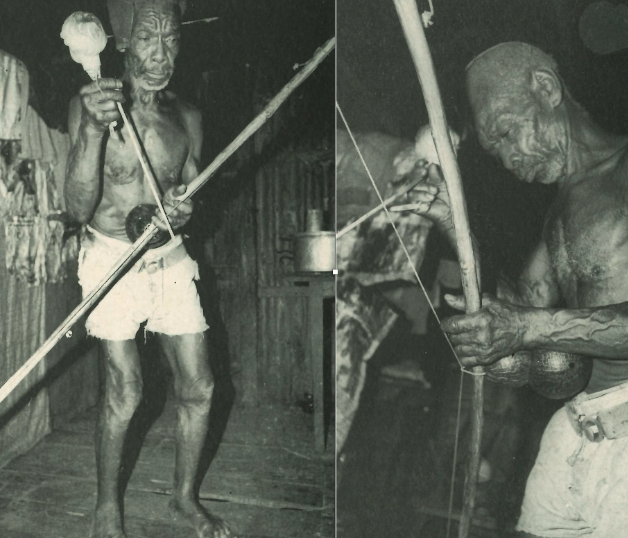
The vyolon (violin) and benndyo (banjo)
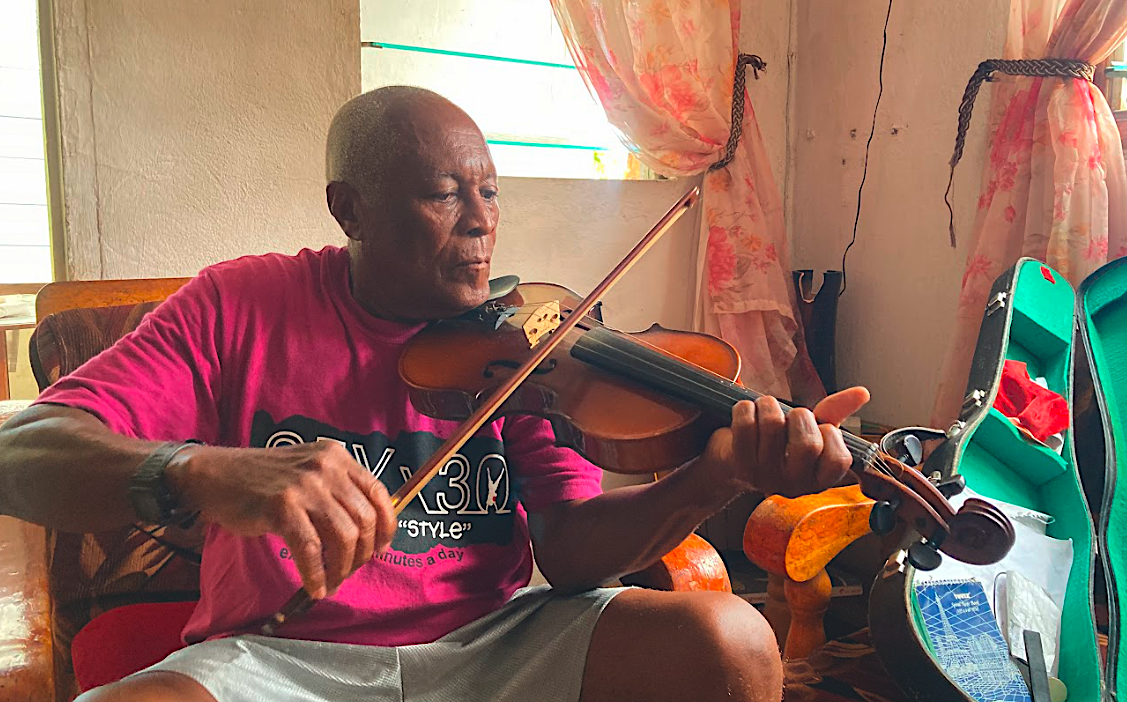
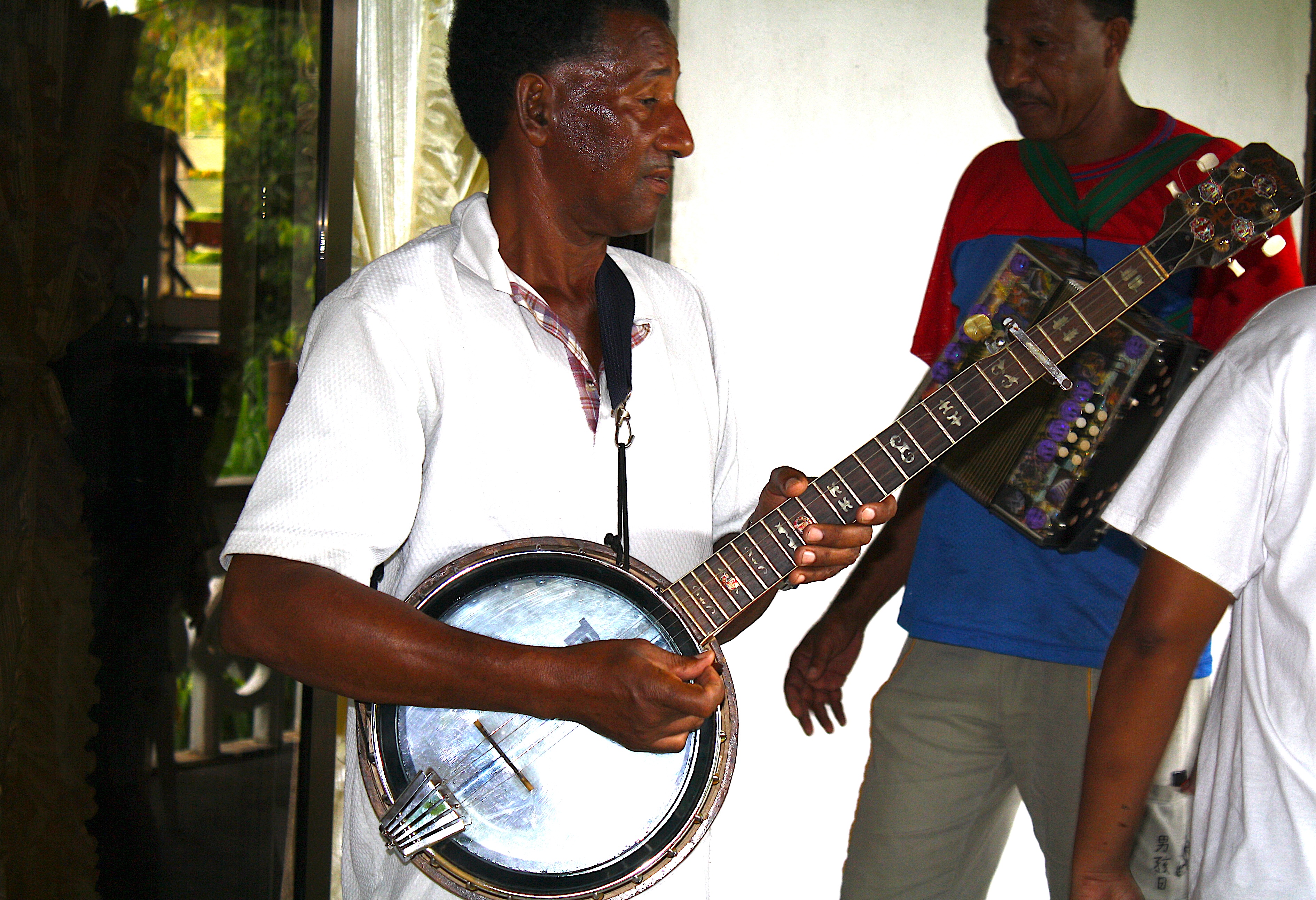
Various historical documents dating from the early 19th century attest to the presence of the violin on islands in the region such as Reunion and Mauritius. Due to the many interactions across the south-west Indian Ocean, this instrument – of European origin and initially the preserve of the bourgeoisie – soon found its way to the Seychelles, and became a mainstay of the folk repertoire during the 20th century, notably for kanmtole and sega. The same is true of the banjo, which arrived in the Seychelles a little later, but which continues to occupy an important role in dance repertoires to this day, even as the number of players continues to dwindle. Although it is also characterised by a versatility that allows it to perform both a melodic line as well as harmonic and rhythmic accompaniment, the playing technique of the benndyo remains more accessible than that of the vyolon. Today, having been largely supplanted by the guitar, the vyolon and benndyo are becoming increasingly rare in the Seychelles. There has been little renewal of the older generation of fiddlers and banjo players.
Common instruments
Guitar
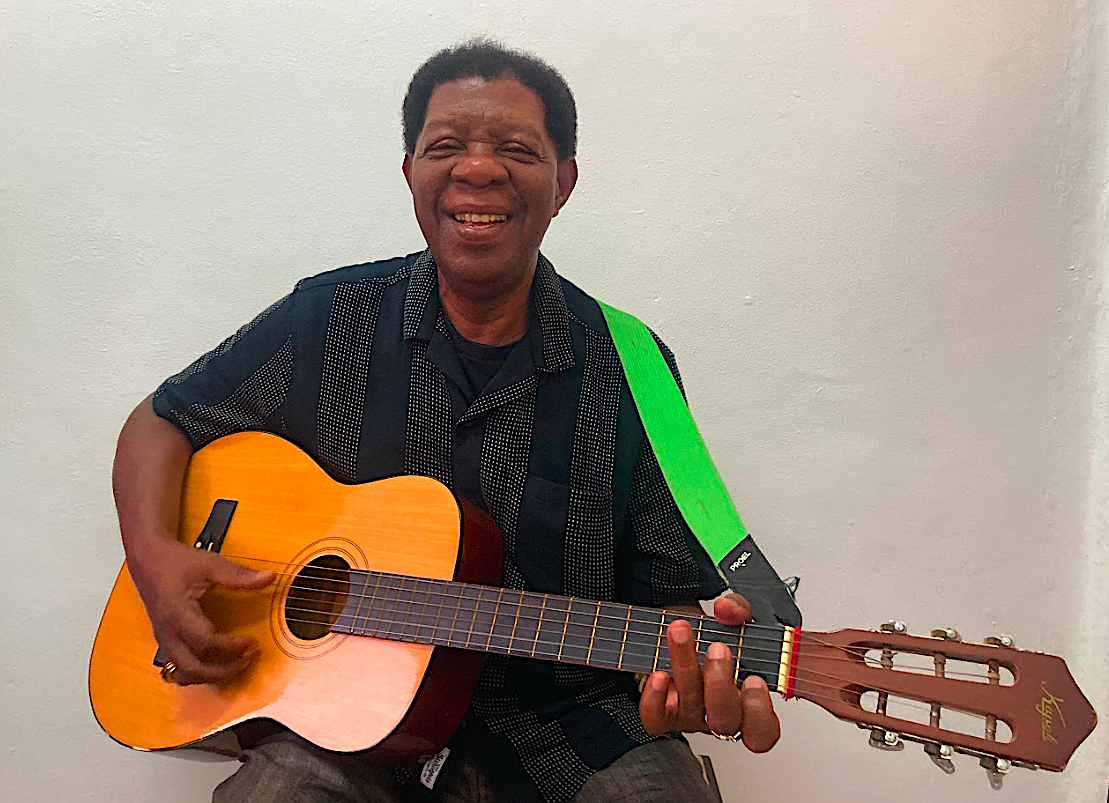
The guitar, an instrument of European origin, spread across the Indian Ocean in a similar fashion to the vyolon and benndyo. It arrived in the Seychelles during the 19th century through trade and cultural exchanges with neighbouring islands such as Reunion and Mauritius, and was initially only played by the urban or bourgeois elite. However, thanks to its versatility and the relative ease with which it could be learnt compared to the violin, the guitar very quickly found favour with the Creole population. By the 20th century, it had emerged as the preferred accompanying instrument for folk repertoires such as kanmtole and sega, while also securing its place within domestic and festive musical practices. Its role is twofold: it can support the harmony and rhythm of a dance, while also playing melodic lines, making it an instrument that is both accessible and expressive. Today, the guitar occupies a central position in Seychellois music. It has largely replaced the vyolon and benndyo in popular ensembles, while continuing to inspire creativity among young musicians.
Fanie Précourt
Notes:
1) Sachs, Curt, Les instruments de musique de Madagascar, in Journal de la société des Africanistes, 1938, Vol 8, p. 215.
2) Mahoune, Jean-Claude, L’origine de la musique traditionnelle de la république des Seychelles, non édité, sans lieu ni date.
3) La Selve, Jean-Pierre, Musiques traditionnelles de La Réunion, Saint-Denis, Azalées, 1995, (p. 54).
