
publié par
Fanie Précourt
13 novembre 2026
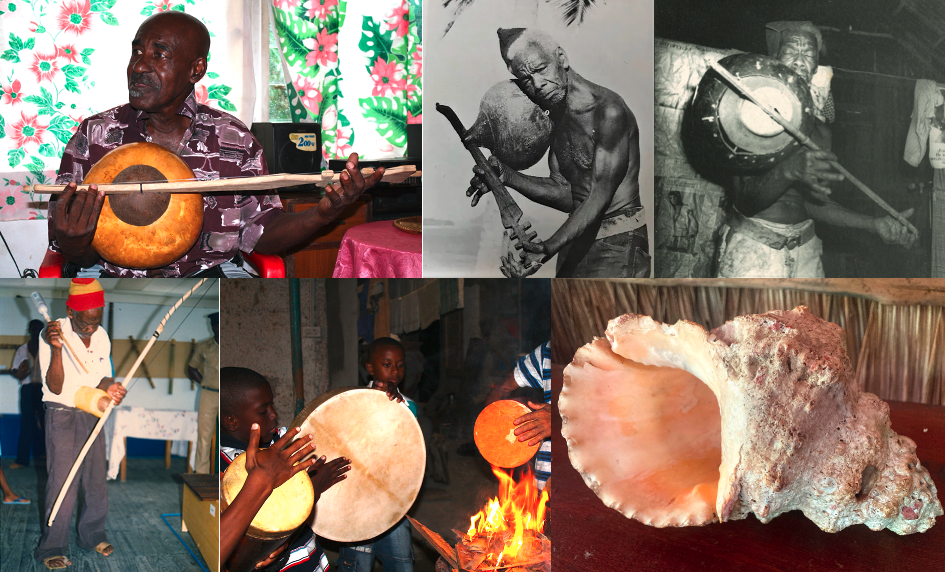
In 2025, nineteen traditional musical instruments were recorded in the Seychelles, primarily on the islands of Mahé, La Digue, and Praslin. Of these, six have now disappeared from contemporary instrumental practice, some surviving only in very rare examples. Unfortunately, none of these instruments are currently undergoing a process of cultural revival, that is, active reintegration into the current musical landscape.
Furthermore, nine instruments are considered rare or even endangered, a worrying observation. This situation is explained in particular by the scarcity of raw materials, the evolution of musical practices, and the lack of new makers among those crafting aging instruments. Particularly striking is the fact that the tanbour moutya is among these endangered instruments, even though it remains the emblem of moutya, a musical genre inscribed on UNESCO's Intangible Cultural Heritage list since 2019. Faced with this shortage, two alternative membranophones have gradually been integrated into the Seychellois instrumental repertoire: the djembe, widely used globally, and the ravann from Mauritius, a frame drum similar to the tanbour moutya.
Meanwhile, four industrially manufactured instruments remain very widespread and widely used during festivities, without appearing to be threatened today.
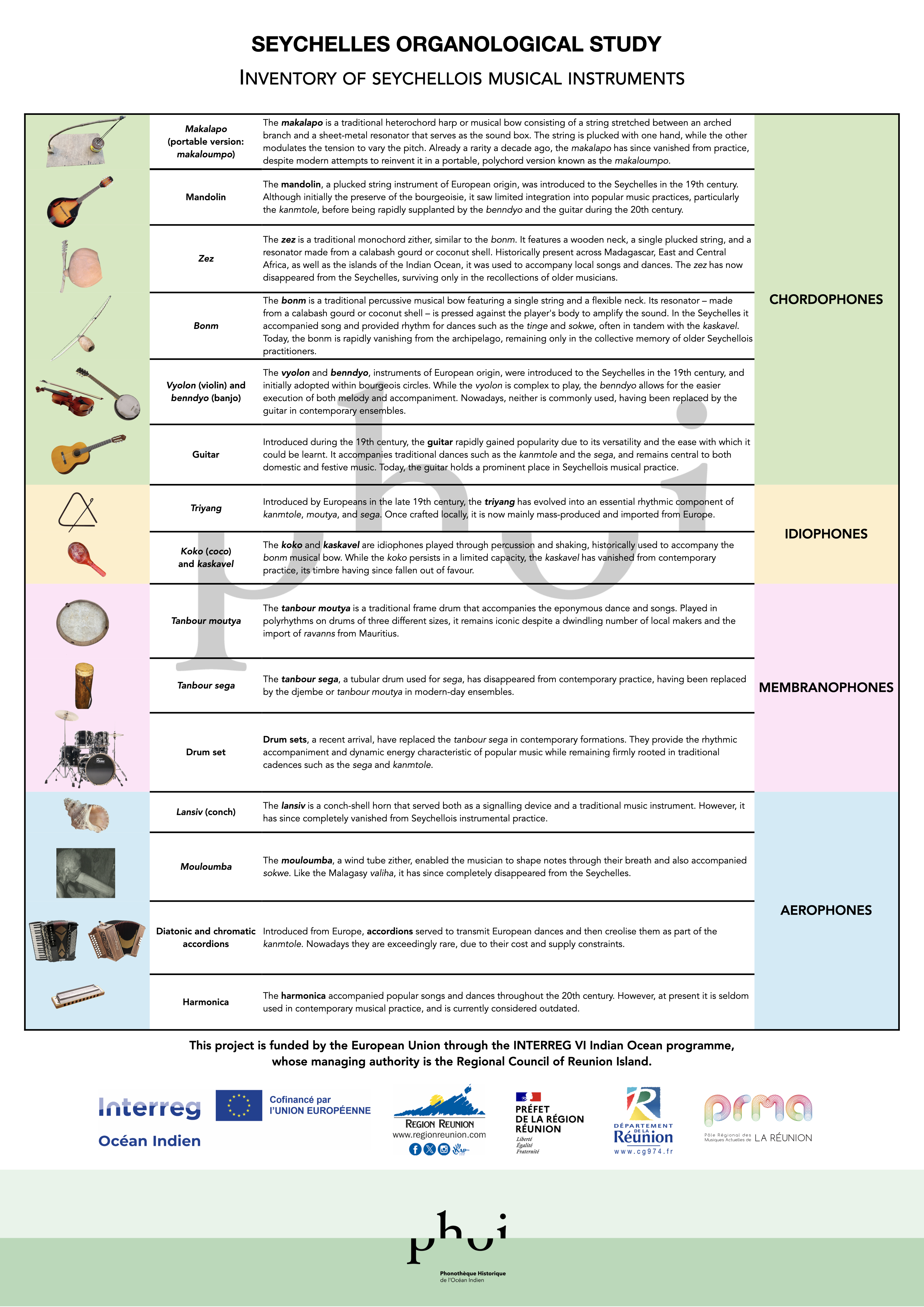
Of the nine music and dance traditions of the Seychelles, two have disappeared, four are rare and three are common.
Regarding traditional music and dance, the situation is hardly more encouraging for the nine identified repertoires. Three of them can be considered alive, as they are still regularly practiced and disseminated. Conversely, three others appear threatened today, either because they are considered outdated or due to the disappearance or scarcity of their traditional instruments, such as the zez and the bonm for the sanson bonm or zez. Two repertoires have completely disappeared, although they still exist in the memories of former practitioners. Finally, one last repertoire was the subject of an attempt at revival in the last century, without, however, managing to establish itself permanently or become popular.
Overall, these dynamics reflect a growing imbalance between the living transmission of traditions and the erosion of practices. While some repertoires continue to exist thanks to their roots in festive or identity-based contexts, a significant portion of this intangible heritage remains fragile due to a lack of generational renewal and sufficient institutional support. This situation underscores the urgent need to implement safeguarding, documentation, and transmission measures to preserve the diversity and richness of Seychellois musical and choreographic expressions.
Fanie Précourt
