
Located 1,700 km from the East African coast, 1,100 km from Madagascar and 2,800 km from the west coast of India, the Republic of Seychelles comprises four archipelagos: the Seychelles proper (consisting of some thirty islets – the main ones being Mahé, Praslin, La Digue, and Bird Island), as well as the Amirantes Islands, Farquhar Atoll and Aldabra Atoll. The country as a whole includes 115 islands and islets, spread over 400,000 km² of ocean, but with a total land area of only 452 km².
publié par
Fanie Précourt
1 mai 2026
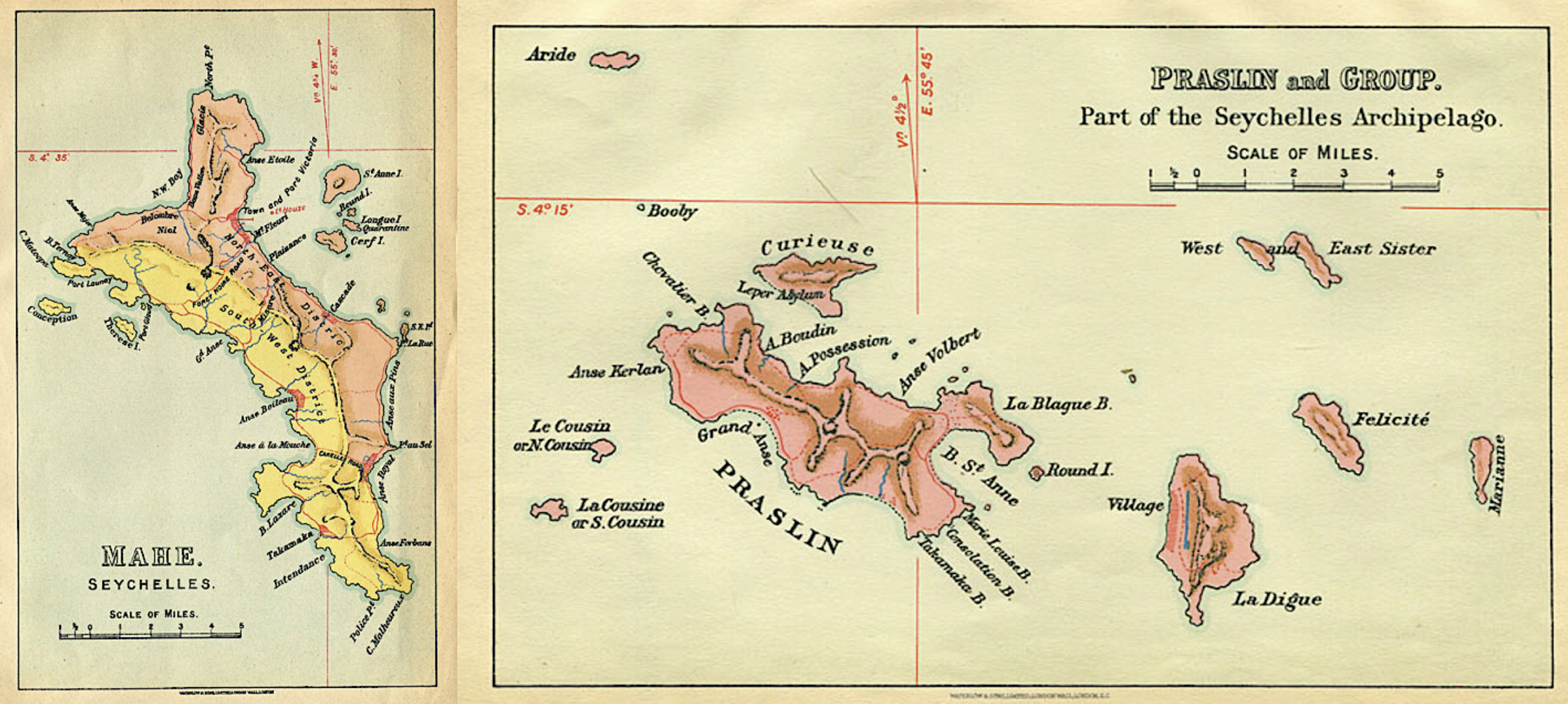
The Seychellois population today stands at 135 000 inhabitants, of whom 80 000 live on Mahé. The Seychelles people are the product of intermingling between the French (occupiers from 1756 to 1810), the British (colonial rulers from 1810 to 1976), and those of Afro-Malagasy origin (descended from slaves brought between 1770 and 1835), as well as Indian, Comorian, and Chinese minorities – the latter being descendants of indentured labourers recruited during the period 1840 to 1930.
The population is predominantly Catholic (90 %), and Seychellois Creole is spoken by 90 % of inhabitants, while French and English are also used by 40 % and 30 % respectively.
Since becoming the Republic of Seychelles in 1976, the country has earned a reputation for its ancestral and multi-ethnic musical culture, which is firmly rooted in migratory flows from the colonial powers, as well as exchanges with neighbouring islands and nations. Within this sphere of shared cultural identity, Seychellois musical practices lie at the crossroads of African, Malagasy, Indian, and European heritage.
The archipelago is home to a variety of musical instruments, characterised by their materials, shapes, manufacturing techniques and sounds. These instruments, born of their makers’ ingenuity, present unique features that we invite you to discover through four articles, each focusing on a different classification: membranophones, idiophones, chordophones, and aerophones.
Membranophones
In the membranophone family – which includes instruments that produce sound through the vibration of a membrane stretched over a body or frame – several heritage and modern instruments are present in the Seychelles, most notably the tanbour moutya, the tanbour sega, and the drum set. The tanbour moutya remains an essential element of traditional musical practice, particularly for accompanying the eponymous dance and songs. In contrast, the tanbour sega has disappeared from contemporary use, supplanted in most cases by drum kits or djembes, which are better suited to modern ensembles and group performances. Whether preserved or replaced, these membranophones reflect changing Seychellois musical traditions and the shift from ancestral heritage to contemporary expression.
Tanbour moutya
This frame drum – comparable to the ravann of Mauritius, tanbour of Rodrigues and amponga tapaka of Madagascar – exists in similar forms in south-west Asia, Melanesia, Polynesia, and Portuguese-speaking Africa.
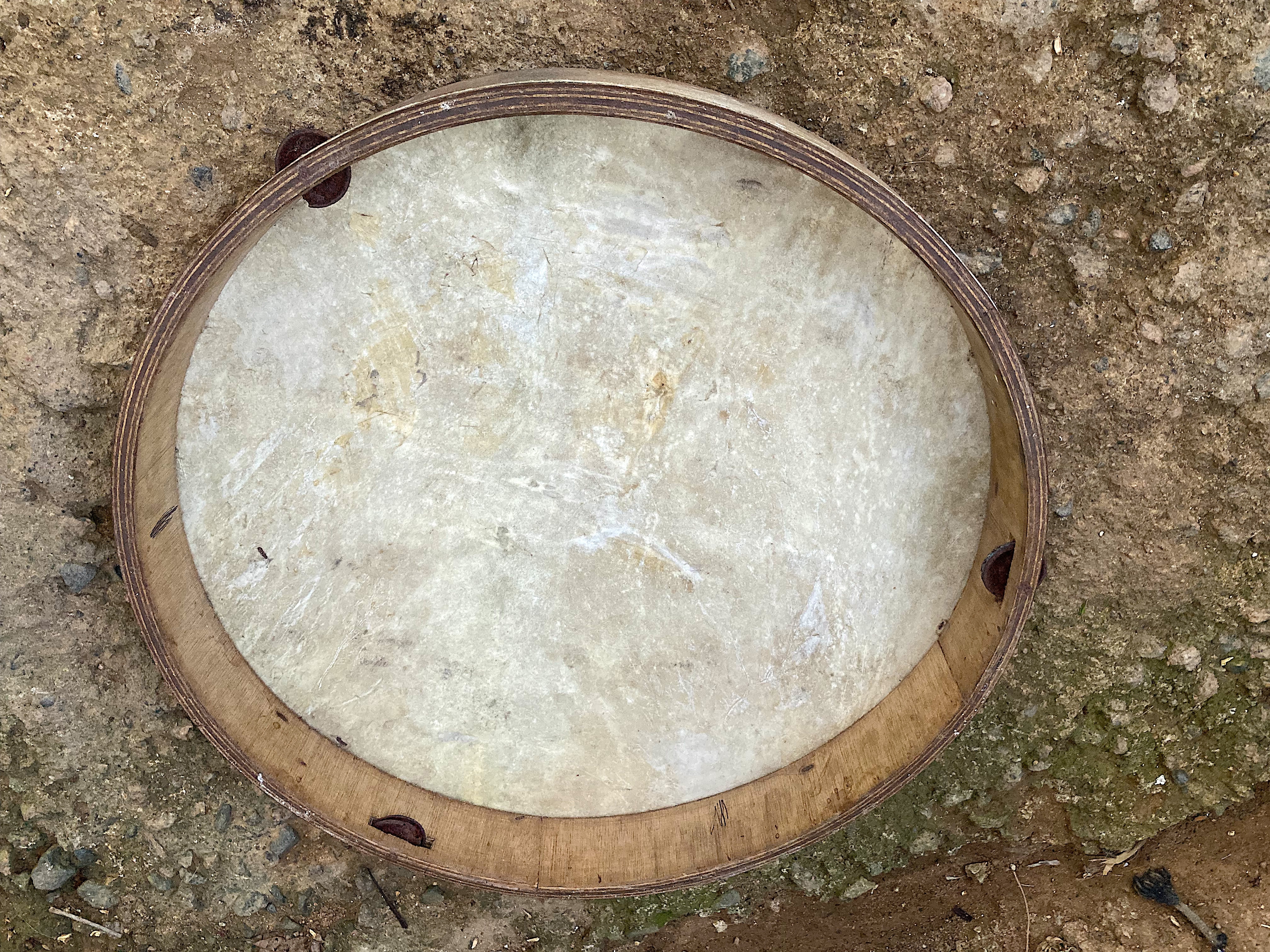
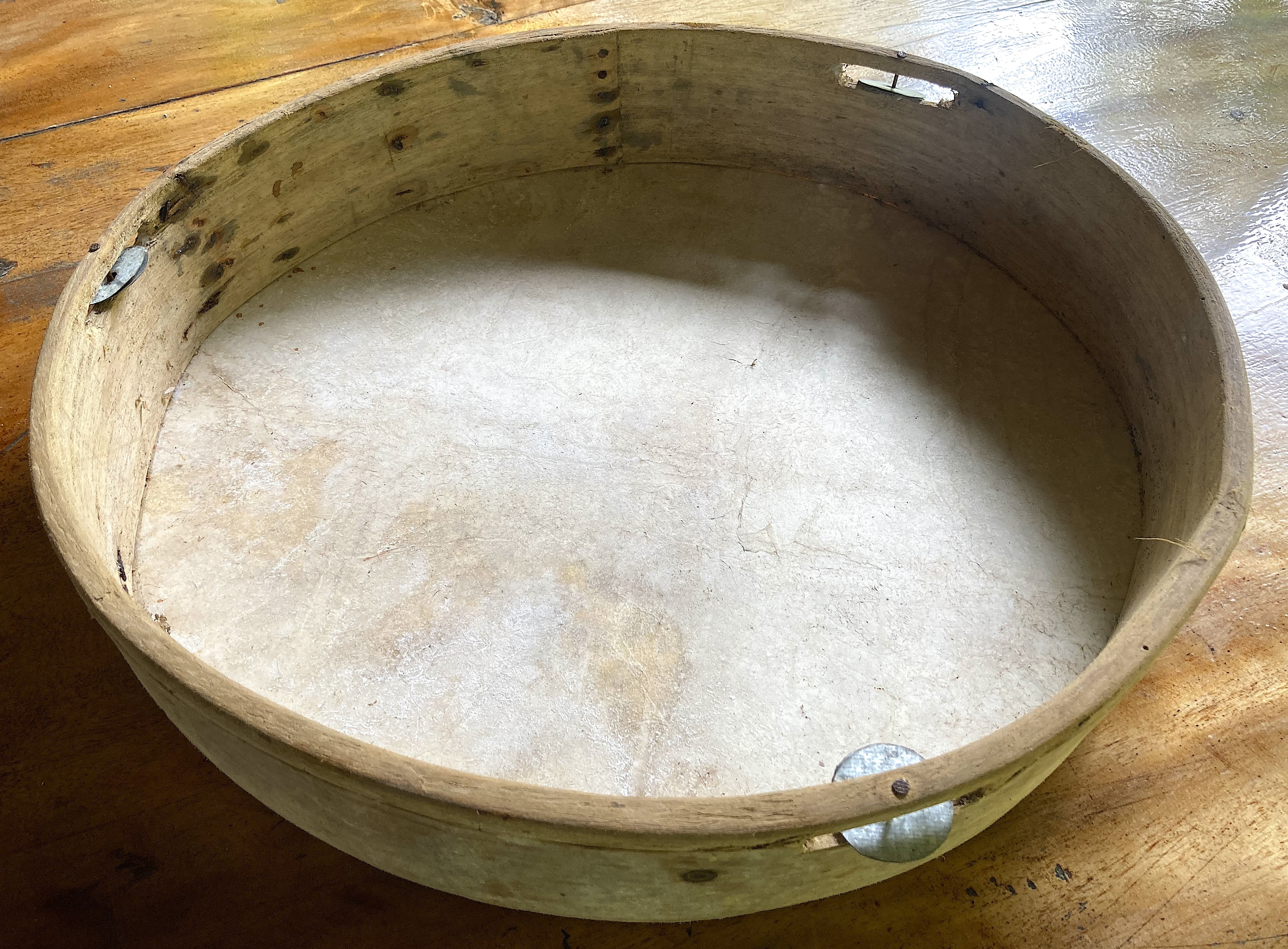
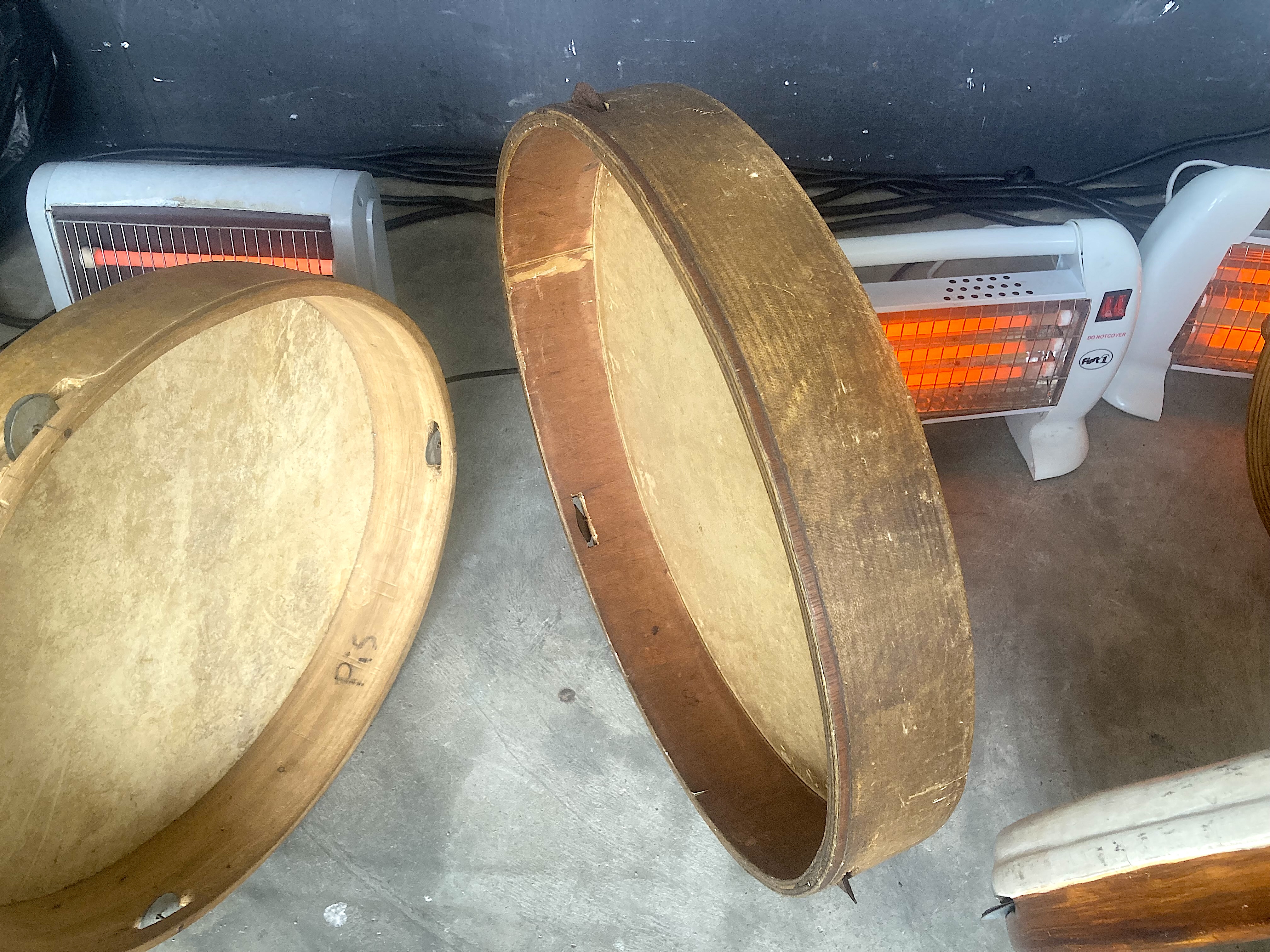
It consists of a wooden hoop approximately sixty centimetres in diameter and five centimetres thick, covered with goatskin and fitted with steel jingles inserted at three evenly spaced points. It thus belongs to both the membranophone family (since its skin is struck), and to the idiophone family (since the jingles are shaken). The musician usually sits down to play, supporting the drum with their leg. This provides stability while leaving the hand free to beat the drum. While the left hand (for a right-handed player) is braced opposite the leg, the right hand beats the centre or edge of the drumskin with full force. The skin must be warmed before playing the drum to achieve the tension required for optimal resonance. The tanbour moutya provides a rhythmic foundation for the repertoire of the same name. Traditionally, there are three tanbour moutya players within a group, corresponding to the three instrument sizes (18, 20 and 22 inches, called piti, mama and papa respectively) which are played in polyrhythm. Despite being emblematic of the moutya, the production of tanbour moutya has all but ceased in the Seychelles today, hindered by a scarcity of instrument makers and raw materials. Ravann drums imported from Mauritius tend to replace it.
video facture tanbour moutya
Tanbour sega
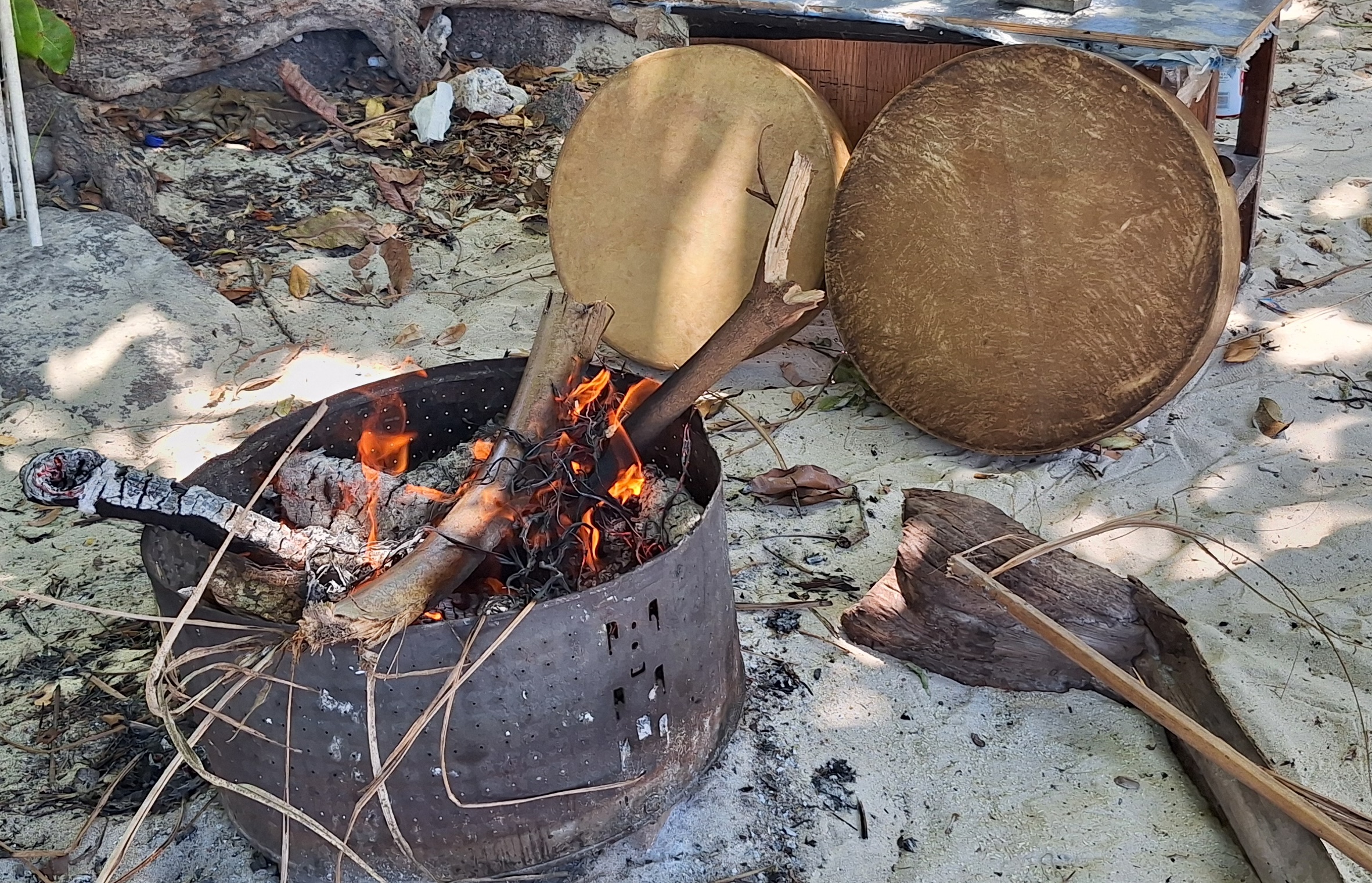
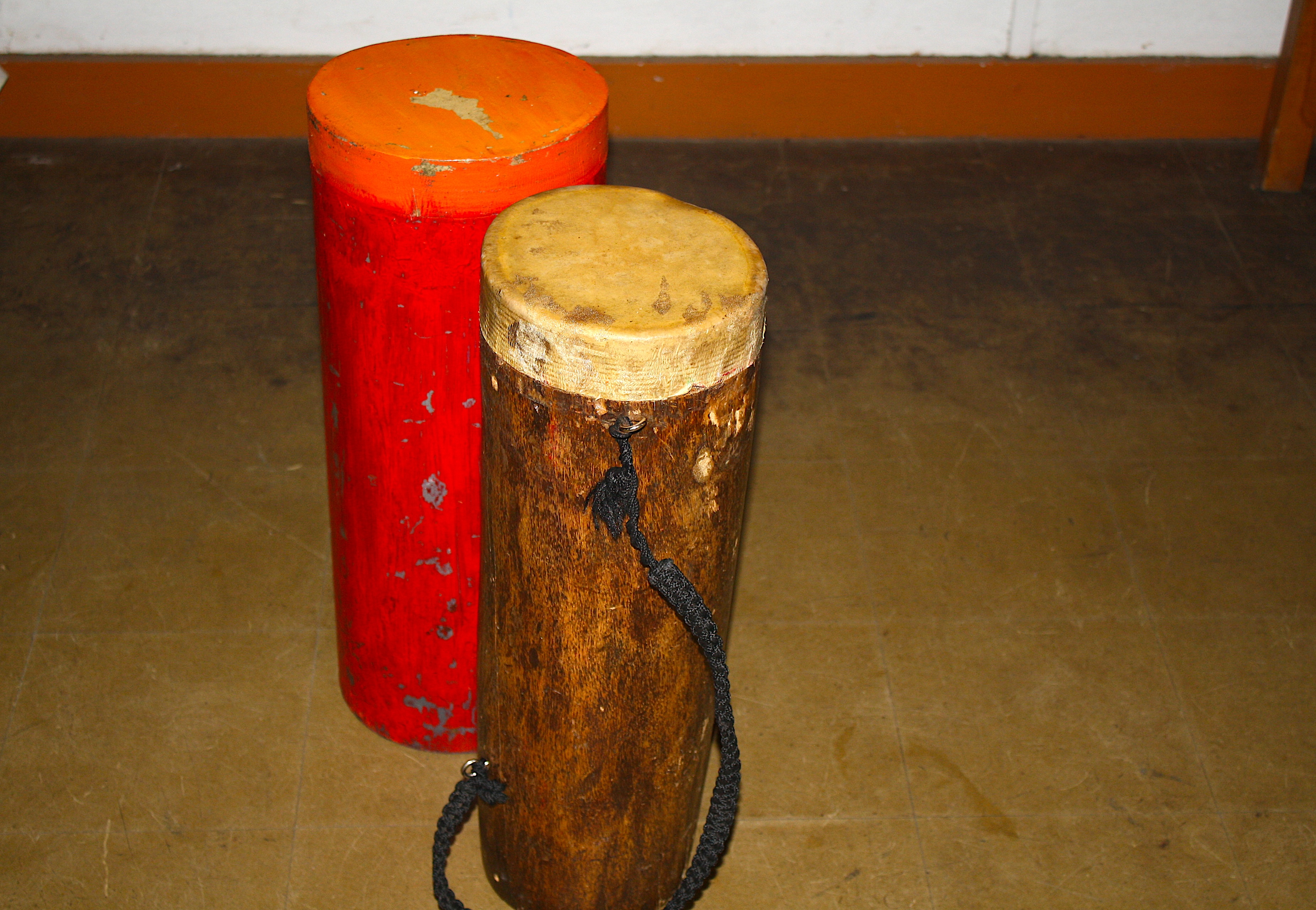
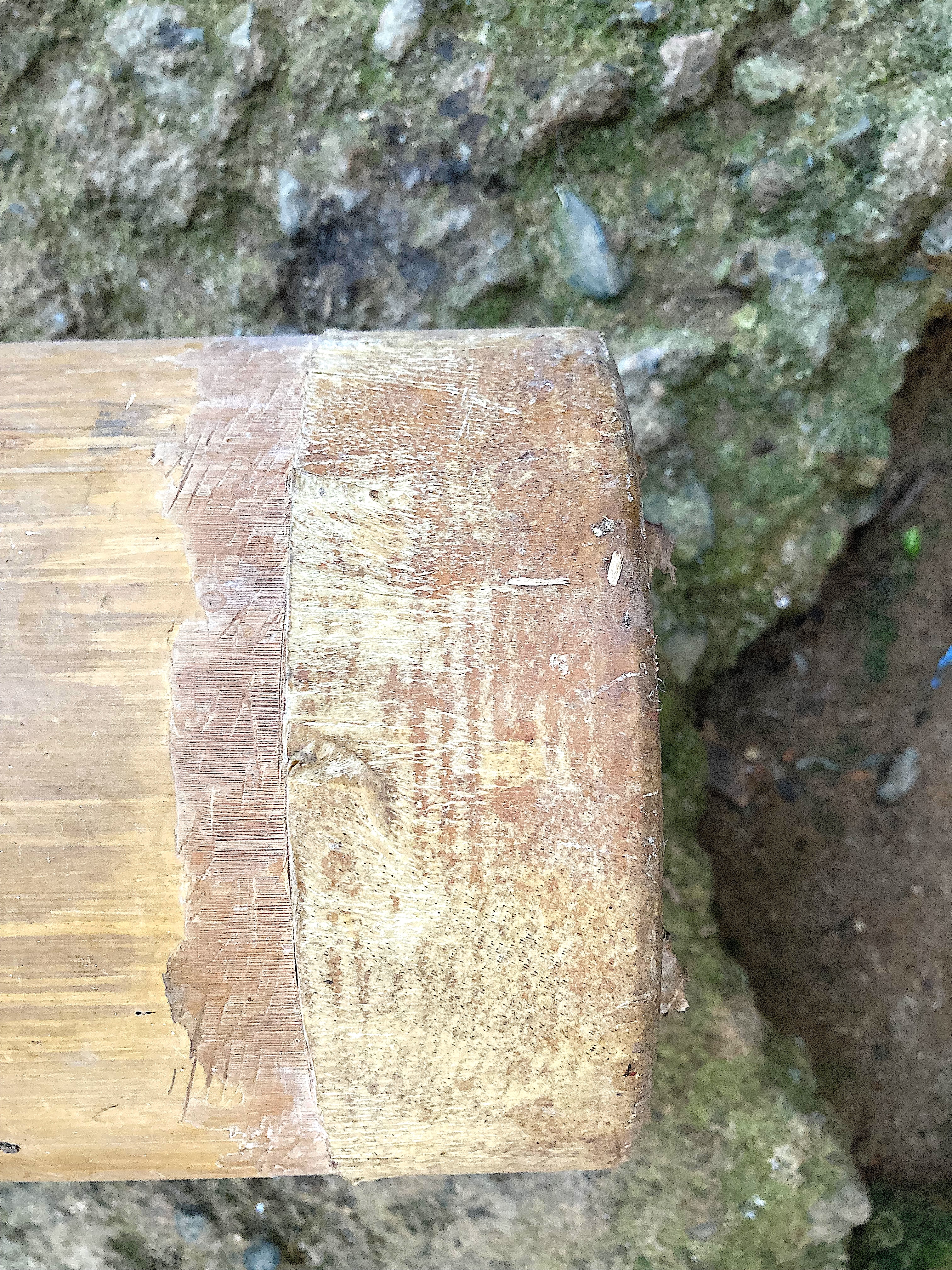
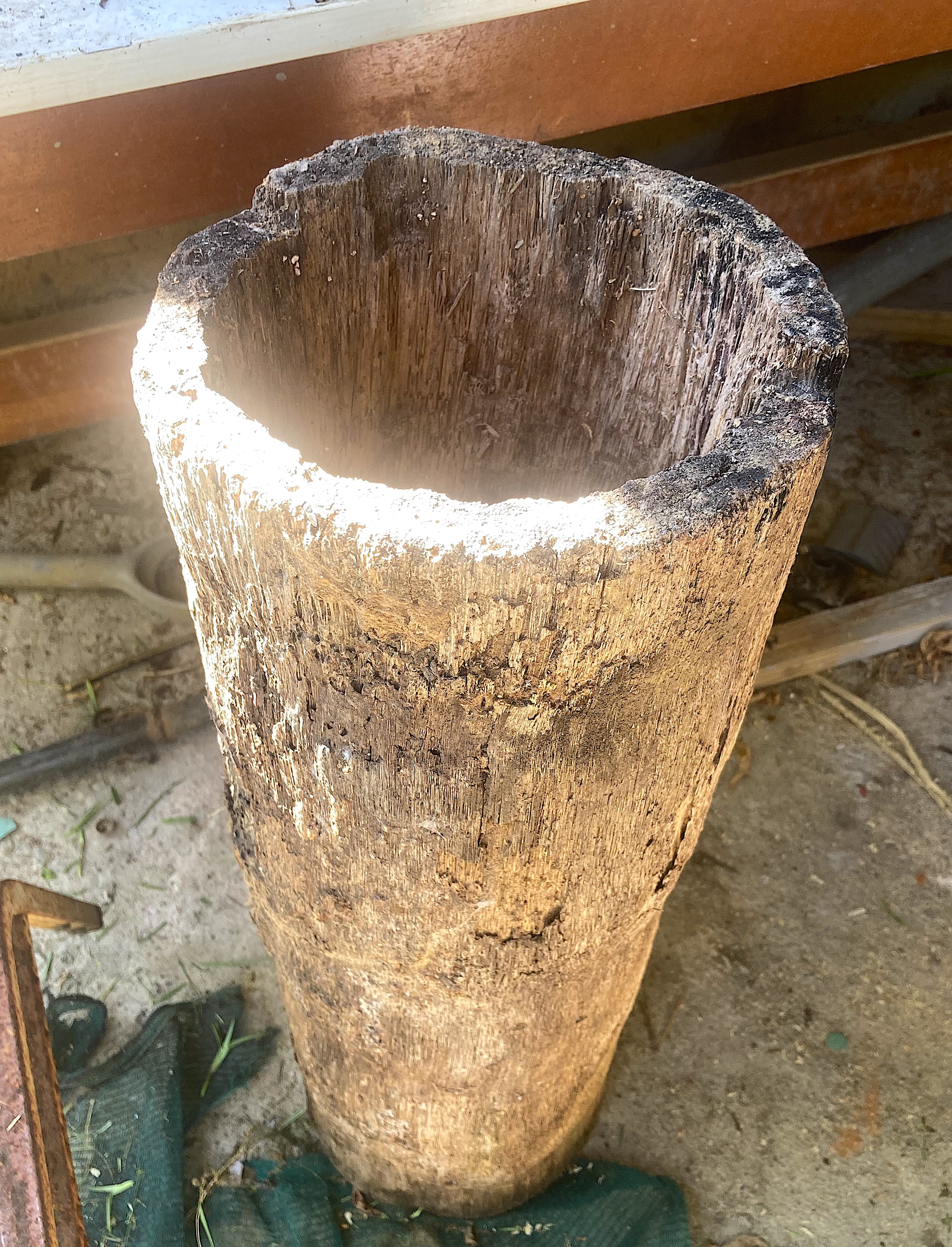
This tubular drum, gently tapering like the vouve or long drums once played in Reunion, bears a strong resemblance to the atabaque of Madagascar (a comparable version of which is found in Brazil, where it accompanies capoeira). It is fashioned from an 80 cm-high section of hollowed-out coconut tree trunk, with the wider end covered by a piece of cowhide or goatskin that is now glued on but was traditionally studded. A handful of rare examples are made from bamboo. The tanbour sega may be fitted with a shoulder strap, allowing the musician to play it standing up with both hands. It can also be played on drums of two different sizes; the larger model is called the sega and the smaller one the signal. As its name suggests, this drum was historically associated with sega; however it has since disappeared from active use, and has been entirely superseded by the djembe, or even the tanbour moutya.
Drum set
The drum set, a modern instrument of Western origin, has established itself in the Seychelles as the main substitute for the tanbour sega since the second half of the 20th century. Consisting of snare drums, tom-toms and cymbals, it provides both rhythmic accompaniment and dynamic energy for popular and festive music. Its versatility and powerful sound make it the preferred instrument for contemporary orchestras, yet it remains closely linked to traditional Seychellois rhythms such as the sega and the kanmtole, helping to preserve them.
Fanie Precourt
